
Leaked Files Suggest Abramovich's Aides and Deloitte Cyprus Backdated Records to Make $2 Billion Disappear
Leaked Cyprus Confidential records suggest Roman Abramovich's aides and Deloitte Cyprus backdated documents to remove $2bn and $650m of luxury assets from Cypriot company books. Abramovich, Eugene Tenenbaum and Deloitte Cyprus deny wrongdoing.
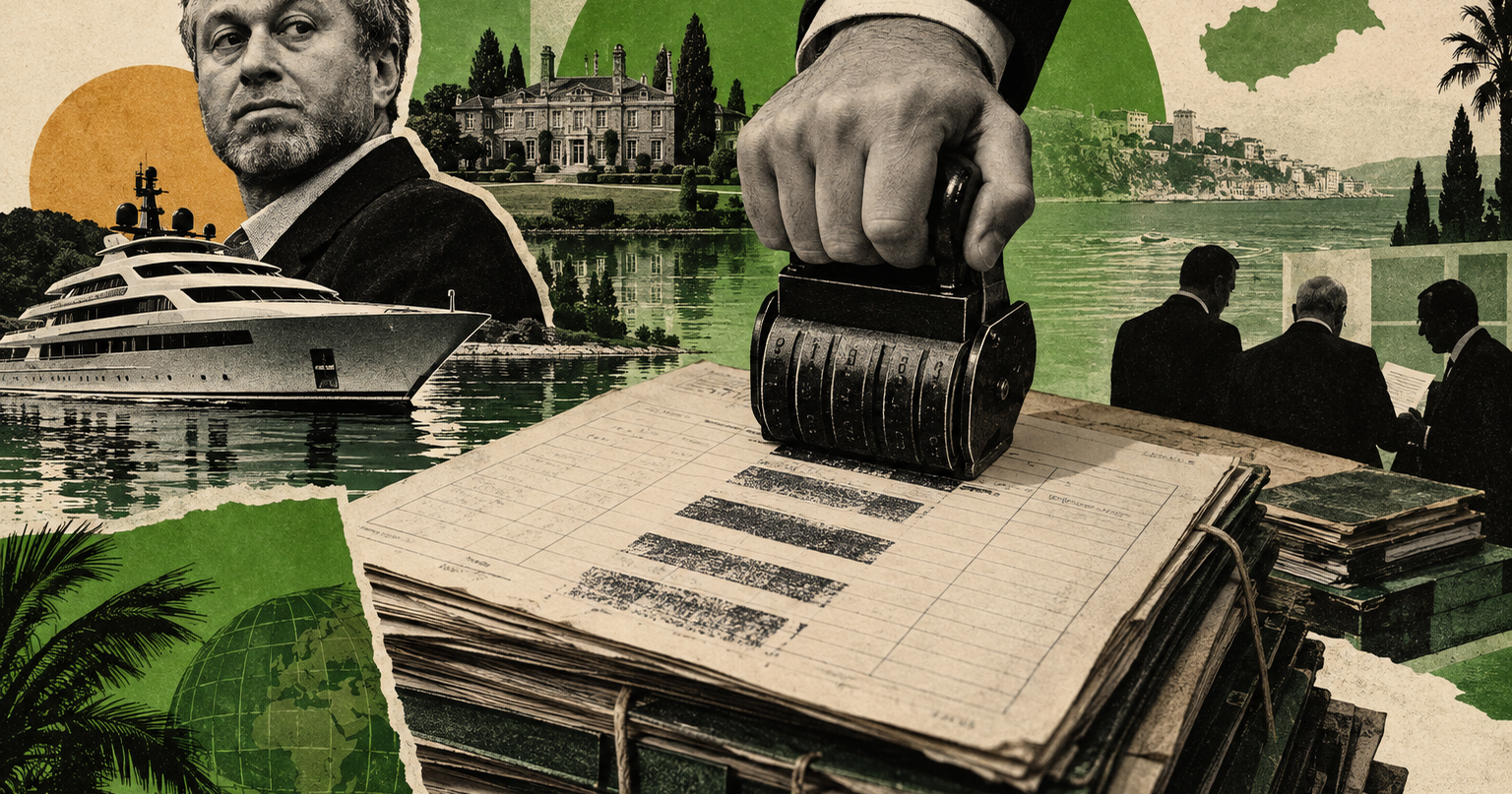
For more than a decade, Roman Abramovich's money appears to have moved through Cyprus on paperwork that was written after the fact. Leaked records suggest his aides, working with staff at Deloitte Cyprus, backdated documents so that $2bn and a $650m collection of mansions, jets and yachts seemed to vanish from Cypriot company books.
The findings come from a Guardian analysis of the Cyprus Confidential leak, more than 500,000 documents first released to the International Consortium of Investigative Journalists. Abramovich, his top aide Eugene Tenenbaum and Deloitte Cyprus all deny wrongdoing.
The $2bn that stopped being Kravin's
The story starts with Sibneft, the Siberian oil company Abramovich obtained for roughly $250m during post-Soviet privatisation. By the time he sold his last shares to Gazprom in 2005, he had raised $16bn.
One Cypriot company, Kravin Investments, received a $3bn windfall in May 2003 and kept about $2bn. Interest on that money was, in theory, taxable in Cyprus. Records suggest aides then looked for ways to "eliminate" a liability one adviser warned could be "very large".
In August 2005, Demetris Ioannides, a former Deloitte Cyprus chair whose firm Meritservus advised Abramovich for nearly 20 years, wrote that Kravin's accounts for 2003 and 2004 would need to change. A Deloitte Cyprus partner appeared to agree a month later.
New paperwork then cast Kravin as a mere trustee for a British Virgin Islands company, Kelvedon Worldwide. Those documents carried 2003 dates despite being created at least two years later. Deloitte Cyprus, apparently aware of the backdating, signed off the accounts, and the $2bn and its tax liability appear to have disappeared from Kravin's balance sheet.
A toybox that vanished
A similar move appears to have hit Amiscan Investments, which in 2005 held $650m of luxury assets including the Fyning Hill estate in West Sussex, a London penthouse, a French chateau, helicopters, jets, yachts and a supercar.
New Cypriot disclosure rules meant those assets would have to appear in Amiscan's accounts. In an October 2005 email to Tenenbaum, Ioannides suggested it might be "more prudent not to disclose" them. Backdated agreements then made it look as if the assets had moved to Kelvedon at the start of 2003, and the auditor signed off accounts showing no trace of them.
Earlier, in 2000, files suggest backdated consultancy agreements were used to route $98m to Abramovich through an off-the-shelf company, PB Mediapower Enterprises. The leak holds 50 promissory notes from that arrangement, each repayment application bearing his signature.
What the experts and the court record show
Andrew Mitchell KC, a financial crime and tax specialist, called the Kravin scheme a "blatant move to protect from legitimate taxation assets which should otherwise have been subject to tax", which he said would amount to "straightforward" tax evasion. Forensic accountant Rachel Sexton said backdating to create a false impression "could be considered to be fraudulent misrepresentation."
The files also appear to contradict Tenenbaum's testimony in a 2008 UK high court case brought by businessman Chalva Tchigrinski. Tenenbaum said he held no records relating to Sibneft-Yugra, yet the leak shows his sign-off on agreements tied to those deals. Documents submitted for Abramovich's case also appear to have been backdated.
The denials
Abramovich's lawyers said any suggestion he evaded tax or deceived Cypriot authorities is denied and that relying on advisers of Deloitte's standing would have been entirely proper. Tenenbaum's lawyers said documents can be backdated for legitimate reasons, and that he gave evidence "honestly and in good faith". Both said their clients relied on Deloitte Cyprus and could not recall documents more than 20 years old.
Deloitte Cyprus said it "acts in compliance with applicable laws" and can no longer access the material. A lawyer for Ioannides said he could not comment for personal reasons. Ioannides and Meritservus were sanctioned by the UK in 2023, part of the wider squeeze on Russia's money networks that also produced the US Treasury sanctions on the A7 network.
All told, the analysis suggests more than 1,000 documents in the Abramovich empire were backdated, often with the knowledge of his inner circle.
Some offers on this page may be paid placements or contain affiliate links.
Finpresso: daily AI & finance brief
Free daily newsletter, read in 5 minutes.
Subscribe free