
Brent closes above $90 after US hits Larak launchers
Brent September futures settled at $90.49 on Monday, up 2.7%, after a US strike on two Iranian rocket launchers on Larak Island in the Strait of Hormuz. The settle, not the intraday spike, is the priced supply-risk premium, and CENTCOM still frames the lanes as defended.
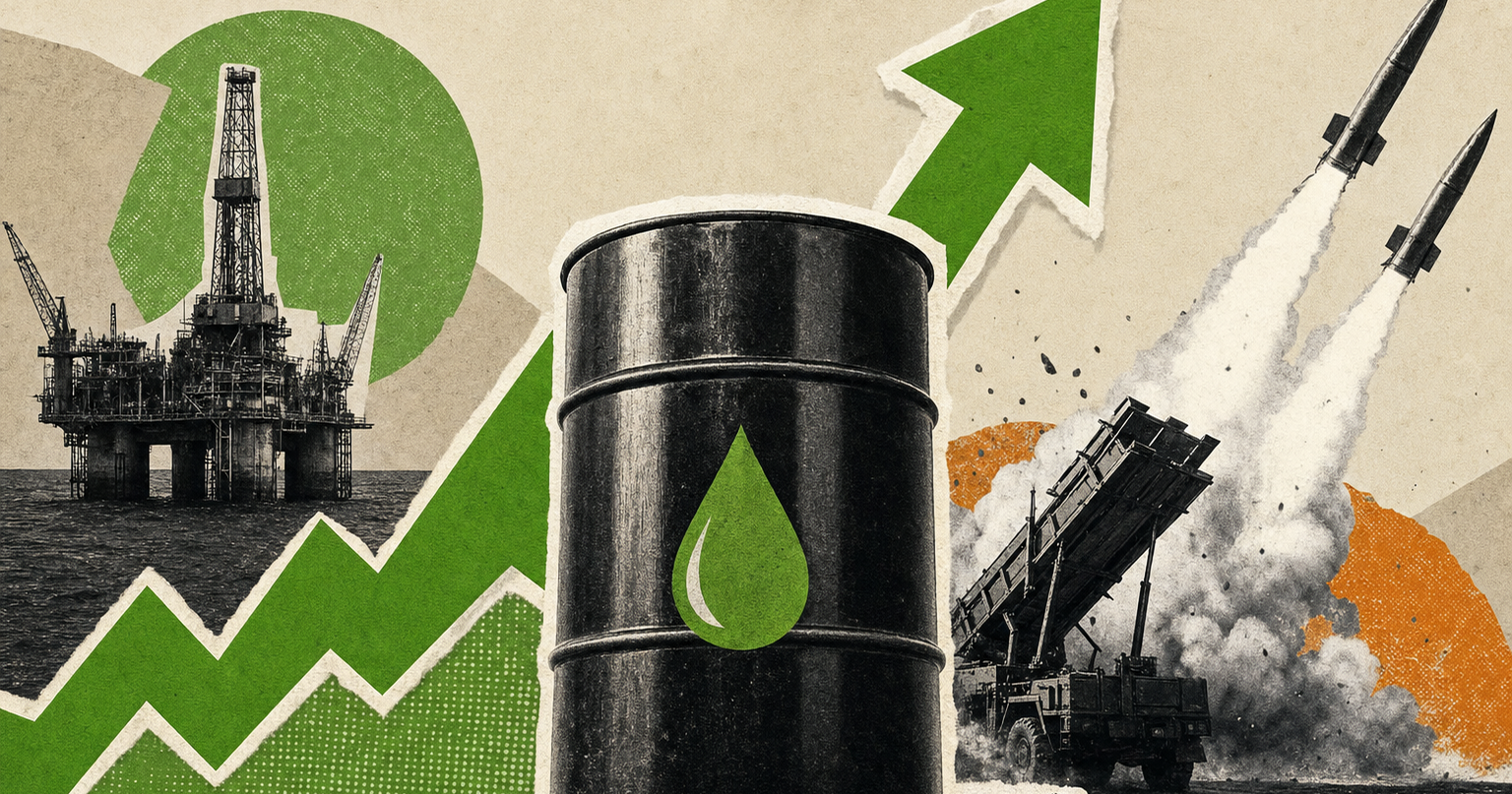
Brent crude settled above $90 on Monday after a weekend US strike on Iranian launchers overlooking the Strait of Hormuz, according to CNBC. Read the move as a supply-risk premium on a limited, named military action, not as proof the strait is shut. The instrument is a futures settle, not an intraday rumor, and the US Central Command that ordered the strike still describes the shipping lanes as defended, so the market is pricing risk, not a closure.
The closed fact is the settle, not the spike
Prices ran to roughly $91 early in the session, but the number that clears is the close. Brent September futures settled at $90.49, up 2.7% on the day, and US WTI settled at $85.76, up 2.8%, per CNBC. That is the level the tape actually repriced to once the headlines were digested, and it is the anchor to model against rather than the intraday high. It lands on an energy complex already sensitive to the interplay of oil and rates that ran through the 30-year Treasury yield's 19-year high.
What the US actually did
On Sunday, 30 August, US forces struck two Islamic Revolutionary Guard Corps rocket launchers on Larak Island in the Strait of Hormuz. CENTCOM spokesman Capt. Tim Hawkins said the IRGC "were observed preparing to launch rockets with sea mines" into the strait, and CENTCOM said US forces took "limited, precise action" against IRGC minelaying forces posing an imminent threat. By the wires' count it was the first publicly acknowledged US strike on Iranian positions in about a month, since late July. Hawkins added that "U.S. forces are monitoring the area closely and remain prepared to protect the free flow of commerce through this essential waterway," which is the closest thing to a floor under the risk premium: the stated intent is to keep the lanes open, not to escalate into a blockade.
What is a claim, and whose
Bind each assertion to who made it, because the follow-on narratives diverge fast. CENTCOM's account is the minelaying threat and the "limited, precise" response. Claims of Iranian casualties, ballistic or drone retaliation, and tanker-mine incidents in the strait belong to Iranian media and follow-up reporting, and CENTCOM has labeled some tanker-mine intimidation in the waterway as disinformation. President Trump's Truth Social post threatening Iran's Kharg Island oil terminal is political rhetoric and color, not the catalyst that moved the settle, and it is not a reason to price a full closure. The broader supply-shock and coordination angle is the one the FSB's warning on frontier AI and cyber risk to the G20 gestured at: how a single named event ripples through global risk pricing.
The takeaway
Book Monday's move as a supply-risk premium on a limited, named action, not as the opening of a Hormuz-closed trade. Size energy exposure and hedges against the settle levels of $90.49 Brent and $85.76 WTI and against CENTCOM's "limited, precise" framing, and treat casualty and blockade narratives as unpriced until a named source you trust confirms them, not the other way around.
Some offers on this page may be paid placements or contain affiliate links.
Finpresso: daily AI & finance brief
Free daily newsletter, read in 5 minutes.
Subscribe free