
A Cheese Importer Is Suing to Kill Trump's 50% Canada Tariffs, Built on a 1930 Law Nobody Had Used in 96 Years
New Jersey cheese importer Gellert Global Group sued to strike down Trump's 50% tariffs on Canadian goods, arguing Section 338 of the 1930 Smoot-Hawley Act was misused and its 30 day waiting rule broken.

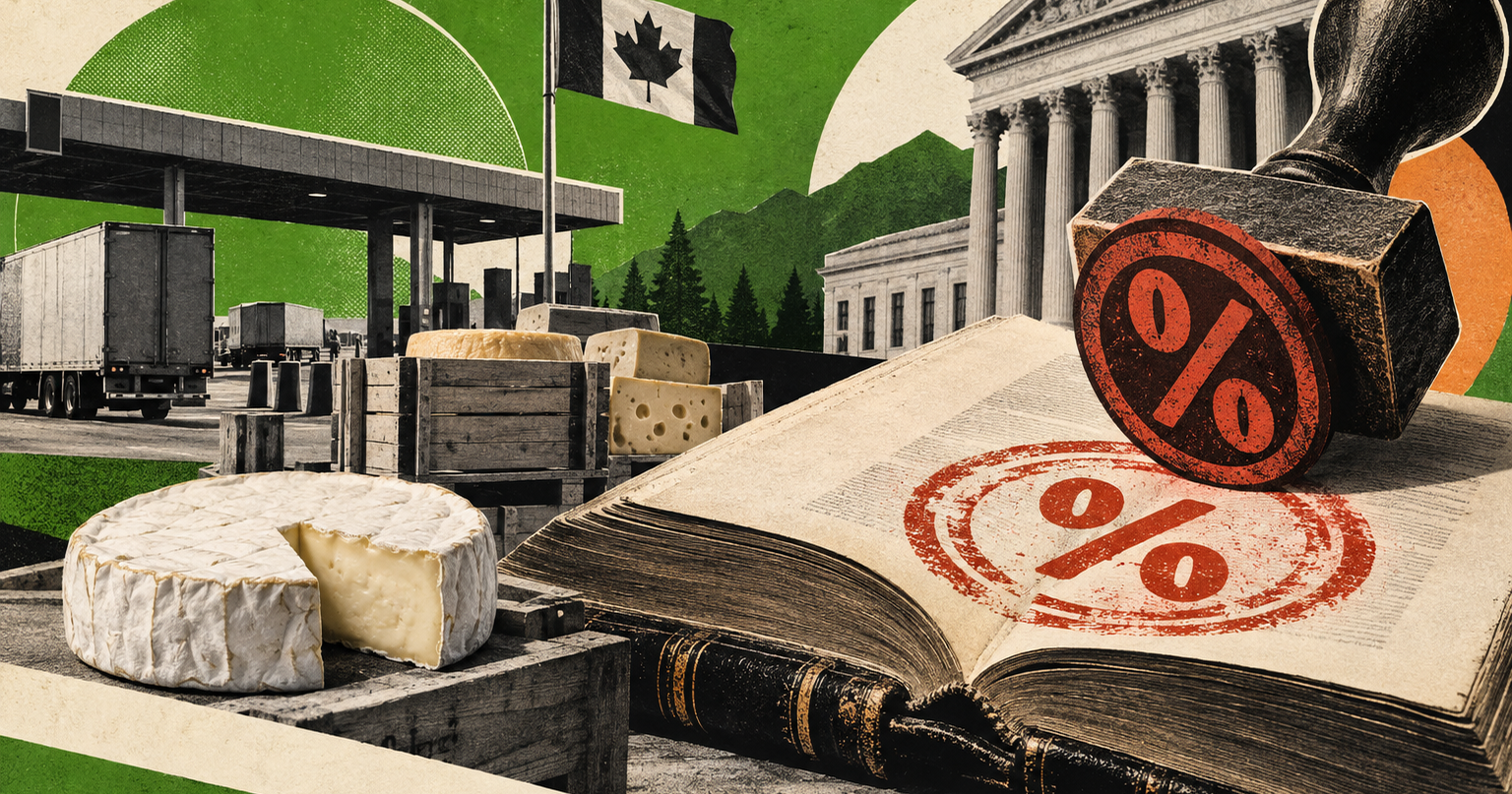
The legal group that already beat Trump's "liberation day" tariffs at the Supreme Court is back in court, this time for a New Jersey cheese importer. On Tuesday the Liberty Justice Center sued to strike down the 50% tariffs on Canadian goods, arguing they rest on a 1930 law the White House both misused and failed to follow.
At stake are refunds with interest for a proposed class of importers, and another test of the administration's habit of moving the same tariffs from one statute to the next.
A law pulled off the shelf
On July 20, Trump signed three proclamations under Section 338 of the Smoot-Hawley Tariff Act, adding a 50% duty on Canadian products over what he called unfair treatment of US motor vehicles, alcohol and dairy. After a three day suspension, the duties kicked in on August 22, once trade talks in Washington fell apart.
They cover about $20bn of Canadian goods, from wine and honey to hockey sticks and wigs. Prime Minister Mark Carney matched them "dollar for dollar." Until July, no president had used Section 338 to impose a tariff in its 96 years on the books.
The case
The suit, Gellert Global Group Corp. v. Trump, was filed in the US Court of International Trade along with motions for a preliminary injunction and summary judgment. It asks a three judge panel to declare the tariffs unlawful, stop their collection and order refunds with interest.
The core argument is that Section 338 only allows tariffs to offset foreign discrimination found "as a fact." Two of the Canadian measures the White House cited were responses to Trump's own tariffs, including ones the Supreme Court has since held unlawful. "Retaliation is not discrimination," the complaint says.
The third involves dairy quota terms negotiated under USMCA, which the suit says "give American cheese better access to Canada than the cheese of most of the world receives." Canadian cheese still landed on lists aimed at liquor and auto policies, even though the dairy proclamation does not cover cheese.
The complaint also argues Congress replaced Section 338 with Section 301 of the Trade Act of 1974, which requires an investigation and public comment. And it says the White House broke the law's own 30 day waiting rule: the Canadian cheeses Gellert imports were added on September 8, and duties were collected seven days later.
The cheese
Gellert is a third generation family food business with more than $1.7 billion in annual revenue. In 2025 it imported $71 million of Canadian cheese, from sheep and goat milk varieties to mascarpone, brie and camembert, and paid no tariffs on it under USMCA, CNBC reports. Now it pays 50%, which it estimates at $40 million a year.
The company plans to absorb the cost through the end of the year but calls that "not sustainable long term," and says it would otherwise have to raise prices. Canada's counter tariffs also hit the American made cheese its Canadian division sells.
The supply chain does not respect the border. One Canadian supplier buys milk from upstate New York dairy farmers, makes brie in Canada and ships it back to the US. "These tariffs disrupt those relationships overnight and create costs and uncertainty that ripple through the entire supply chain," co-CEO Thomas Gellert said.
Round four
"This case is not about the president. It is about the presidency," said Liberty Justice Center CEO Sara Albrecht. "No president should have the power to pull a dormant statute off the shelf and use it to impose sweeping tariffs or import bans without the limits Congress required."
It is the group's fourth tariff case. Its challenge to the IEEPA "reciprocal" tariffs ended with the Supreme Court striking them down in February, and the administration is now refunding an estimated $166 billion on those separate duties. The trade court also held the replacement Section 122 tariffs unlawful in May, a ruling now on appeal.
Canada remains a pressure point on several fronts. The administration said in July it would not renew USMCA for another 16 year term, and Trump has also threatened Europe with heavy tariffs should Canada move closer to the EU. The White House did not respond to requests for comment on the suit.
Some offers on this page may be paid placements or contain affiliate links.
Finpresso: daily AI & finance brief
Free daily newsletter, read in 5 minutes.
Subscribe free