
Investors Turn on Debt-Fueled AI as CoreWeave's Bonds Hit Distress Levels and AI Stocks Shed $1 Trillion
CoreWeave's bonds and credit default swaps hit distress levels this week as hot inflation lifted borrowing costs, and 20 of the largest AI and chip stocks lost more than $1 trillion in value. CoreWeave says its backlog covers its debt.

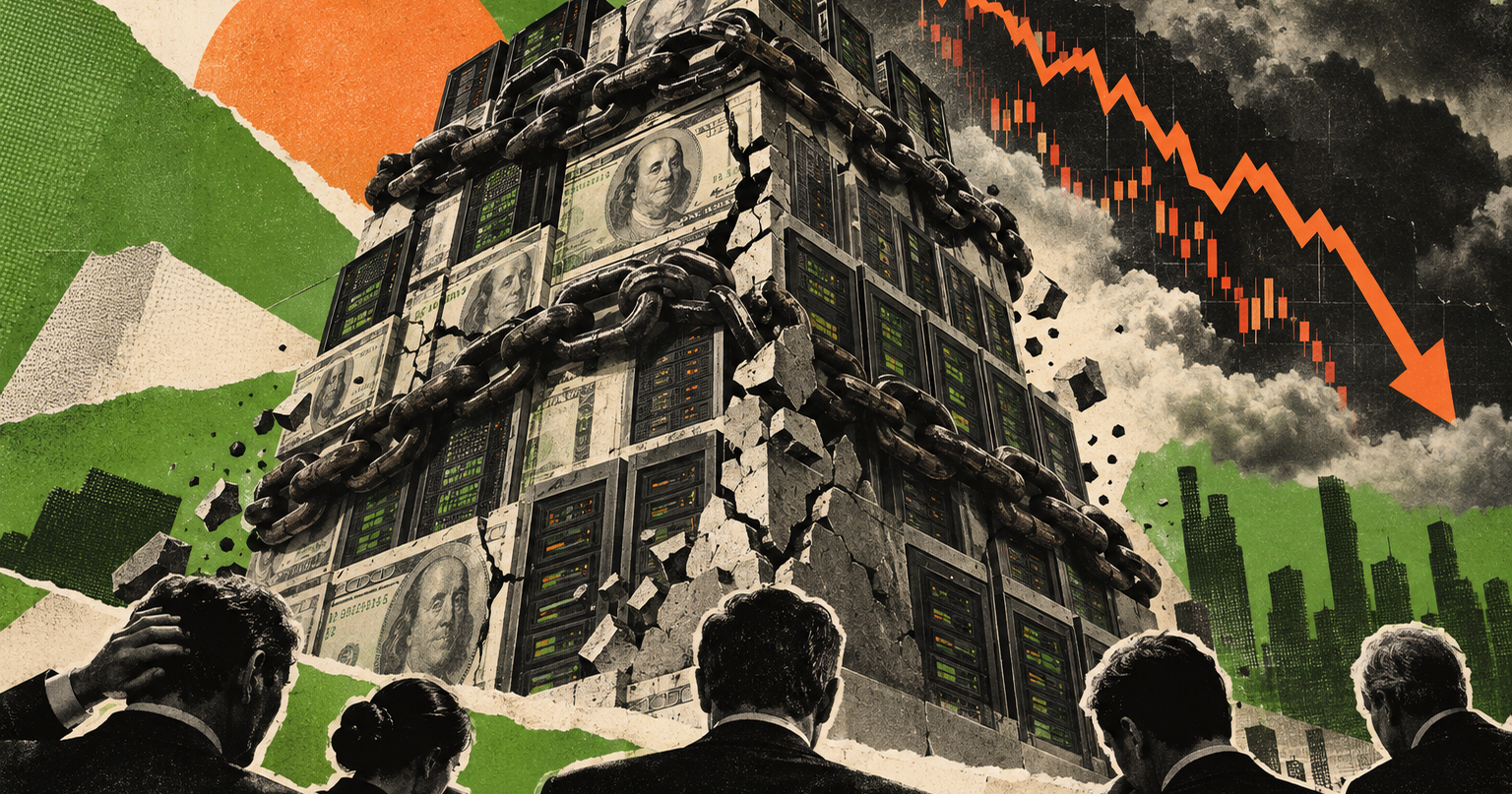
For much of this year the market was happy to lend money to anyone building AI data centers. This week the lenders flinched.
CoreWeave, the loss-making, Nvidia-backed cloud provider carrying about $50 billion of debt, saw its bonds and the cost of insuring them hit levels that usually signal distress. At the same time, credit stress, doubts about corporate AI spending and another hot inflation report erased more than $1 trillion from 20 of the world's largest AI and semiconductor stocks. On Thursday alone Nvidia fell 1.84%, AMD 1.5%, Intel about 2.8% and Dell 6.8%.
CoreWeave has not missed a payment. But the price of its debt says investors are no longer sure it won't.
The numbers
The yield to maturity on CoreWeave's 9.75% bond due 2031 reached 15.78% on Thursday. Its five-year credit default swap spread briefly topped 1,140 basis points before settling near 1,038, up 16% in a week and 164% from a year ago. A spread of 1,000 or more is generally a sign of credit distress, said Gavan Nolan of S&P Global Market Intelligence.
Reuters said the October 2031 bond briefly yielded past 16% on Thursday and was headed for a fifth straight weekly fall. Bonds sold in June at 9.675% now yield about 15%.
The shares fell 15.5% on Wednesday, bounced 5.94% Thursday after a vote of confidence from Nvidia, and were still down more than 15% for the week. They dipped another 4.1% before Friday's open.
Third-quarter reports from the big cloud companies had already hinted at data center delays and slower growth in capital spending. Then inflation landed. US producer prices rose 6.3% in September from a year earlier, the fastest since December 2022, driven by energy amid the US war with Iran. "A hot inflation print triggered a sharp selloff in CoreWeave because its business model is a highly indebted play on future data center demand," BCA Research said.
Why CoreWeave
The former bitcoin miner is the purest bet on borrowed AI. It made $5.1 billion in revenue last year and lost $1.2 billion. Revenue is expected to double this year while capital spending is estimated to quadruple to $35 billion to $39 billion. FactSet puts its forward debt-to-equity at 667 to 1.
It also sits inside the circle. Chipmakers like Nvidia back it, and clients like Meta and OpenAI rent from it, the kind of circular financing the IMF has flagged as a risk to global stability. CEO Michael Intrator and linked entities have sold nearly $1 billion of stock since the March 2025 IPO, mostly under prearranged plans.
"CoreWeave is the canary in the coal mine in the neocloud business," Paul Meeks of Freedom Capital Markets told CNBC. Nobody doubts the demand, Nolan said, but "it needs that cash flow to arrive really to justify all the capex that it's spending." The Evercore ISI trading desk was blunter: the market is "basically saying 'no mas' to AI debt without operating cash flow support."
The defense
Intrator pushed back in a memo Wednesday. "When you are building a new type of technology company there will be periods of time when the market misunderstands and acts irrationally," he wrote. "We are confident in our backlog which more than supports all of our debt obligations."
That backlog tops $100 billion, about two thirds of it with investment-grade customers including Microsoft, Meta, IBM and Caterpillar, according to Deutsche Bank, which reiterated its buy rating and called the drop a buying opportunity.
Spreading
The same bank also warned about what comes next. "This kind of concern can prove to be a self-fulfilling prophecy, and risks triggering broader issues in other AI-related names," said Deutsche Bank's Jim Reid. Oracle's five-year CDS rose roughly 10% in a week to 282 basis points, and Reid noted a downgrade from its BBB rating "would risk pressuring IG-only investors into forced sales." Nebius and IREN were under pressure too.
Analysts told Reuters the bond rout matters more than the stock slide, because it may signal a broader rethink of financing projects that could take years to earn money. "As we move to a capex cycle funded out of debt rather than simply free cash flow, we have to increasingly respect the credit price action," Reid said.
The Federal Reserve meets October 27 and 28, and Chair Kevin Warsh has given his last scheduled public remarks before then. Until then, investors are left with the question CoreWeave has made unavoidable: whether the cash from AI arrives before the bills do.
Some offers on this page may be paid placements or contain affiliate links.
Finpresso: daily AI & finance brief
Free daily newsletter, read in 5 minutes.
Subscribe free