
Record Diesel Prices Hit Drivers After Wars Wipe Out About a Fifth of Global Fuel Supply
Ukraine strikes on Russian refineries and the US-Israel war on Iran have erased about a fifth of world diesel supply. UK diesel is up 38% to 196.28p a litre and heading toward a record 2 pounds.
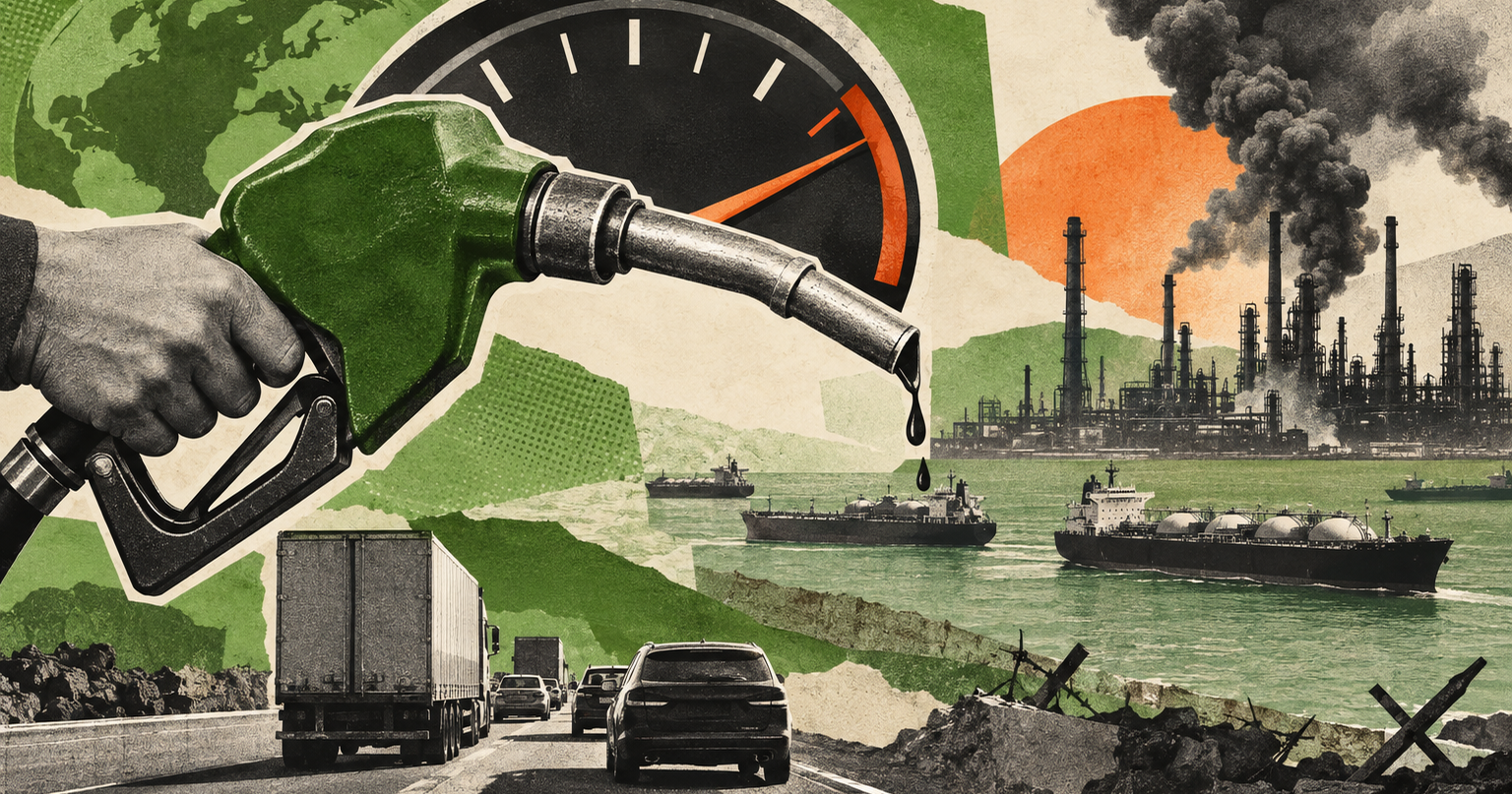
Two wars on opposite sides of the map have collided at the fuel pump, and drivers are paying for it in real time.
Ukraine's sustained strikes on Russian refineries and the US-Israel war on Iran, including disruption around the Strait of Hormuz, have together erased about a fifth of the world's diesel supplies, according to Guardian energy reporting. Across Europe and the US, forecourt prices have already blown past their previous all-time highs.
In Britain the average price of diesel has climbed 38% to 196.28p a litre since the Middle East crisis began in late February, and it is expected to hit a record 2 pounds a litre within days. Some forecourts are already charging above that mark. Other wires put US diesel above $6 to $6.50 a gallon.
The striking part is where the shortage actually sits. This is not primarily a lack of crude oil, which briefly dipped below $100 a barrel. It is a shortage of refining capacity to turn crude into usable fuel. Middle East refineries that once supplied around 10% of the world's fuels have been badly damaged, and what little they still produce struggles to move past blocked trade routes.
Russia's own output tells the same story. War-damaged Russian refining fell by almost a third over the past year to a 20-year low, the International Energy Agency says, after repeated Ukrainian drone attacks including the recent strike on the Kapotnya plant near Moscow.
For anyone tracking the market plumbing, the clearest signal is the crack spread, the gap between crude and refined product prices. In Europe it has climbed above $100 a barrel for the first time, a sign that the squeeze is in refining margins rather than the oil itself, and a cost that ripples into every transported good.
Britain is unusually exposed. The country's refinery count has shrunk from nine to four since the early 2000s, and after the Grangemouth and Lindsey closures cut domestic capacity, the UK now imports roughly 54 to 55% of its road diesel. That growing reliance on overseas supply leaves prices at the mercy of distant conflicts.
The politics have followed the prices. Donald Trump pressed Volodymyr Zelenskyy in a Sunday call to halt strikes on Russian refineries over fuel-cost concerns, the Financial Times reported, and wrote on Truth Social that Russia had "lost control of its Diesel Oil Industry."
Diesel remains the workhorse behind haulage, farming, and the trades, so the cost feeds straight into groceries and services. UK inflation sat at 3.1% in the latest print, still well above the Bank of England's 2% target, which keeps this squeeze tangled up in the energy-price debate driving rate decisions. It also traces back to the same Hormuz pressure now shaping sanctions and financial policy across the region.
Some offers on this page may be paid placements or contain affiliate links.
Finpresso: daily AI & finance brief
Free daily newsletter, read in 5 minutes.
Subscribe free