
FTC and 22 states sue Amazon over secret ad surcharge
The FTC and 22 states sued Amazon on August 31, 2026 in the Western District of Washington, alleging a secret ad surcharge scheme that overcharged about 1.2 million advertisers and extracted more than $20 billion. It is a complaint seeking an injunction and monetary relief, not a fine or judgment, and Amazon calls it misguided.
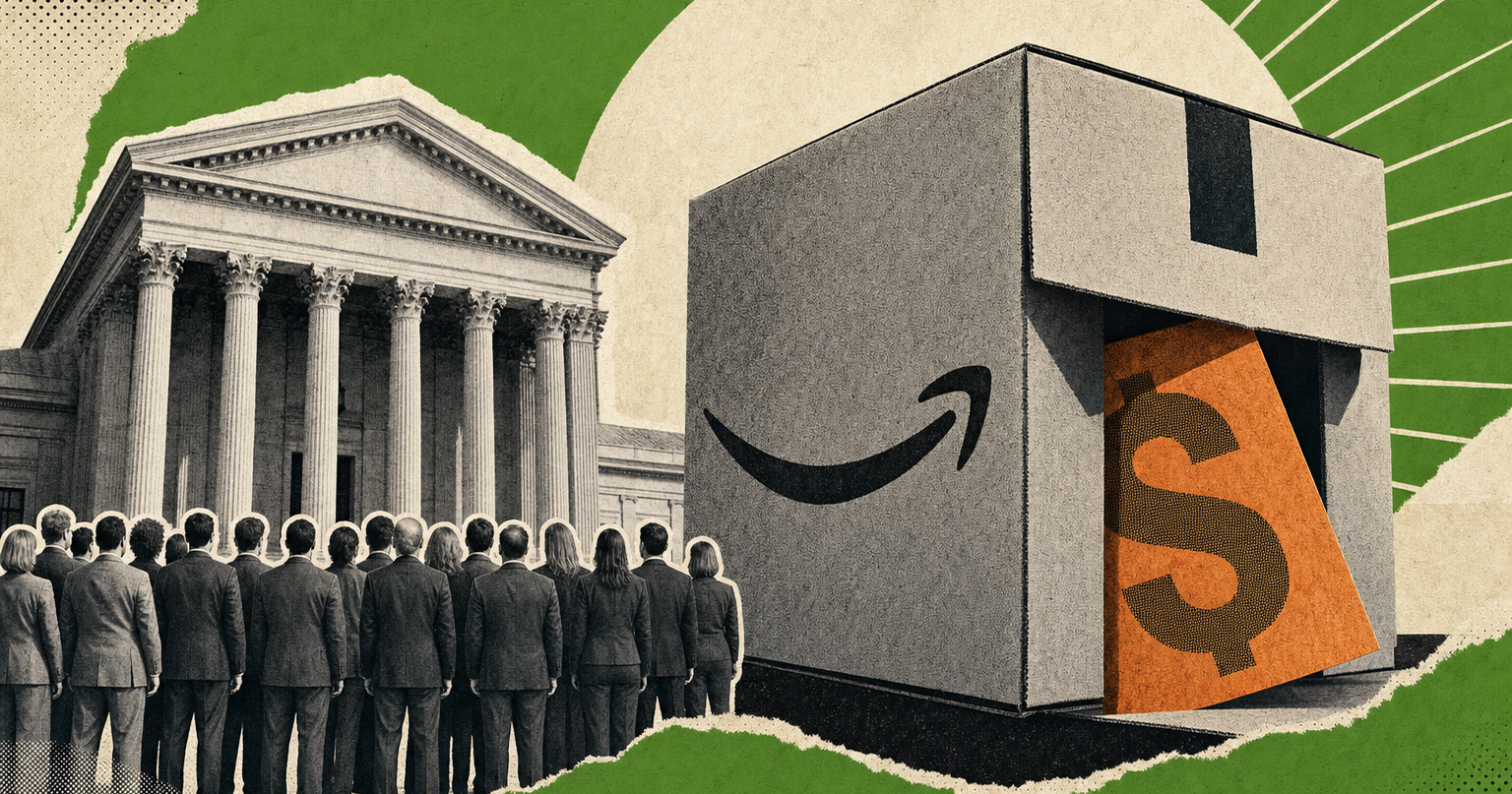
The Federal Trade Commission and 22 states sued Amazon on Monday, alleging a secret advertising surcharge that overcharged about 1.2 million advertising customers and likely extracted more than $20 billion since 2019. The agency published the complaint and a press release the same day.
The filing is a civil complaint seeking a permanent injunction and monetary relief, not a fine already imposed, a settlement, or a judgment. Every figure in it is an allegation a court has yet to test. Amazon calls the suit misguided and disputes the core claim.
A civil complaint, not a fine
The case is Amazon.com, Inc. as defendant, No. 2:26-cv-03097, filed August 31, 2026 in the U.S. District Court for the Western District of Washington. The Commission authorized the filing on a 2 to 0 vote. The 22 states joining are Alaska, Arizona, California, Colorado, Florida, Idaho, Illinois, Indiana, Iowa, Kentucky, Louisiana, Maryland, Nebraska, New Jersey, New York, North Carolina, Oklahoma, Pennsylvania, Rhode Island, South Carolina, Vermont, and Washington.
The complaint's paragraph 1 puts the alleged take at more than $20 billion. The press release says tens of billions. Both are allegations of money extracted, not an award anyone has ordered Amazon to pay.
The FTC pleads a permanent injunction and other relief under Section 5(a) of the FTC Act. The plaintiff states seek civil penalties, restitution, disgorgement or forfeitures, and costs under their own laws. That is what is being asked for, and it is different from the older FTC monopoly case against Amazon.
What Amazon allegedly did to the auction
Amazon marketed its ad auctions as a generalized second-price system, where a winner pays about one cent more than the next-ranked bid, across Sponsored Products, Sponsored Brands, and Sponsored Display.
The complaint alleges that after that competitive result was set, Amazon quietly added undisclosed soft reserve surcharges, and ran internal proxy second-price and invented-participant mechanics the complaint likens to shill bids. The effect the FTC alleges is that by 2024, Sponsored Products advertisers paid their own winning bid about 80% of the time, first-price behavior dressed as second-price.
The alleged victims are roughly 1.2 million U.S. advertising customers, including more than 500,000 small and medium businesses.
"Amazon has millions of advertising customers who were misled into paying significantly higher prices," FTC Chairman Andrew Ferguson said in the press release, adding that "these higher costs were largely passed on to American consumers."
Amazon's answer
Amazon does not concede the numbers and offers its own. The company says the average cost-per-click for Sponsored Products search ads was flat adjusted for inflation from 2019 to 2024, that average winning bids fell 50% from 2019 to 2025, and that roughly 92% of placed ads are not given to the highest bid. It estimates advertisers saved more than $8 billion from 2021 to 2025 because it ranks ads on relevancy rather than bid price alone, argues that soft and hard reserves are standard across the industry, and states that "in no scenario does an advertiser pay more than their bid."
It also rejects the framing, saying "the FTC wants the public to believe this case is about higher prices for consumers. It is not." None of that is adjudicated. It is Amazon's response, sitting directly against the FTC's account of the same auctions.
Regulators pressing "unfair and deceptive" theories against large firms is a live season, visible too in the OCC and FDIC unsafe-and-unsound rulemaking and in court fights over agency authority like Kalshi's. None of those fights is settled by a filing alone.
Some offers on this page may be paid placements or contain affiliate links.
Finpresso: daily AI & finance brief
Free daily newsletter, read in 5 minutes.
Subscribe free