
China rejects G20 non-market trade wording
China's Commerce Ministry rejected G20 language on trade imbalances after China was the lone dissent on a joint statement. The fight stuck on the word non-market. China's 2025 goods surplus was $1.2 trillion, up 20 percent. The U.S. issued a chair statement, not a signed communique.

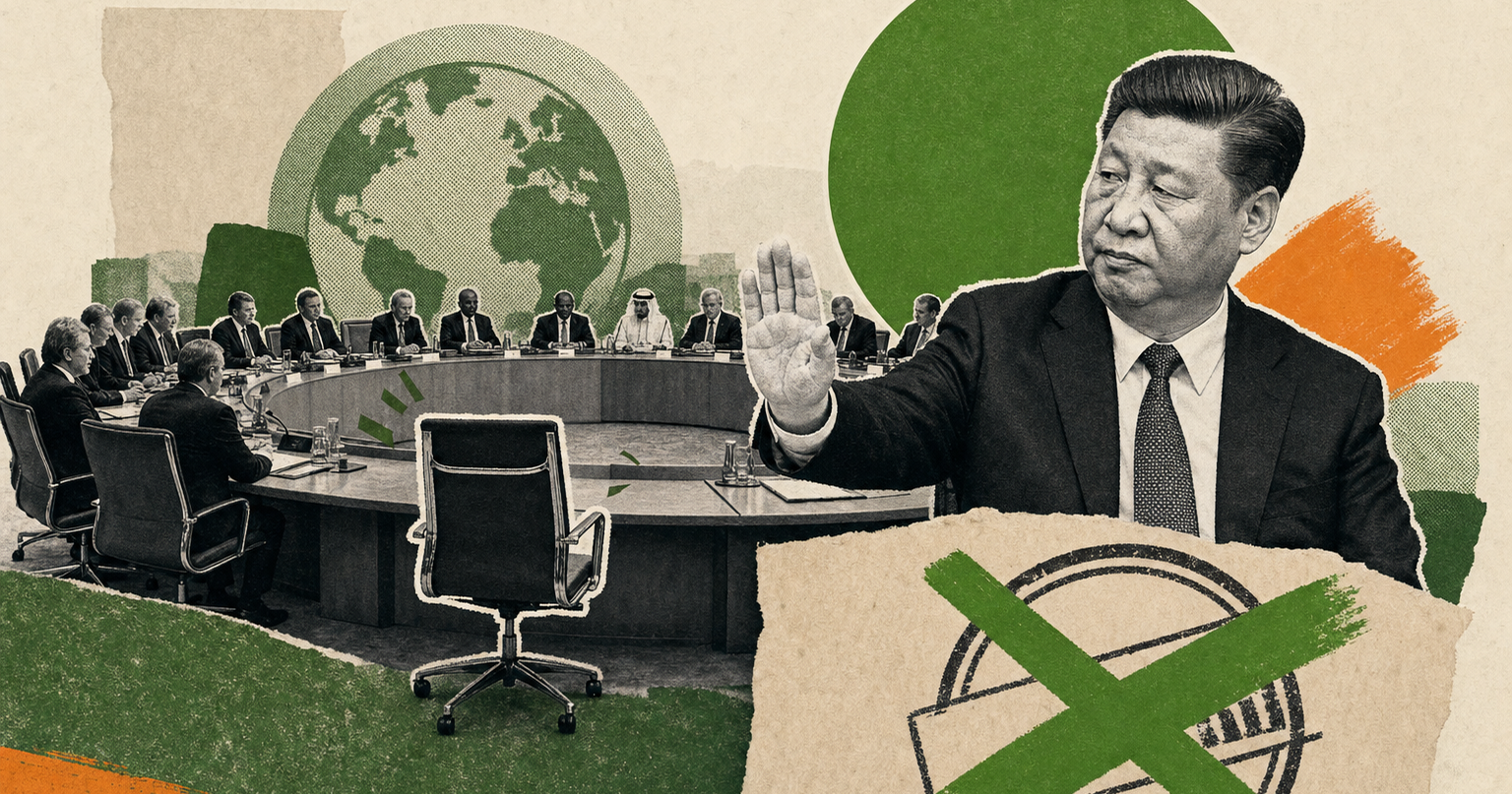
China's Commerce Ministry rejected G20 language on export-led imbalances at its weekly press conference. Spokesperson Huang Ling said taking advantage of the G20 to hype "economic imbalances" and "overcapacity" is "essentially promoting protectionism," and that "China is firmly opposed." CNBC reported the briefing from Beijing.
The fight is a press-conference rebuttal after a failed G20 finance communique, not a new tariff law and not a binding G20 treaty. There was no full joint statement China signed. The United States issued a chair statement that kept the contested wording.
U.S. Treasury Secretary Scott Bessent said 19 of 20 G20 members agreed to address an "unsustainable equilibrium" from "cheap exports," and China was the lone dissent. The Los Angeles Times, citing Bloomberg, reported the stickiest word was "non-market" in language on trade imbalances. Chinese officials read it as an attack on state-owned enterprises. China offered alternative wording and found some private support, but no U.S. consensus.
The U.S. chair statement said countries should eliminate "non-market policies and practices that exacerbate imbalances." Bessent told Fox it was "unfortunate the Chinese didn't want to come along." The Chinese delegation was led by PBOC governor Pan Gongsheng and Vice Finance Minister Liao Min. Xi Jinping is due in Washington later this month.
China's 2025 goods surplus hit $1.2 trillion, up 20 percent from the year before. The U.S. goods deficit with China was about $200 billion last year, per BEA figures cited by the Times. Bessent claimed about 4 percent of China's GDP goes into industrial subsidies and called BYD "the best $70,000 car that $35,000 can buy."
Rhodium Group's earlier count of direct grants to BYD is about $292 per vehicle, roughly 5 percent of a $4,700 Tesla cost gap in China, a much smaller number than Bessent's rhetoric. China's July white paper, "China's Position on the So-called Excess Capacity Issue," rejects the unfair-competition frame. Pan said protectionism and overstretched national-security framing drive imbalances, and that deficit nations should cut fiscal shortfalls and raise savings.
Huang also warned France over a Temu-style e-commerce law and said the EU should not make unilateral threats. EU Trade Commissioner Maros Sefcovic said Beijing must deliver "concrete results" by October or face harsher measures.
The wording fight is backdrop for the Xi visit, not proof the G20 banned Chinese exports.
Some offers on this page may be paid placements or contain affiliate links.
Finpresso: daily AI & finance brief
Free daily newsletter, read in 5 minutes.
Subscribe free