
India Q1 GDP grows 7.8% as services and investment climb
India's statistics ministry says real GDP grew 7.8% year on year in the April to June quarter of FY 2026-27, up from 6.9% a year earlier, led by a 10% services sector and an 11.9% jump in fixed investment.
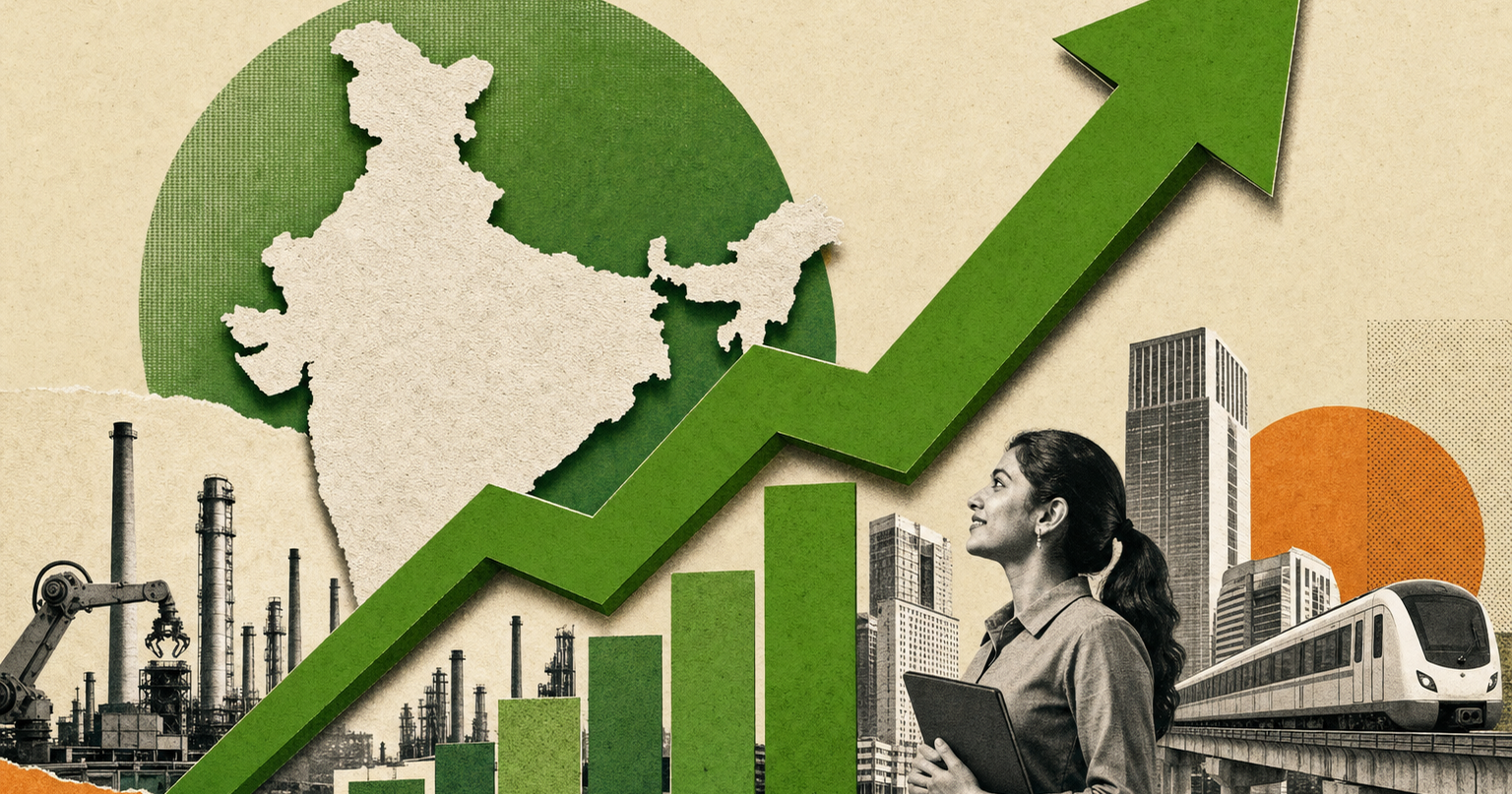
India's economy grew faster than it did a year ago. Real GDP rose 7.8% year on year in the first quarter of FY 2026-27, the April to June period, up from 6.9% in the same quarter last year, according to the official press note from the Ministry of Statistics and Programme Implementation. The print is the government's own National Statistics Office figure, not a bank estimate or a wire's read of one.
The headline in rupees
Nominal GDP, which is not adjusted for inflation, grew 10.3%, up from 8.1% a year earlier. In level terms the quarter came to Rs 81.36 lakh crore of real GDP against Rs 75.46 lakh crore a year ago, and Rs 88.27 lakh crore in nominal terms. Real gross value added, which strips out taxes and subsidies, grew 8.2%.
The growth was led by services. The tertiary sector expanded 10.0% at constant prices, and within it financial, real estate and professional services grew 12.1%, the single fastest line in the release. The secondary sector, covering manufacturing and construction, grew 8.6%. The primary sector, farming and mining, grew a slower 2.9%, with agriculture and allied activities up 3.6%.
The number under the headline
The figure worth flagging sits on the expenditure side. Gross fixed capital formation, the national-accounts measure of investment in things like factories, machinery and buildings, grew 11.9% at constant prices, more than double the 5.8% pace of a year earlier. Private consumption, the largest single component of the economy, grew a steadier 7.1%. That consumption line reads differently against a cooling American shopper, where Walmart just posted its slowest US sales growth since 2020. An investment jump running ahead of consumption is the mix policymakers tend to prefer, because it points at capacity being built rather than only spent.
One caveat on the comparison. These figures run on India's new 2022-23 base-year series, released in February 2026, and the prior quarters have been revised onto the same series, so the 7.8% against 6.9% is a like-for-like read rather than old series against new.
Beat is the wires' word
Several outlets called 7.8% ahead of economist forecasts, but the MoSPI note carries no consensus table of its own, so the beat is the market's yardstick, not the government's. What the note itself shows plainly is momentum, a faster headline than last year on broad services strength and a sharp pickup in investment.
Some offers on this page may be paid placements or contain affiliate links.
Finpresso: daily AI & finance brief
Free daily newsletter, read in 5 minutes.
Subscribe free