
A House China Hawk Wants the Fed to Reconsider Hong Kong's Emergency Dollar Lifeline as Beijing Builds Its Own
Rep. John Moolenaar wants the Fed to rethink Hong Kong's access to a crisis dollar facility it barely uses. Critics say pulling it would do nothing to protect the dollar.

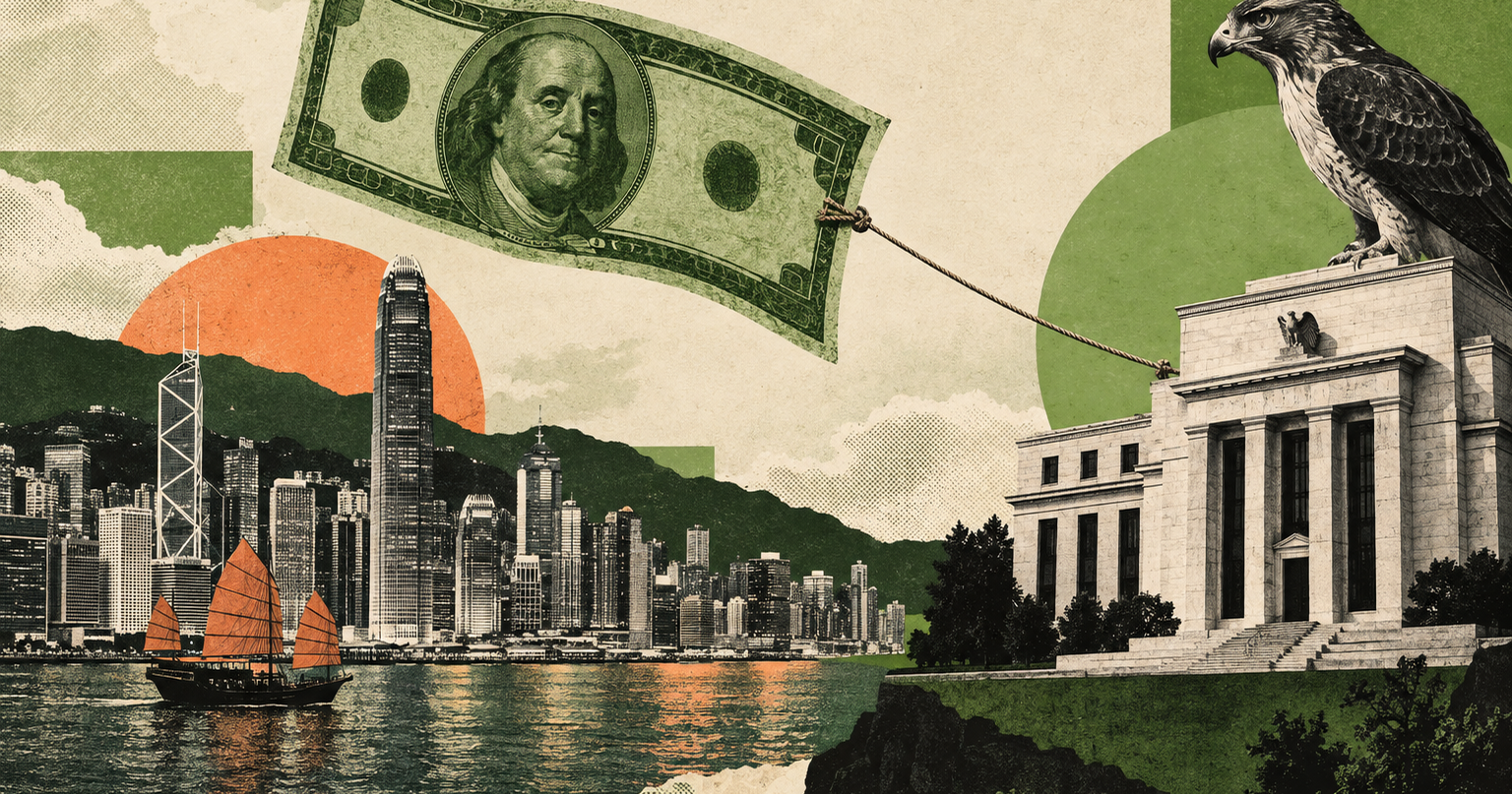
A top House China hawk is going after one of the quieter pipes in global finance. Rep. John Moolenaar (R-Mich.), chairman of the House Select Committee on the Chinese Communist Party, sent the Federal Reserve a letter last week urging it to review the Hong Kong Monetary Authority's access to the Fed's emergency dollar facility, CNBC reported.
The facility is the Foreign and International Monetary Authorities (FIMA) Repo Facility. It lets foreign central banks borrow dollars from the Fed using their US Treasury holdings as collateral. The Fed created it in 2020 so governments could get dollars in a crisis without dumping Treasurys, a fire sale that could send prices spiraling.
A lifeline Hong Kong barely touches
Hong Kong was one of the first in. Fed officials said in 2020 that it "could be a template for others." According to Moolenaar's letter, Hong Kong drew up to $1.4 billion in May 2020 and has not materially used the facility since. The Fed's latest data show nobody using it at all as of last Wednesday.
Moolenaar's argument is about what Hong Kong has become. He cites "the complete dismantling of the legal and institutional autonomy that has historically distinguished Hong Kong from mainland China and justified its preferential treatment under U.S. law." And he worries Beijing is using the city as a laboratory for pushing the yuan as an alternative to the dollar.
Beijing's copy
The copying part is not hypothetical. The People's Bank of China launched its own version of FIMA in June, lending Chinese government bonds short term to central banks. Hong Kong was its first user, PBOC Governor Pan Gongsheng said in July.
"The Federal Reserve's own facilities should not be a passive participant in that process, nor should the Chinese Communist Party be allowed to copy and paste the U.S. system for its use," Moolenaar wrote. He also argued the low usage makes this the right moment: "Precisely because the current financial stakes are modest, now is the appropriate moment for deliberate review rather than reactive action under crisis conditions."
The Fed received the letter and plans to respond. The HKMA declined to comment.
Not everyone is sold
Shehzad Qazi of China Beige Book doubts Fed Chairman Kevin Warsh will take a step that could look like meddling in China policy at a sensitive moment. Still, he called the letter "an example of the novel ways Congress could begin asserting its role in China policy," and described the US-China truce as "very tenuous." On the surface the mood is warm, with Trump recently hosting Xi Jinping in Washington on a cheerful note, even as Beijing has been threatening retaliation against Europe over trade.
Cornell's Eswar Prasad thinks the plan backfires. "FIMA's repo facility, if anything, increases the prominence of the dollar in global finance and also bolsters U.S. Treasury securities' role as a global safe asset," he said, so "it is hard to imagine that restricting access to this facility would in any way bolster the dollar's dominance or remove any threats to it."
The dollar's lead is not exactly fragile. It makes up 56.7% of global central bank reserves, against 2.1% for the yuan, according to the IMF. And Washington still treats FIMA as a tool worth promoting: in August, Treasury Secretary Scott Bessent urged Japan to use it to support the yen.
Some offers on this page may be paid placements or contain affiliate links.
Finpresso: daily AI & finance brief
Free daily newsletter, read in 5 minutes.
Subscribe free