
Saudi East-West Oil Pipeline Out for 3 to 5 Weeks
Saudi Arabia closed the East-West (Petroline) pipeline on Friday after drone attacks it blamed on Iran-backed militias in Iraq. Two regional officials told AP repairs could take three to five weeks. Rystad says 2.6 million to 4 million barrels a day out of Yanbu is at risk, about 4% of global supply at the high end.

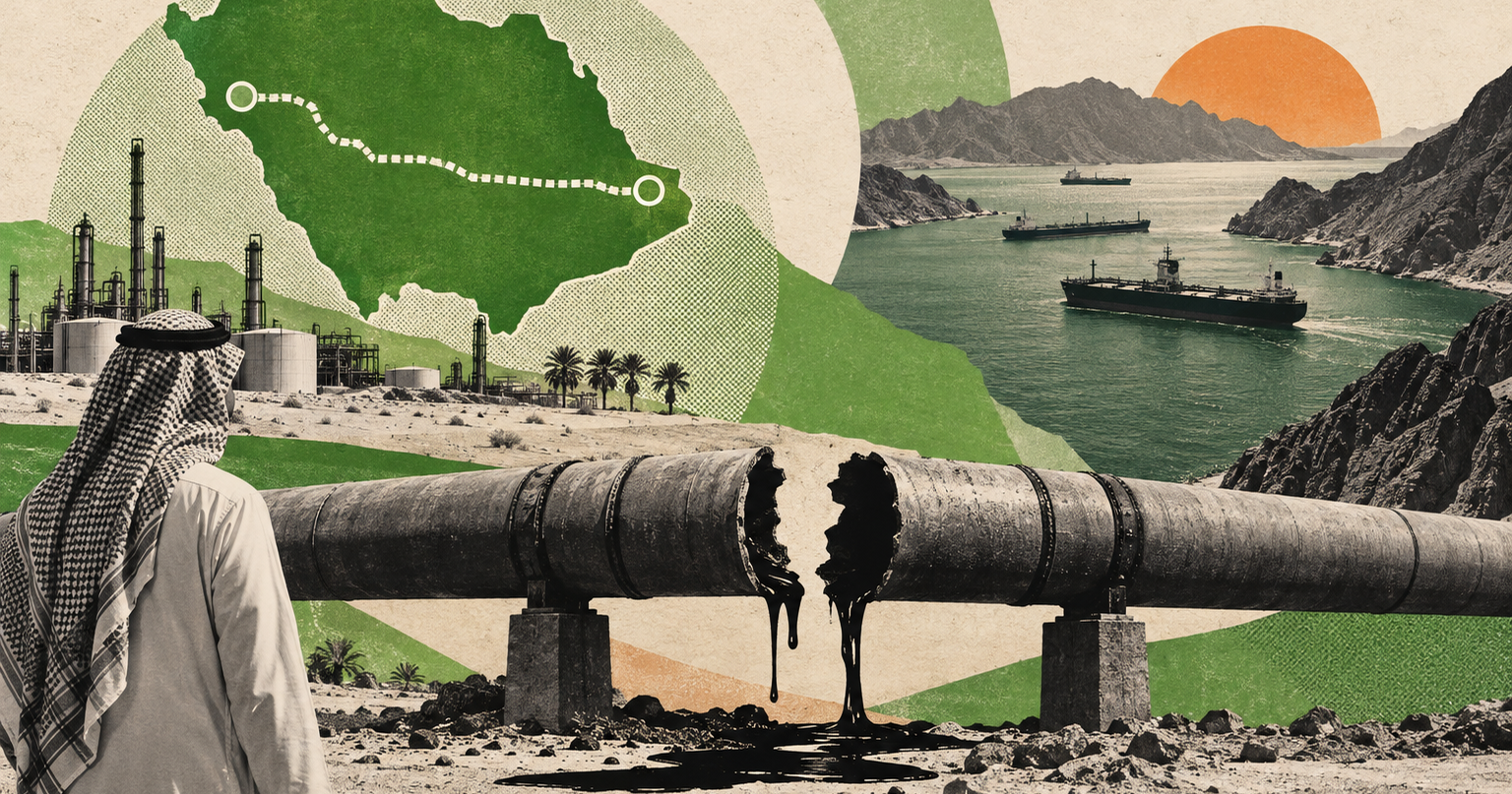
Saudi Arabia closed its East-West pipeline on Friday after drone attacks it blamed on Iran-backed militias in Iraq, according to AP reporting carried by Fortune. Two regional officials told AP that repairs could take three to five weeks. The strikes hit stretches in the Riyadh and Medina regions, and injuries were reported.
That three-to-five-week window is what two regional officials told AP, not a published ministry timetable.
The East-West line, also called Petroline, runs about 1,200 kilometers (roughly 746 miles) from Gulf-side processing near Abqaiq west to Yanbu on the Red Sea. It was built in the 1980s as a Hormuz bypass, and design capacity is cited at about 7 million barrels a day after expansions. Rystad told AP that an average 2.6 million to 4 million barrels a day moved through the pipeline and out of Yanbu since late August, a volume now at risk. The IEA says 4 million barrels a day is about 4% of global supply.
CNBC adds the market colour. Rystad's Janiv Shah said Saudi inventories may cushion exports for about five to seven days, and that a longer disruption changes the price reaction quickly. Analysts told CNBC prices are unlikely to fall below $100 soon.
Fortune had Brent above $105 on Monday. CNBC's Tuesday morning print put November Brent at $106.29, up 0.6%, and October WTI at $102.61, up 1.2%. Brent is up more than 21% and WTI more than 25% over the past month.
Hormuz is only a partial offset. Before the war, about 20 million barrels a day, roughly a fifth of world oil, moved through the strait. Lloyd's List Intelligence counted 90 Hormuz transits in the first week of September, versus about 130 ships daily before the war. Houthis also threaten Red Sea and Bab el-Mandeb routes that Yanbu cargoes would use.
Near-term Saudi exports may still run on inventories. Actual lost barrels depend on how fast those stocks drain and whether Hormuz or Red Sea alternatives partly replace Yanbu. CNBC also quoted Andy Lipow of Lipow Oil Associates suggesting repairs could take months. Riyadh has not published a restart timetable of its own.
Some offers on this page may be paid placements or contain affiliate links.
Finpresso: daily AI & finance brief
Free daily newsletter, read in 5 minutes.
Subscribe free