
SK Hynix breaks ground on $4B Indiana HBM plant
SK Hynix broke ground on a more than $4B facility in West Lafayette, Indiana, its first US HBM base. The money detail the headline hides: it is a packaging and testing plant, not a wafer fab. The high-value front-end stays in Korea.
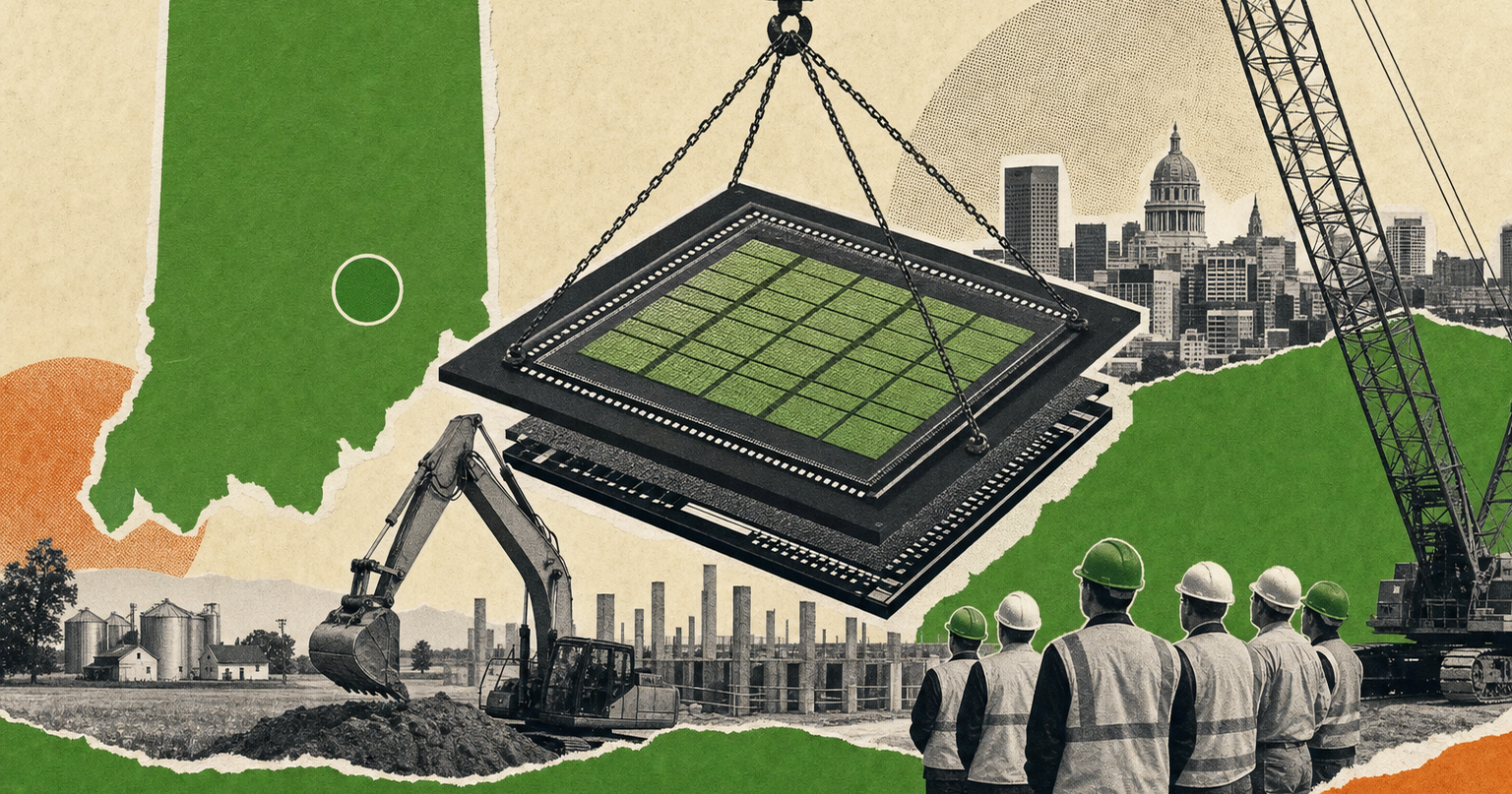
SK Hynix on August 27 broke ground on a more than $4 billion facility in West Lafayette, Indiana, its first U.S. production base for high-bandwidth memory, the chips that sit on top of every AI accelerator. The ceremony was held at Purdue University. Ground is only now breaking, so the dollar figure is a start, not capacity coming online.
The word the headline leaves out: packaging
The money story is in one distinction. The site is an advanced packaging and testing facility, not a front-end wafer fab. SK Hynix's own newsroom is explicit that the "cutting-edge wafers produced in Korea will be shipped to Indiana for advanced packaging, testing, and final delivery" as Made-in-USA products. HBM is built by stacking DRAM dies into a tower and bonding them. The capital-intensive, highest-margin step, fabricating those DRAM wafers, stays in South Korea. Indiana gets the assembly, the test floor and the jobs.
Washington has been pressing for domestic memory manufacturing. What it is getting here is the back end of the process, not the crown-jewel fab. For SK Hynix the logic is clean: put the politically visible, lower-capex stage close to U.S. customers and policy, keep the expensive front end where it already runs at scale.
The timeline and what $4B buys
The spend does not convert to output soon. SK Hynix targets a cleanroom opening in October 2028 and mass production of its next-generation HBM in the second half of 2029, a window Reuters (via Quartz) pins to the third quarter and to the HBM4E generation. The first Indiana-packaged chips are roughly three years out.
On labor, the company puts the facility at about 1,000 workers during commercial operations, and roughly 7,000 jobs once construction, operations and suppliers are counted. That gap between the headline job number and the steady-state headcount is the usual construction-versus-operations split.
A Korea-U.S. HBM belt, and who showed up
The groundbreaking drew Indiana Governor Mike Braun, U.S. Senator Todd Young, Purdue President Mitch Daniels and South Korea's ambassador Kang Kyung-wha. CEO Kwak Noh-Jung framed it as a strategic pivot: "Today marks the day when the United States and SK hynix embark on a new future of AI together," and he pledged the company "will become the most trusted partner in shaping the future of AI in America." He told CNBC the site would make Indiana a "key HBM production base in America" by 2030.
It fits a memory market that has become the tollbooth on the AI buildout, the same demand pulling on Nvidia's Q2 guide toward $96B to $108B. Nothing ships from Indiana before late 2029, and even then the wafers, and the margin, are still made in Korea.
Some offers on this page may be paid placements or contain affiliate links.
Finpresso: daily AI & finance brief
Free daily newsletter, read in 5 minutes.
Subscribe free