
SpaceX Locks In $40 Billion of Debt for Nvidia Chips as Musk Warns 200 Neoclouds Face Guppy-Level Death
SpaceX signed a binding commitment with an Apollo-managed entity for about $40 billion of GPU financing, and Elon Musk said debt markets have shut out AI cloud companies without other revenue.

Elon Musk says SpaceX has borrowed $40 billion to buy Nvidia chips, and he used the news to deliver a warning to everyone else in the AI cloud business: the money has dried up for them.
On Sunday, Musk posted on X that SpaceX had closed $40 billion in debt financing for GPUs, crediting its investment grade ratings and the revenue from Starlink and rocket launches. A follow-up post said it is mainly callable debt for GPUs expected to arrive in the first and second quarters of 2027. On Monday, a SpaceX regulatory filing said the company had signed a binding commitment with an Apollo-managed entity for roughly $40 billion in GPU financing, CNBC reports.
"Guppy-level death"
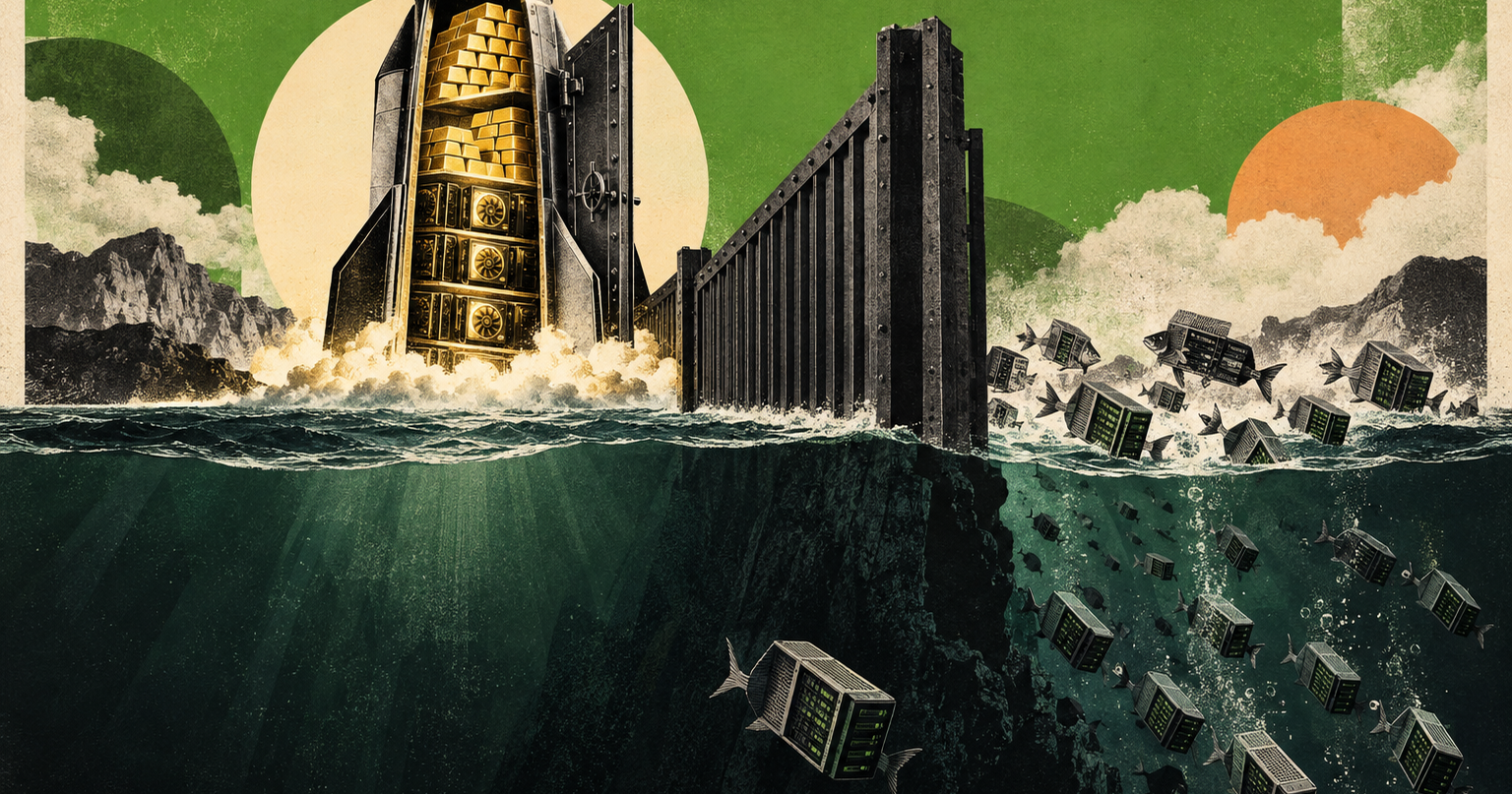
"As of the past few weeks, debt markets have almost entirely shut off access to money for any company that doesn't have substantial revenue independent of AI data centers," Musk wrote. Then the line that will travel: "The 200+ neoclouds are going to see guppy-level death and consolidation. Some will make it through, but not many."
Neoclouds sell high-end computing power to tech companies, and they have come under intense scrutiny over the past two weeks for heavy borrowing and questions about demand, Bloomberg reports. Musk later added that SpaceX won't buy any of them, calling it "pointless." SpaceX shares, which trade under the ticker SPCX, closed Monday at $147.55, up 0.44 percent.
What "closed" means
Bloomberg noted it was not immediately clear what Musk meant by "closed," or whether investors had agreed on pricing. Pricing talks for the off-balance-sheet structure had been caught in the recent neocloud market turmoil, Bloomberg reported on Friday.
Bankers led by Goldman Sachs had discussed the structure with investors led by Apollo, with Apollo-backed Atlas SP slated to manage the entity, according to people familiar with the matter. Pimco had also considered investing, and the debt was expected to be sold as 144a private placements.
The structure would also let SpaceX avoid a repeat of last year. xAI tried to raise up to $20 billion off balance sheet through a sale-leaseback with Valor Equity Partners, and SpaceX ultimately had to record about $13 billion of that debt after it was declared a "failed sale-leaseback arrangement," according to its latest earnings report.
The business behind the borrowing
SpaceX can make the pitch because AI is now its biggest business. The unit it calls Super Intelligence saw third quarter revenue rise ninefold to $7.56 billion from $813 million a year earlier, and it turned a profit for the first time by selling compute from its Memphis data centers to outside AI labs and hyperscalers.
The company wants more. CFO Bret Johnsen said on the earnings call that SpaceX is talking to lenders about further borrowing. "We have a lot of conviction that we are going to be able to do this in a very measured fashion and continue to keep ourselves in that IG status along the way," he said.
It was a busy Monday for AI funding. The same day, Meta laid out a plan to sell up to $95 billion of stock to pay for AI. The giants with other revenue can still raise money at enormous scale. Musk's point is that almost nobody else can.
Some offers on this page may be paid placements or contain affiliate links.
Finpresso: daily AI & finance brief
Free daily newsletter, read in 5 minutes.
Subscribe free