
US Seizes $89 Million From a Tether Banking Partner and Leaves EQIBank Facing Liquidation
US prosecutors seized accounts tied to EQIBank and payment processor Capstone. EQIBank says $89 million, 80% of its cash, is frozen. Tether says its exposure is under 0.034%.

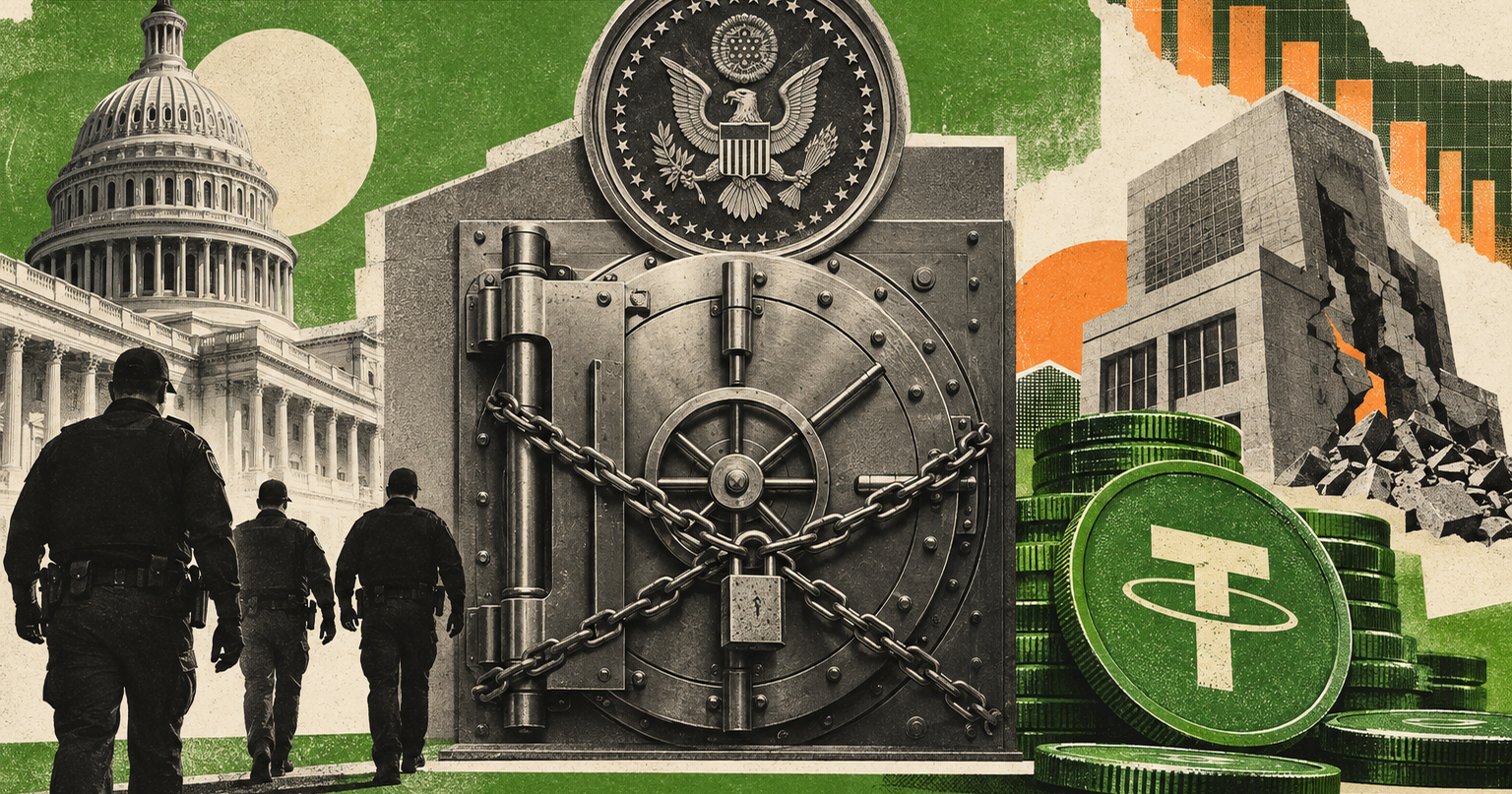
One of the small banks that helps people move dollars in and out of Tether is suddenly fighting for its life.
US prosecutors have seized accounts belonging to Capstone, a US payment processor, at Wells Fargo and JPMorgan Chase. They allege Capstone misrepresented its business to those banks while moving wires on behalf of EQIBank, a Dominica-licensed offshore digital bank, and Tether. EQIBank says about $89 million was taken, roughly 80% of its monetary holdings, putting it at risk of liquidation.
The plumbing behind USDT
EQIBank's role was unglamorous but important. It handled wires tied to purchases and redemptions of USDT, the point where stablecoins meet actual bank accounts. When that kind of gateway gets frozen, the problem is not the token itself but the pipe connecting it to dollars.
The case is a civil forfeiture action, not a criminal conviction, and nothing has been decided about EQIBank's future yet. Liquidation is a risk the bank has flagged, not an outcome.
Tether shrugs
Tether moved quickly to play down its exposure. It says its holdings at EQIBank amount to less than 0.034% of group assets. Against the $187.75 billion Tether reported in June, that caps the figure at around $64 million.
The company also said it had "no knowledge of the conduct by Capstone alleged by the DOJ." Tether's reserves were not seized, USDT has not lost its peg, and nobody is claiming a threat to either.
Counterparty risk, again
Still, the episode shows where stablecoins remain fragile. Issuers can hold pristine reserves and still depend on a chain of small banks and processors to get money in and out. If one of those links misleads a bigger bank, the whole route can be shut overnight.
That is precisely the kind of exposure US regulators are trying to pin down as they write stablecoin rules under the GENIUS Act. For EQIBank, the question is simpler: whether it can survive losing most of its cash while the case plays out.
Some offers on this page may be paid placements or contain affiliate links.
Finpresso: daily AI & finance brief
Free daily newsletter, read in 5 minutes.
Subscribe free