
Trump Announced an Energy Ceasefire Kyiv Hadn't Heard Of and Moscow Hasn't Confirmed, and Oil Fell Anyway
Trump declared an energy ceasefire between Russia and Ukraine on Truth Social. Zelensky said it was news to him, Russia has not confirmed it and a Kharkiv power plant was hit that evening, but oil prices fell on Monday.
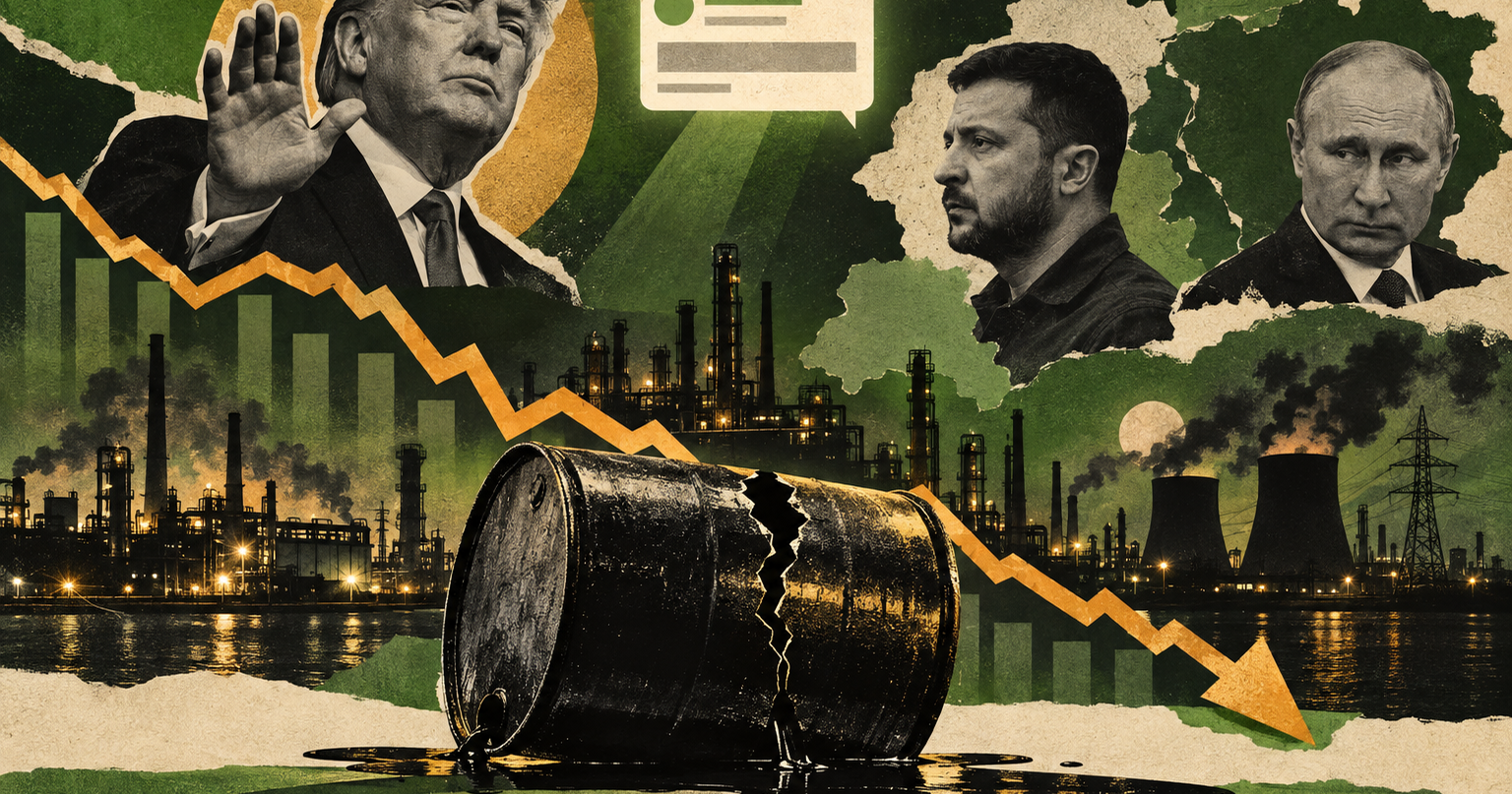
One post on Truth Social was enough to knock oil prices lower on Monday, even though one of the two countries supposedly bound by it said it was hearing about it for the first time and the other has not confirmed it.
"Effective immediately, there is an ENERGY CEASEFIRE in the War between Russia and Ukraine. Both parties have agreed. Do not break it!" Trump wrote early Sunday. By Monday's Asian session, WTI was down 1.5% at $90.50 and Brent down 1.2% at $103.48, and most stock markets rose.
Nobody else seemed to know
The post came after Trump called on Volodymyr Zelensky to stop attacking Russian refineries and said it was "time for Ukraine to get a new president." Zelensky appeared surprised and said he was seeking details, but added: "Ukraine supports the ceasefire, and it is important that Russia support it as well."
Moscow has not confirmed anything. Igor Ananskikh, first deputy chair of the State Duma's energy committee, said he had no information about a ceasefire. "We all know that Trump often says things to keep oil prices from rising. I don't know how closely this reflects reality," he said.
The strikes did not wait for clarity. Kyiv said Russia hit multiple power plants, and around 8 pm Zelensky reported: "Just now, there was a strike on CHP-5 in Kharkiv, on Kharkiv's energy infrastructure." Ukraine's Presidential Office confirmed the strike came after Trump's announcement.
It has happened before. On September 14, Trump claimed both countries had agreed "not to hit" each other's energy infrastructure, and nothing came of it. This time he again offered no details.
The diesel problem behind the post
The pressure is at the pump. US diesel is up almost 70% since the start of the Iran war, to about $6.30 a gallon, and those prices are a political liability for Republicans going into next month's midterms. The White House has been grasping for fixes, from backing a halt to US diesel exports as record pump prices sparked midterm panic to a deal with Vladimir Putin.
On Friday, Trump announced that deal: a temporary lifting of sanctions on Russian diesel, with 300,000 tonnes released immediately, then 500,000 tonnes in November and a further 1 million tonnes after that. Treasury suspended sanctions on Russian diesel exports until April 7. The first tranche is about three quarters of what the US uses in a single day, and shipping takes about three weeks, landing roughly a week before the vote.
"It is not going to have any impact on prices. The first amount is so small," said Ashley Kelty, an energy analyst at Panmure Liberum. Treasury Secretary Scott Bessent disagreed on Sunday: "This is good for the American people ... bringing these diesel prices down."
Zelensky called the diesel deal a "weak decision," while Trump blamed Kyiv's refinery strikes for rising fuel prices. On Sunday, Zelensky said Ukraine would be ready to stop hitting Russian refineries if Russia curbed its attacks on Ukrainian energy infrastructure. Maximilian Hess of Enmetena Advisory sees a trap: "The whole point of the deal for Putin is that it fails, which he can blame on Ukraine and thus stoke tensions between Trump and Zelenskyy. Indeed, it's already working."
A market learning to shrug
Monday's drop also erased an earlier spike. Over the weekend, Houthi attacks on Saudi Arabia killed at least a dozen people at Riyadh's international airport, the deadliest attack on Saudi soil in more than a decade.
"The market is no longer paying full geopolitical premium on every headline," said Stephen Innes of SPI Asset Management. "The physical market remains tight enough to keep Brent above $100, but futures are refusing to treat every new escalation as the start of another straight-line inflation shock."
Traders now turn to US inflation and retail sales data, earnings this week from JPMorgan, Goldman Sachs and Bank of America, and a Fed meeting at the end of October.
Some offers on this page may be paid placements or contain affiliate links.
Finpresso: daily AI & finance brief
Free daily newsletter, read in 5 minutes.
Subscribe free