
Tariffs Cost Audi $1.4 Billion, So It Will Build Its First US Plant, and Trump Announced It at a Rally
Audi will spend about $4 billion on its first US factory near Macon, Georgia, after tariffs cost it 1.2 billion euros last year, and Trump unveiled the plant at a midterm rally.

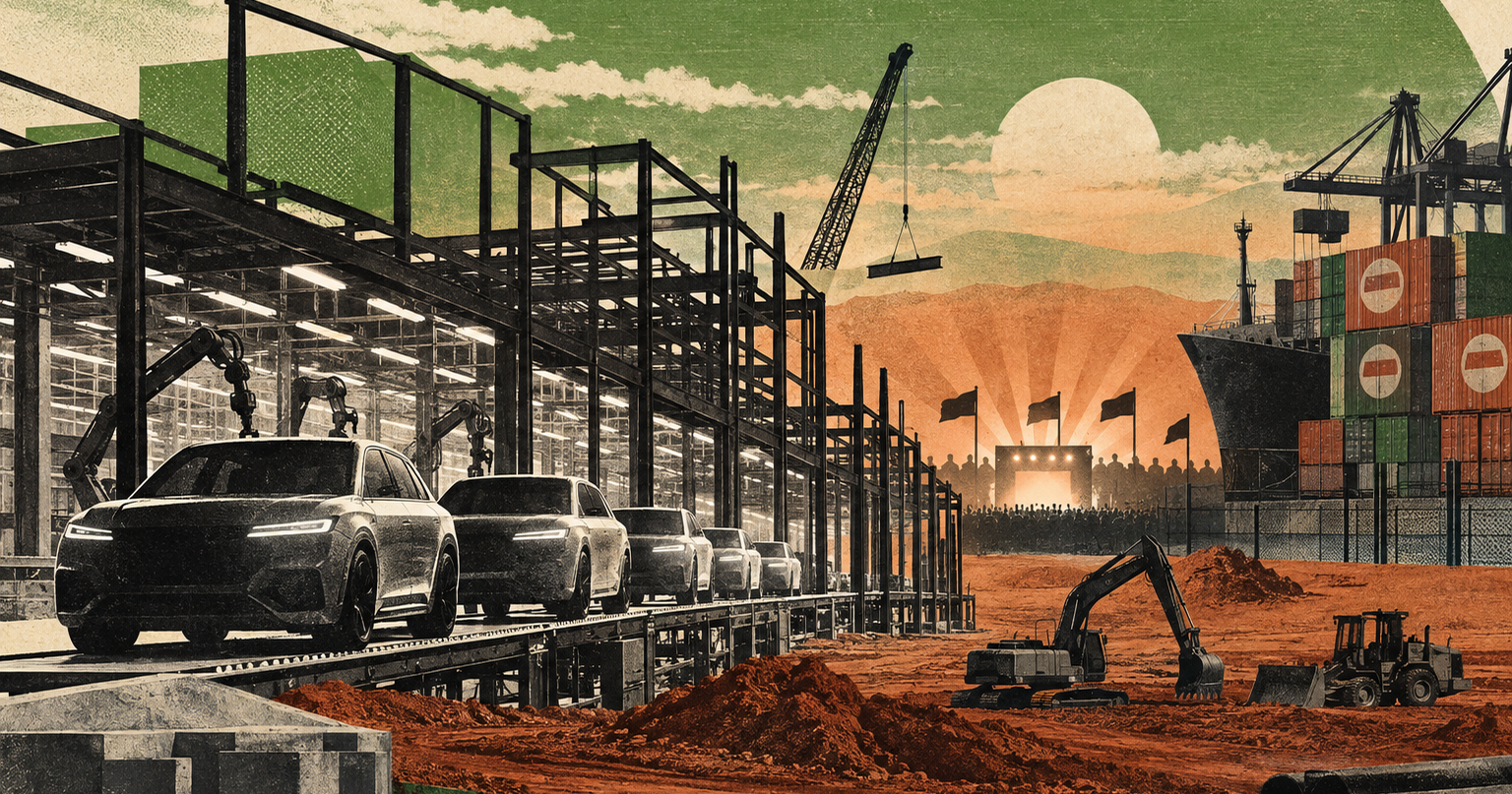
Audi is finally building cars in America, and the tariffs did it. The last major German luxury brand without a US factory will spend about $4 billion on a plant near Macon, Georgia, and the man who announced it was Donald Trump, on stage at a midterm rally, crediting his tariffs.
Audi's own boss does not dispute that. US tariffs cost the company 1.2 billion euros ($1.4 billion) last year, because every car it sells in the US is imported from Europe or Mexico.
The plant
According to Audi's announcement, the factory at the Middle Georgia Mega Site will create about 4,500 jobs and build up to 200,000 vehicles a year. Construction starts in 2027 and production in the early 2030s. It will make the Q7, Q8 and Q9 SUVs, and roughly half of the output will be exported outside the US.
The company says a stronger North American presence will "reduce exposure to trade and currency risks" and turn the region into a third production pillar alongside Europe and China. Mercedes-Benz and BMW made that move long ago.
Timed for a rally
Trump unveiled the project at a rally in Perry, Georgia on Saturday, describing it as a $4.2 billion investment and crediting tariffs.
The stage was not Audi's idea. CEO Gernot Dollner told reporters at a roundtable reported by CNBC that the administration asked Audi to make the announcement at the event, which promoted Republicans ten days before the November 3 midterms. He described it as "a three year project that, at the end, by coincidence, led to that moment yesterday." As he put it: "With respect of the office and country, we joined the invitation."
Dollner said the decision was years in the making, with more than 70 locations evaluated and "intense" negotiations with officials. The tariffs clearly sharpened it. Duties on German vehicles now sit at 15 percent, down from 25 percent, but even that leaves an all-import brand exposed. Not every company is adapting quietly; Trump's tariffs have drawn legal fights, like the cheese importer suing over the 50 percent Canada tariffs.
Growth abroad, cuts at home
Dollner framed the plant as ambition. "We have significantly greater ambitions for Audi in America," he said. "The United States is the second largest premium market in the world, and today we are not fully exploiting this potential. We are changing that."
There is room to grow. Audi's US deliveries were roughly flat through the third quarter this year, after a 16 percent drop from 2024 to 2025.
The timing back home is harder. Parent Volkswagen is restructuring, with plans to cut 50,000 jobs and close four German plants, including an Audi facility, between 2031 and 2034. Dollner insists the two are separate. "This is not a decision against Germany," he said. "Germany remains the backbone of Audi."
For Trump, the plant is the cleanest proof yet of his tariff pitch: a foreign carmaker pulling a factory onto American soil, delivered on cue before an election.
Some offers on this page may be paid placements or contain affiliate links.
Finpresso: daily AI & finance brief
Free daily newsletter, read in 5 minutes.
Subscribe free