
US automakers urge ban on Chinese connected vehicles
The Alliance for Automotive Innovation asked Congress in a 3 September 2026 letter to ban the sale, import and manufacture of Chinese connected vehicles.

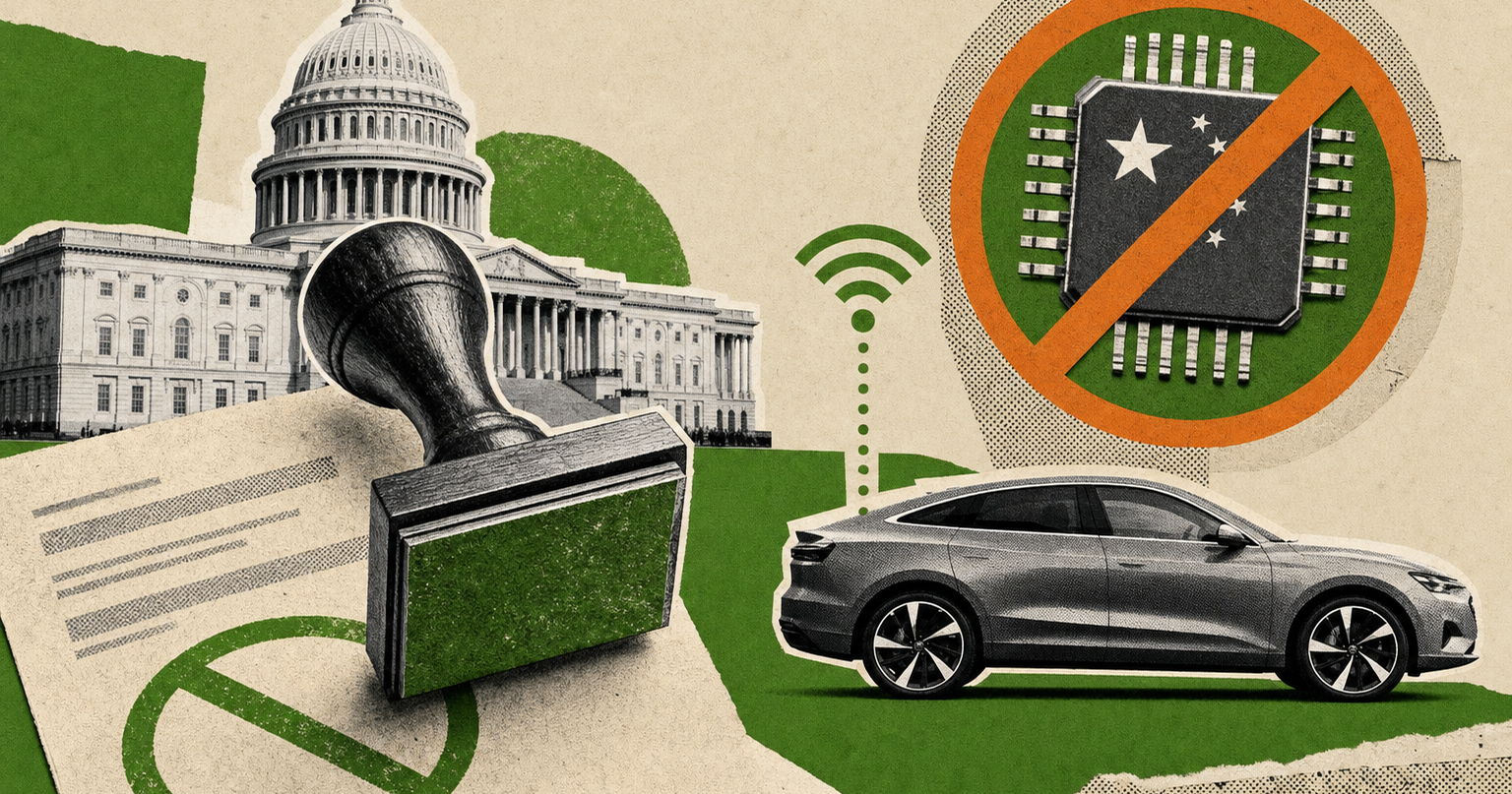
US automakers, through the Alliance for Automotive Innovation, asked Congress to ban the sale, import, and manufacture of Chinese connected vehicles, hardware, and software before the 119th Congress ends. CEO John Bozzella sent congressional leadership a 3 September 2026 letter and a matching press release, addressed to Speaker Johnson, Majority Leader Thune, Minority Leader Jeffries, and Minority Leader Schumer. The letter is a trade-association ask, not enacted law, not a Customs ban, and not a White House order.
Bozzella wrote that Chinese automakers are "dumping subsidized vehicles with connected software and hardware around the world" and capturing share in Europe, Australia, Southeast Asia, Mexico, and South America with vehicles that can collect and transmit sensitive vehicle and consumer data. He added, "This hasn't happened inside the U.S. yet," and urged a ban "before adjourning this year." The letter frames that as a "national security policy response" to China's manufacturing strategy.
The letter sizes the industry at 11 million American jobs in all 50 states and nearly $1.5 trillion a year. The press release also says the sector supports more than 5 percent of the economy.
The push is aimed at the floor before the session ends, not a new bill drop. Senate Commerce ordered the bipartisan Connected Vehicle Security Act of 2026 (S.4429) reported with a substitute favorably on 22 July 2026. Sen. Bernie Moreno (R-OH) introduced it on 29 April 2026. The letter also cites the House companion H.R. 8730 from Reps. John Moolenaar and Debbie Dingell, and the Motor Vehicle Modernization Act (H.R. 7389, Sec. 301) that House Energy and Commerce approved in May, barring foreign adversaries including China from manufacturing, introducing into interstate commerce, or importing motor vehicles.
CNBC notes the Alliance wants action before the session ends 3 January, and that November midterms may affect momentum. CNBC also reports a Senate draft could create Mercedes exposure because Chinese investors hold nearly 20 percent of the German automaker. Mercedes remains an Alliance member. The letter itself asks for a "balanced policy so all our member companies continue to succeed and thrive inside the U.S."
China trade pressure is already on the tape in the G20 non-market wording fight. The Alliance letter is not an in-force Chinese-car ban.
Some offers on this page may be paid placements or contain affiliate links.
Finpresso: daily AI & finance brief
Free daily newsletter, read in 5 minutes.
Subscribe free