
Broadcom, Verizon, and UnitedHealth Object to Their Shares Trading as Tokens on the NYSE Owner's Crypto Venue
Nine companies including Broadcom, Verizon and UnitedHealth have objected to their stock trading as blockchain tokens on OKXICE, the venue from OKX and NYSE parent ICE, which keeps them off it under SEC rules. Nasdaq is opting its own shares out too.

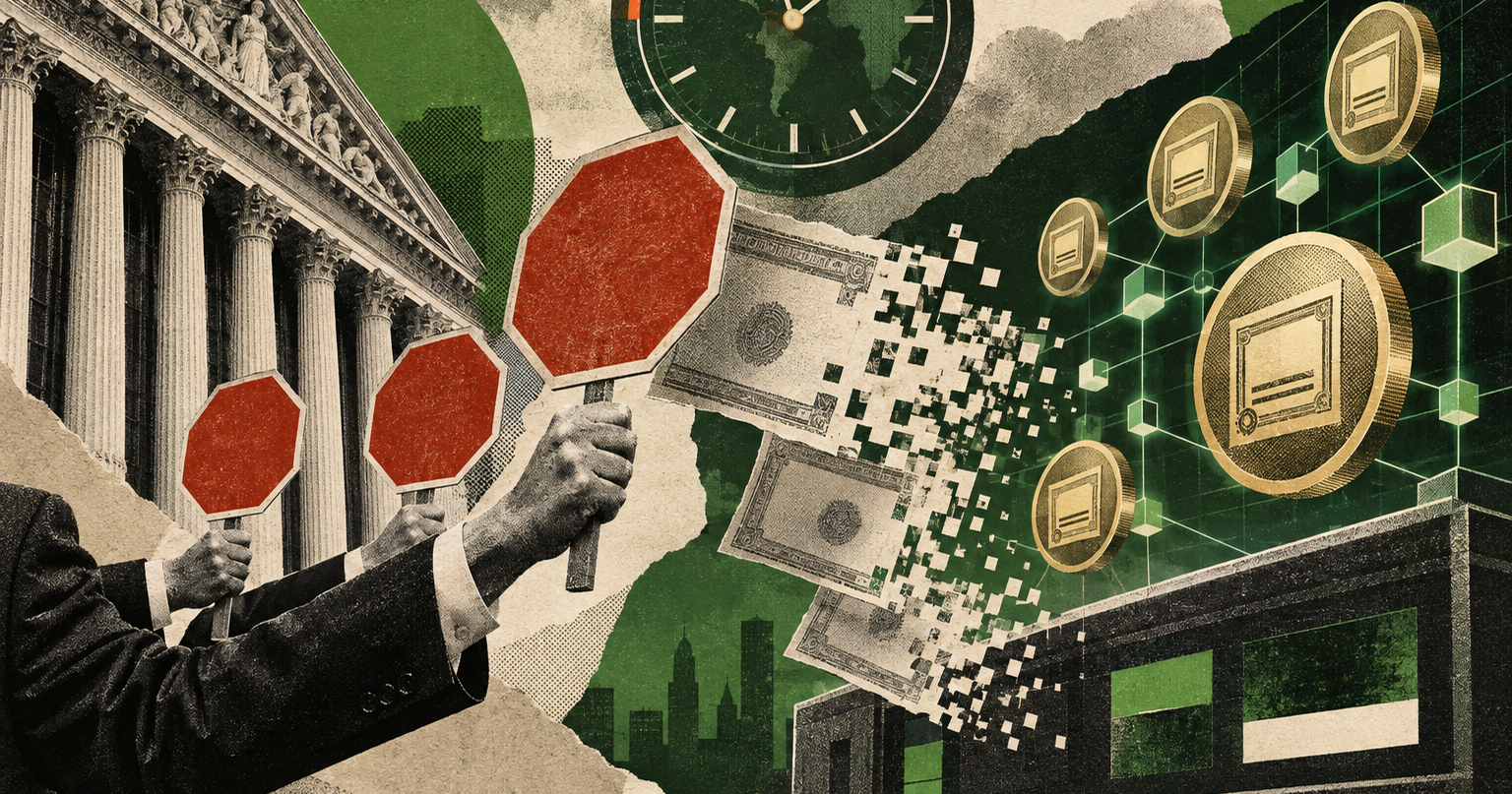
Washington opened the door to tokenized stocks last month. Now the companies whose shares would actually trade are closing it, one by one. Nine issuers, including Broadcom, Verizon and UnitedHealth Group, have objected to having their stock offered as blockchain tokens on OKXICE, the new venue from crypto exchange OKX and New York Stock Exchange parent Intercontinental Exchange.
Under the SEC's rules, that objection is enough. The venue cannot offer tokenized versions of any company that says no.
The list keeps growing
OKXICE told the SEC on October 5 that it planned to launch, initially targeting shares of 63 US-listed companies. Former New York Gov. Andrew Cuomo, the venture's co-chair, announced it on X.
Its public notice dated October 15 lists nine objectors: Broadcom, Verizon, UnitedHealth Group, AppLovin, Applied Digital, Rocket Lab, CoreWeave, Applied Optoelectronics and Cerebras Systems. CoreWeave has had a rough few weeks already, with its bonds trading at distress levels as AI stocks shed $1 trillion.
The roster grew with every revision. The first version, dated October 4, already recorded one objection, from Cerebras, which was not among the 63 and had formally opted out earlier. An October 8 update added AppLovin, Applied Digital and Rocket Lab. The October 15 version added the other five. Eight of the nine were on the original list. The notice does not say why the companies objected or when, and it sets no launch date.
How the venue would work
The opening came from the SEC's five-year Innovation Exemption, issued September 17, which lets qualifying platforms trade tokenized US stocks using automated market makers and liquidity pools. Tokenized stocks are blockchain-based representations of shares.
OKXICE plans to run around the clock, using Uniswap v4 liquidity pools on OKX's X Layer blockchain, with trades settled in stablecoins. A registered broker-dealer would hold the underlying shares one-for-one against outstanding tokens. Token holders must get equivalent rights, including dividends and voting.
Nasdaq says no, too
Nasdaq, which is not among the nine, has separately said in an FAQ on its website that it will opt its own shares out of tokenization under the framework. A Nasdaq spokesperson said the company does not want its stock trading on a venue that does not display best prices in real time or report to the consolidated tape, the feed that aggregates stock market trading data.
Little appetite outside crypto
Wall Street is hearing the same thing privately. TD Securities analysts led by Reid Noch, vice president of US equity market structure, spoke with dozens of issuers and found "little interest in tokenizing their shares outside a small group of crypto-adjacent companies." Several came to the firm with significant concerns after learning about the framework, having missed it entirely when it was announced.
TD sees the biggest hurdle in the rules themselves. The framework rests on temporary exemptive relief, not permanent rules, so a future commission could reverse it. That makes it harder to justify building infrastructure and discourages institutions from plugging in even after venues go live. It also stings more because overseas platforms can keep selling synthetic stock products without the operational requirements the US relief imposes.
Some offers on this page may be paid placements or contain affiliate links.
Finpresso: daily AI & finance brief
Free daily newsletter, read in 5 minutes.
Subscribe free