
After Banning Nvidia, China Turns Its Localization Drive on Broadcom's Network Switches
China's SASAC has surveyed Broadcom Ethernet switches inside state data centers, where penetration may reach about 90 percent, and could issue informal guidance to cut future purchases. China including Hong Kong was about 17 percent of Broadcom's FY2025 revenue, roughly $10.9 billion.
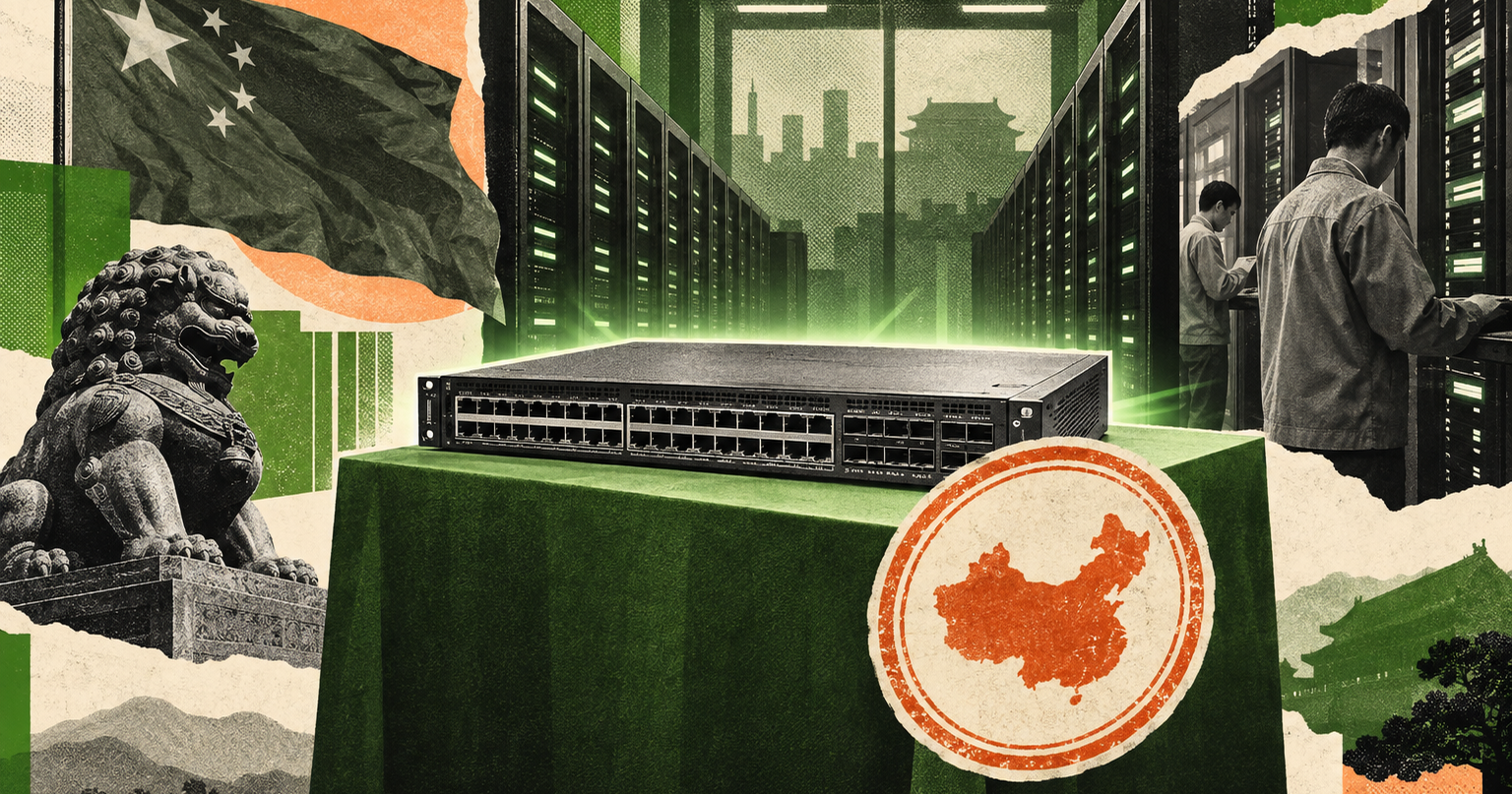
Beijing has already pushed Nvidia out of its state data centers. Now it is moving down the stack to the networking layer, and Broadcom is the name in the crosshairs.
China's state-asset regulator, SASAC, has surveyed Broadcom Ethernet switches sitting inside state-controlled data centers as part of a "domestic chips for domestic use" campaign, ZeroHedge reported, drawing on Financial Times reporting. People familiar with the matter told the FT that Broadcom's penetration among state-owned companies could reach roughly 90 percent. With Nvidia gear already barred from state-backed facilities, Broadcom is close to the last major American vendor left in that build-out.
The preliminary findings may push SASAC to issue informal guidance, telling state data centers to steer future purchases toward domestic suppliers such as Huawei, H3C, and Ruijie. This would not be a rip-and-replace order. Existing equipment would stay in place, and private operators such as ByteDance and Alibaba are reportedly exempt.
SASAC is also examining whether Broadcom leaned on its market power, bundling products or requiring bulk orders of tens of thousands of switch chips in ways that squeezed room for local vendors.
Here is the figure that frames the stakes. Broadcom's latest 10-K put China including Hong Kong at about 17 percent of FY2025 revenue, roughly $10.9 billion of $63.9 billion. That headline share overstates true Chinese end-demand, because ship-to accounting counts hardware that lands in China but serves customers elsewhere. The real exposure is smaller than the label suggests.
The hedges matter here. This is FT reporting sourced to people familiar, not a published regulation, and informal guidance is not a formal ban. Industry sources also note that Huawei switches can run less energy-efficiently than Broadcom's, so a full swap carries its own cost.
The move fits a wider pattern of Beijing hardening its tech supply chain even as its export machine runs hot, the same backdrop behind China's 25 percent August export jump on tech and AI demand. It also lands amid a broader fight over what counts as fair trade, echoing the G20 clash over China's non-market practices.
Some offers on this page may be paid placements or contain affiliate links.
Finpresso: daily AI & finance brief
Free daily newsletter, read in 5 minutes.
Subscribe free