
China's State Funds Poured Billions Into a Bear Market Right Before Xi's Big Meeting, and Investors Still Ran
China's state backed national team injected billions of dollars into stocks as markets entered bear territory during the Communist Party's Fifth Plenum, with tech names among the hardest hit.

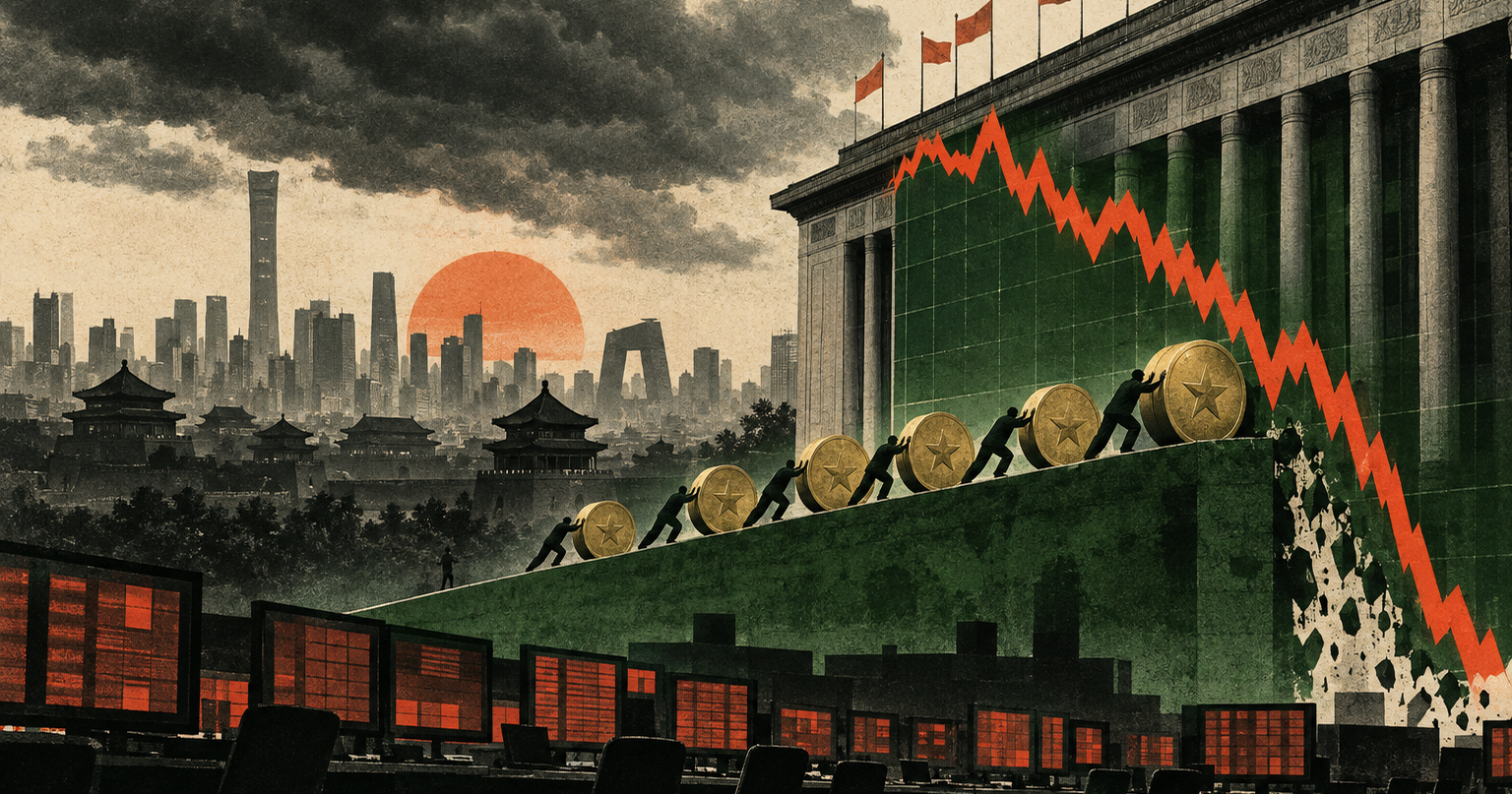
Chinese stocks officially slid into a bear market this week, just as the Communist Party's Central Committee gathered in Beijing for its Fifth Plenum. Beijing did not let that picture stand. Its "national team" of huge state funds stepped in with billions of dollars to stop a weekslong slide, Semafor reported.
The buying may have steadied prices. It did not steady people. One Chinese financial commentator said the intervention may have helped "prop up the market" but "it couldn't prop up investors' confidence." The Financial Times described Beijing as rushing to shore up struggling markets.
Xi's favorite stocks are bleeding the most
The worst damage is in the companies Xi Jinping has championed as "new productive forces," the tech and AI firms meant to replace real estate as the engine of the economy.
The Star50, a Nasdaq style index set up to finance China's high tech transformation, has been one of the world's worst performing tech gauges this year. Battery giant CATL is down more than 50% from its highs. Chipmaker MetaX Integrated Circuits has lost around half its value.
That is awkward timing. Xi, almost 14 years into his rule, is using this meeting to open a year of politicking aimed at extending it by another five. Semafor's China columnist argued that his vision of an AI enabled economy is "colliding head-on with structural realities": a shrinking workforce, rising debt and mounting geopolitical tension.
Discontent from the top to the bottom
The market slump sits on top of wider frustration, according to Semafor's column.
The wealthy were stung by a surprise 20% tax on offshore wealth held in trusts in Hong Kong and Singapore, which set off a rush for foreign passports. Some of that money had already been heading somewhere else, as wealthy Chinese families moved offshore funds into US banks beyond Beijing's tax net.
The urban middle class took the hit from the deliberately engineered bursting of the property bubble. In the countryside, factory automation has pushed workers into gig jobs with longer hours and lower pay.
A bounce with a short shelf life
Chinese stock markets are a poor barometer of the real economy, but they drive sentiment, and sentiment is what Beijing is trying to manage during a politically sensitive week. State money can put a floor under prices for a while.
Semafor's view is that the bounce is unlikely to last. The national team can buy shares. It cannot buy back the confidence of the people selling them.
Some offers on this page may be paid placements or contain affiliate links.
Finpresso: daily AI & finance brief
Free daily newsletter, read in 5 minutes.
Subscribe free