
China's Rich Are Moving Offshore Money to US Banks to Dodge Beijing's Tax Net, and Lawyers Say It May Not Last
After Beijing imposed a retroactive 20% tax on offshore trust income in July, wealthy Chinese are shifting assets from Singapore and Hong Kong to US banks, which do not report accounts to China.

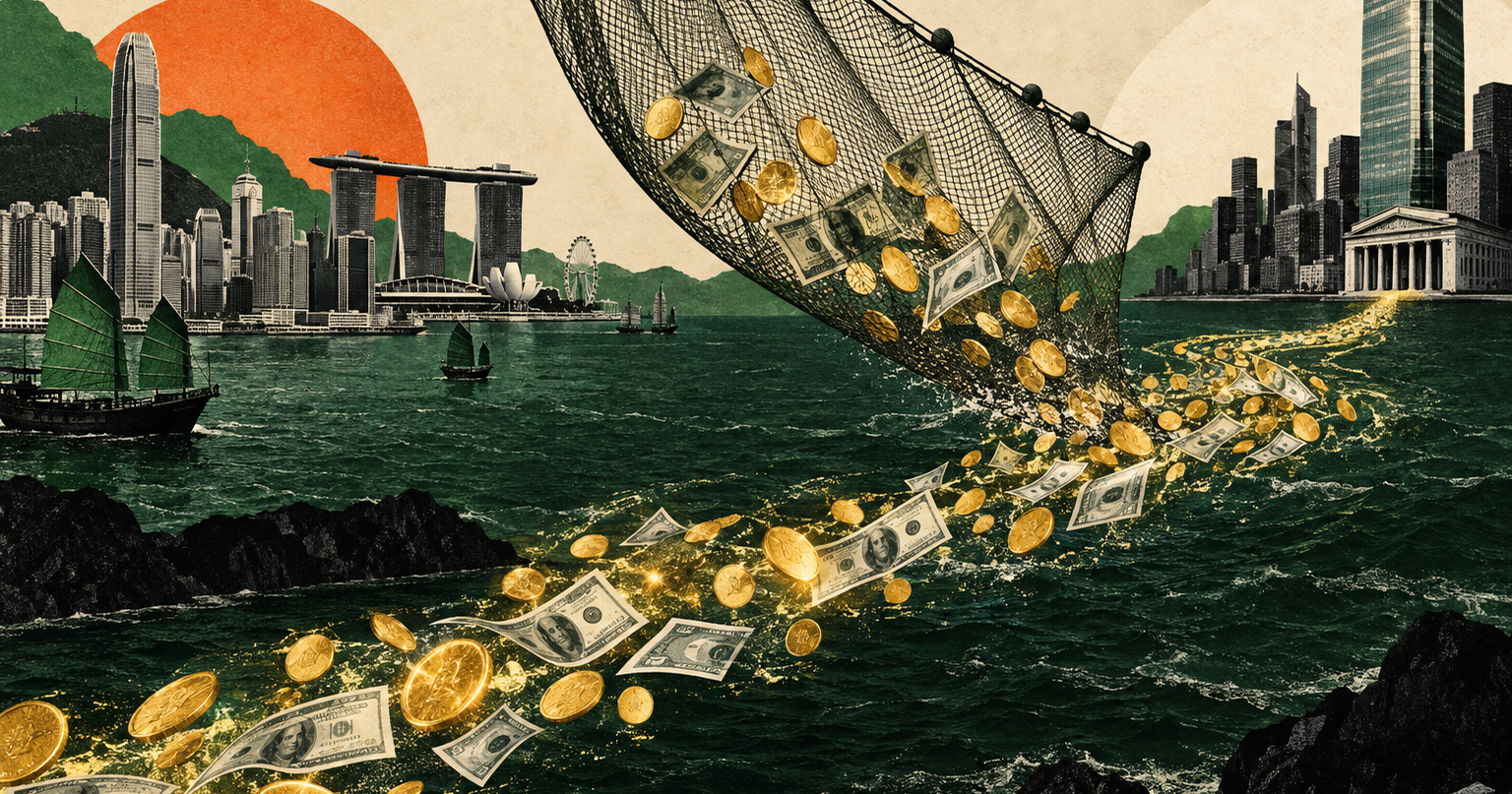
China's wealthy have found a new hiding place for their offshore money, and it is the United States. Since Beijing slapped a retroactive tax on offshore wealth in July, private bankers and lawyers with Chinese clients say inquiries about opening American bank accounts have grown, as clients move assets out of Singapore and Hong Kong to get further from Beijing's reach.
The reason is a gap in the global system for tracking money. The catch, lawyers warn, is that the money leaves footprints on the way out.
A retroactive tax bill
In July, Chinese authorities said income and gains from overseas trusts owned by Chinese tax residents would be taxed at 20%, retroactively. That set off a scramble. Lawyers in Singapore and Hong Kong are now tallying clients' tax bills, unwinding trusts, selling shares in listed companies, or arranging loans to pay what they owe. It comes as Beijing contends with a slowing economy and consumers who are holding back.
Some clients chose a different exit. "It has become relatively prevalent," Keith Tan, CEO of Singapore based Golden Acacia Capital, told CNBC. His clients began planning moves to the US in July, and some had accounts set up in under two months. "The hurdle is not that high for Chinese clients to open American accounts and transfer assets there," he said. The richest go to large private banks; smaller accounts land at regional banks or online brokers.
The American loophole
The United States sits outside the Common Reporting Standard, the OECD framework under which more than 100 jurisdictions automatically share financial account data. Banks in Singapore and Hong Kong are supposed to report China linked accounts to Beijing. American banks have no such duty.
The irony is hard to miss. Washington's FATCA law forces foreign banks to report their American clients, but there is no matching automatic flow of data from US banks to Beijing.
New York is eager to take the business. A New York based wealth planning advisor, speaking anonymously, said US banks are straining to keep up. "With inquiries surging, some banks have shortened the timeframe for clients to meet required minimum capital commitments" before accounts are subject to closure. Families whose children hold US green cards are using foreign grantor trusts, with Nevada and Florida popular choices.
"Hiding is not tax planning"
Lawyers are less enthusiastic. James Wang, CEO of Blue Brick Consulting Group, noted that non resident clients can find US investment vehicles with reduced or no IRS filing obligations. But China's rules still require its tax residents to self declare worldwide income.
Clifford Ng, a partner at Zhong Lun law firm in Hong Kong, put the bet bluntly. "They are gambling on not being disclosed, because the U.S. does not share information as part of the CRS system; they can dodge tax authorities," he said. The problem is that money already held in Singapore or Hong Kong has probably been reported to Beijing, so a transfer to a US bank would be visible on its way out. "They may still be in breach of the rules because they have an undisclosed offshore account that's making money and they're not declaring it onshore," Ng said. "Hiding is not tax planning."
Cris Cao, a Beijing based partner at W&H Law Firm, agreed. Moving money into US accounts "doesn't naturally reduce or wipe out the tax authorities' right to tax, or their obligation to pay," Cao said. "There was a record of it being transferred out," and "that alone is enough for the tax authorities to levy tax."
For money still inside China, the door is already closing. Moving funds that are already offshore is easy, said Jingkuan Lin, a private banker at Bank of Singapore. Getting capital out of the mainland is another story. "Nearly no sizeable money onshore will be able to leave the country from now on."
Some offers on this page may be paid placements or contain affiliate links.
Finpresso: daily AI & finance brief
Free daily newsletter, read in 5 minutes.
Subscribe free