
Europe Wants to Squeeze Chinese Chemicals, Furniture and Machinery Next, and Beijing Has Already Warned It Off
The EU is preparing safeguard caps or tariffs on Chinese chemicals, furniture and machinery that could be presented as soon as early 2027, modeled on its new hybrid car deal with Beijing.

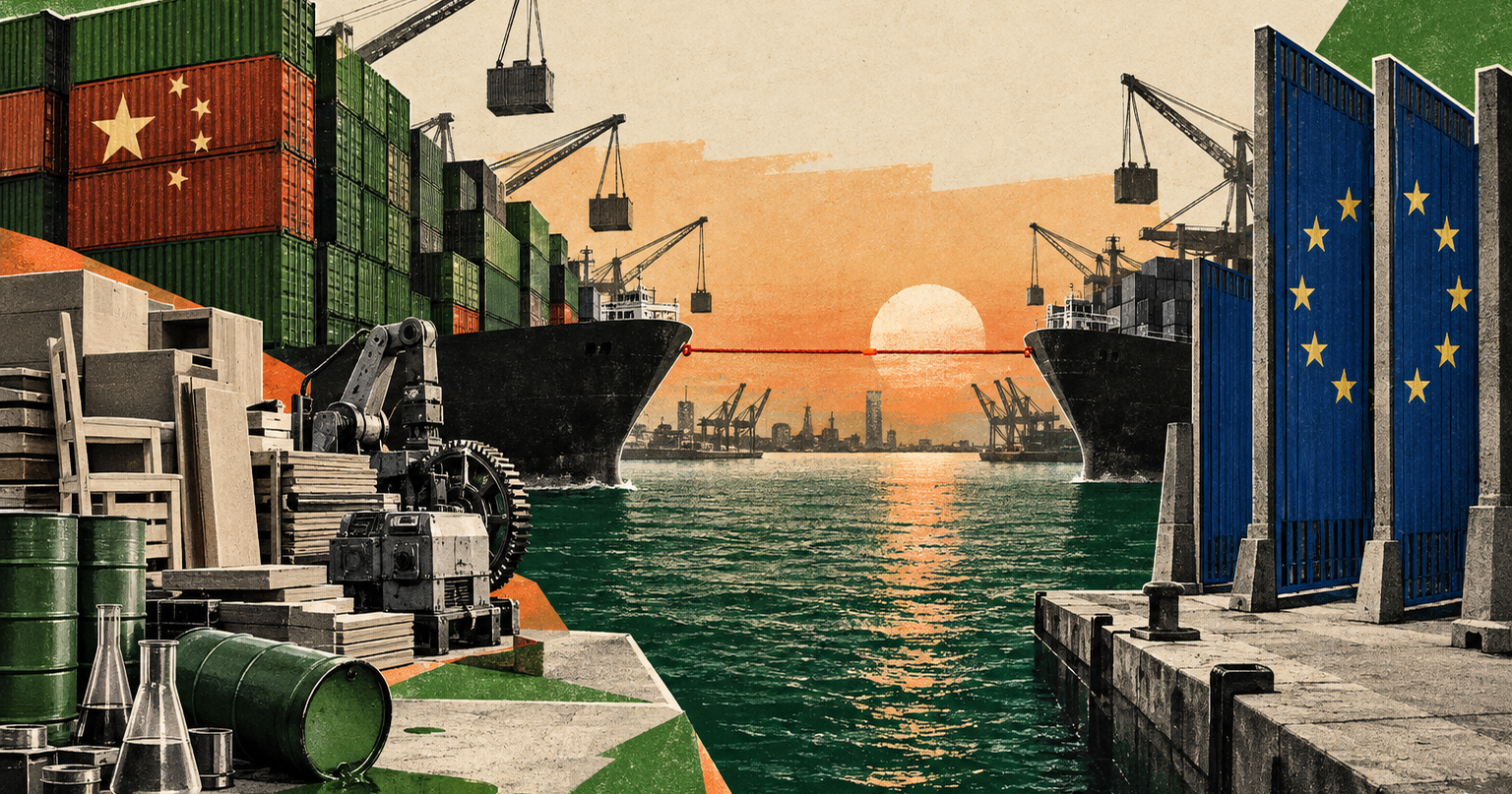
Europe buys more than $1 billion a day more from China than it sells there, and Brussels is getting ready to push back on a wider front. The EU is preparing safeguard measures to cut Chinese imports of chemicals, furniture and machinery, and they could be presented as soon as the first quarter of 2027, according to people familiar with the plans.
The measures would take the form of import caps or tariffs. The same people cautioned that the plans and the exact sectors could still change after talks with member states and with China. A Commission spokesperson declined to comment.
Copying the car deal
The template is the understanding Brussels reached with Beijing on October 9 to cap Chinese hybrid vehicle imports at 350,000 a year, nearly half the current level, starting in 2027. The cap was set high enough to discourage retaliation. In return, China lowers tariffs on some European goods such as auto parts, footwear, olive oil and ice cream, and smooths rare earth exports to the EU.
The Commission wants that cap in force in December. It would run four years, with China's quota rising 6% a year after the first.
Safeguards let the EU restrict a sector after a surge in imports, through quotas or a levy that kicks in above a set volume. Unlike the car deal, Brussels can impose them on its own, without Beijing's agreement. They would follow WTO rules and apply to every country outside the European Economic Area, as with the earlier steel measures.
The deficit keeps growing
The EU's deficit with China hit 360 billion euros last year. Trade commissioner Maros Sefcovic said it "reached almost 197 billion euros in the first half of this year," putting it on course to break the 2022 record of 397.3 billion euros.
Ursula von der Leyen promised earlier this month that industry had been heard and that Brussels would respond, "including some more safeguards." EU leaders at an October summit urged quick action. Sefcovic named plastics as the nearest candidate, and officials have been working on plastics and epoxy resins, though no formal investigation, a legal requirement before any measure, has been opened yet.
Beijing draws a line
China has already answered. Its Commerce Ministry said the EU "cannot fantasise about gaining benefits by exerting pressure," nor underestimate China's determination to defend its interests, and it opened an anti-dumping probe into p-nitrotoluene, a chemical used in dyes, pesticides and pharmaceuticals.
ING chief China economist Lynn Song sees the car deal as a one-off. "At some point China would probably end up drawing the line," he said. "China doesn't want to set that precedent moving forward."
The risk is that the factories Brussels wants to protect run on Chinese rare earths and permanent magnets, and the EU is still asking Beijing for easier export procedures on both. Not every European government wants this fight either: Britain refused EU pressure to tariff Chinese cars.
Brussels is also lining up proposals before mid-December for a supply diversification tool and a France and Germany idea to quickly cut single market access for selected goods and services in response to aggressive trade moves. Sefcovic holds a videoconference with China's Wang Wentao in January and hopes for results at in-person talks in Brussels in March 2027.
Investors liked the signal. European industrial stocks rose on the report, with Konecranes up as much as 2.7%, Atlas Copco 2.6% and Metso 1.6%.
Some offers on this page may be paid placements or contain affiliate links.
Finpresso: daily AI & finance brief
Free daily newsletter, read in 5 minutes.
Subscribe free