
Britain Told Brussels It Will Not Slap Tariffs on Chinese Cars, Weeks Before a Make-or-Break EU Summit
Business secretary Jonathan Reynolds says the UK will not put tariffs on Chinese vehicles because Brussels wants it to, setting up a tense backdrop for the 20 November UK-EU summit.
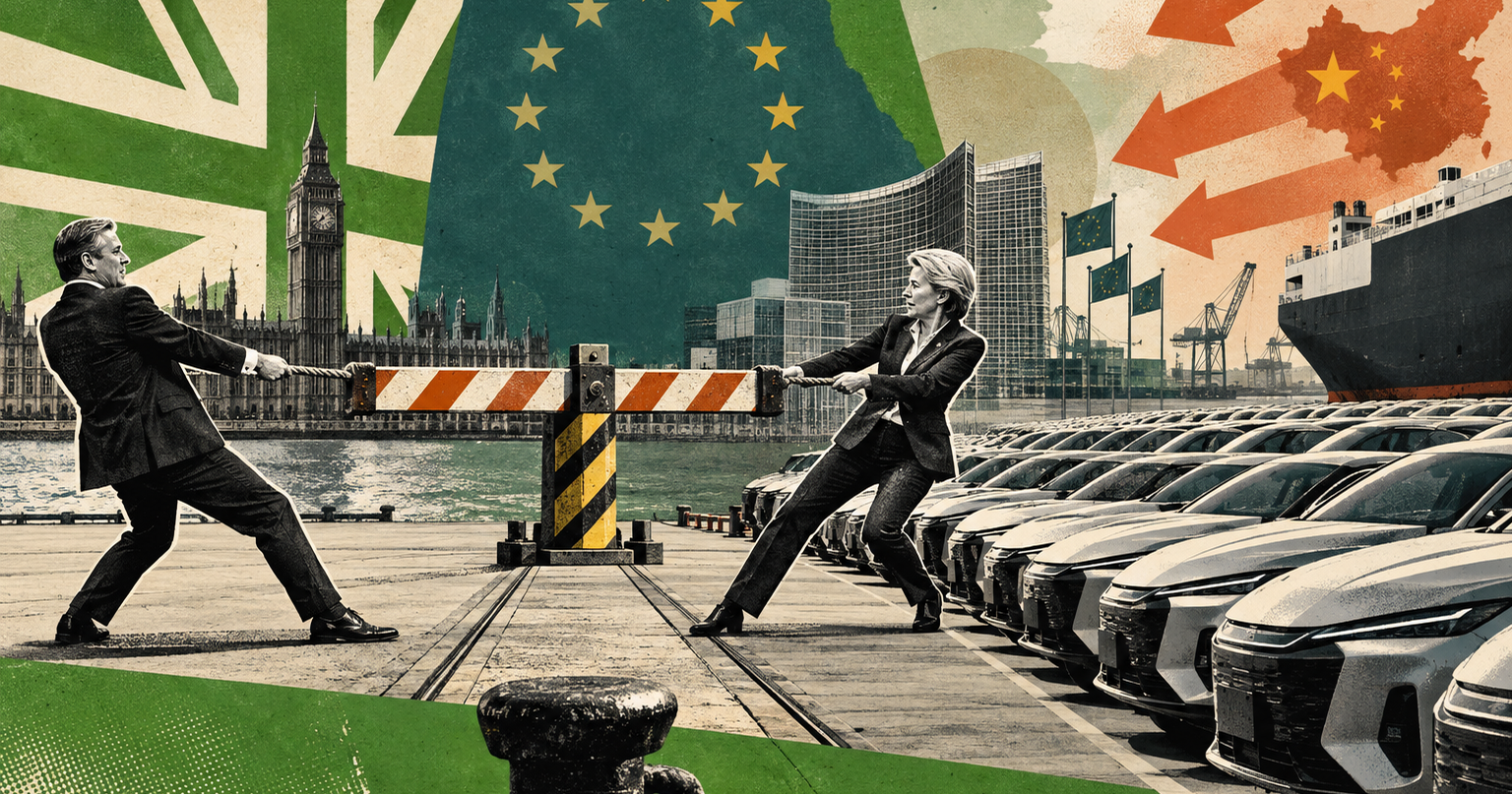
Britain is not going to tax Chinese cars just because Europe wants it to. Business secretary Jonathan Reynolds pushed back on demands from Brussels that the UK follow the EU's lead, even as the government courts closer economic ties with the bloc.
"I just want to be clear: when we make any trade decision in terms of trade defence tariffs in relation to the EU, that's based on the UK interest, it's not based on any other country asking for that," Reynolds said in an interview with the Guardian during a trade trip to Delhi and Mumbai.
He did not rule tariffs out forever. Duties on Chinese goods remain an option for the future, he conceded. For now, the answer to Brussels is no.
Europe has already built its wall
The EU has spent two years tightening the screws on Chinese carmakers. It imposed tariffs of up to 45% on Chinese electric vehicles in 2024, and last Friday it agreed a quota of 350,000 Chinese hybrid cars a year. The driver is fear that cheap imports will hollow out European factories and cost jobs, a fight Beijing has already threatened to answer with firm retaliation.
Reynolds said the UK looked hard at the question in 2024 and keeps it under review "depending on what the needs of industry are." But he argued the structure of British carmaking points the other way. "It comes down to what is the fundamental nature of the UK automotive sector. It's an export-led sector, so that's what I've got to take into account."
He has previously cited the risk that Beijing would hit back with reciprocal tariffs, damaging British firms such as Jaguar Land Rover.
The back door argument
Some in Europe worry the UK could become a back door, with Chinese firms building cars in Britain and selling them into the single market. Nissan has agreed to look at building cars in northern England for Chinese manufacturer Chery.
Reynolds dismissed the idea. "The UK currently has no major Chinese manufacturer based in its automotive sector, so we're not making vehicles here and sending them to the single market through some sort of back door," he said.
The bigger worry for British industry is the EU's new Made in Europe trade rules, designed to shield European companies from subsidised Chinese imports. Some in Brussels want Britain to levy tariffs on Chinese EVs in exchange for access under those rules. UK manufacturers fear being cut out of European supply chains if that deal is not struck.
Reynolds argued the threat cuts both ways, saying: "If you look at the impact analysis of such a policy, the consequences for the EU [of] excluding the UK are much more difficult." He added: "This is not just in the UK's interest; it's not in the EU's interest because obviously we have integrated supply chains."
A summit as a test
All of this lands weeks before a UK-EU summit in Brussels on 20 November, confirmed by the prime minister, Andy Burnham. He told the Commons on Monday he wanted a "serious dialogue" over the UK's place in Europe, framing the meeting as a possible first step toward EU membership.
The Made in Europe rules are not formally on the agenda, but UK officials hope to use the talks to shape the legislation. Diplomats see the summit as an early test of Burnham's "real reset." One EU official said Britain's negotiating position would determine whether it was worth pursuing deeper changes, such as single market access, a new customs union or re-accession.
That puts Reynolds in an awkward spot. He acknowledged the UK-India free trade deal he struck last year would become defunct if Britain rejoins the EU. On this trip he unveiled UK-India investments that officials say are worth over £1bn to the UK over 15 years, and India has cut tariffs on Scotch whisky from 150% to 75%.
The China question is part of a wider split over how to treat Beijing's economic model, one that already surfaced at the G20. For Britain, the choice on Chinese cars now sits right in the middle of its bid to get closer to Europe.
Some offers on this page may be paid placements or contain affiliate links.
Finpresso: daily AI & finance brief
Free daily newsletter, read in 5 minutes.
Subscribe free