
Goldman Stood by 12,000 for the Kospi Until a 35% Crash, Then Cut It to 9,000 and Still Called Korea Cheap
Goldman Sachs cut its 12-month Kospi target by 25% to 9,000 from 12,000 after Korean stocks fell more than 35% from their June peak, while keeping its overweight call on the market.

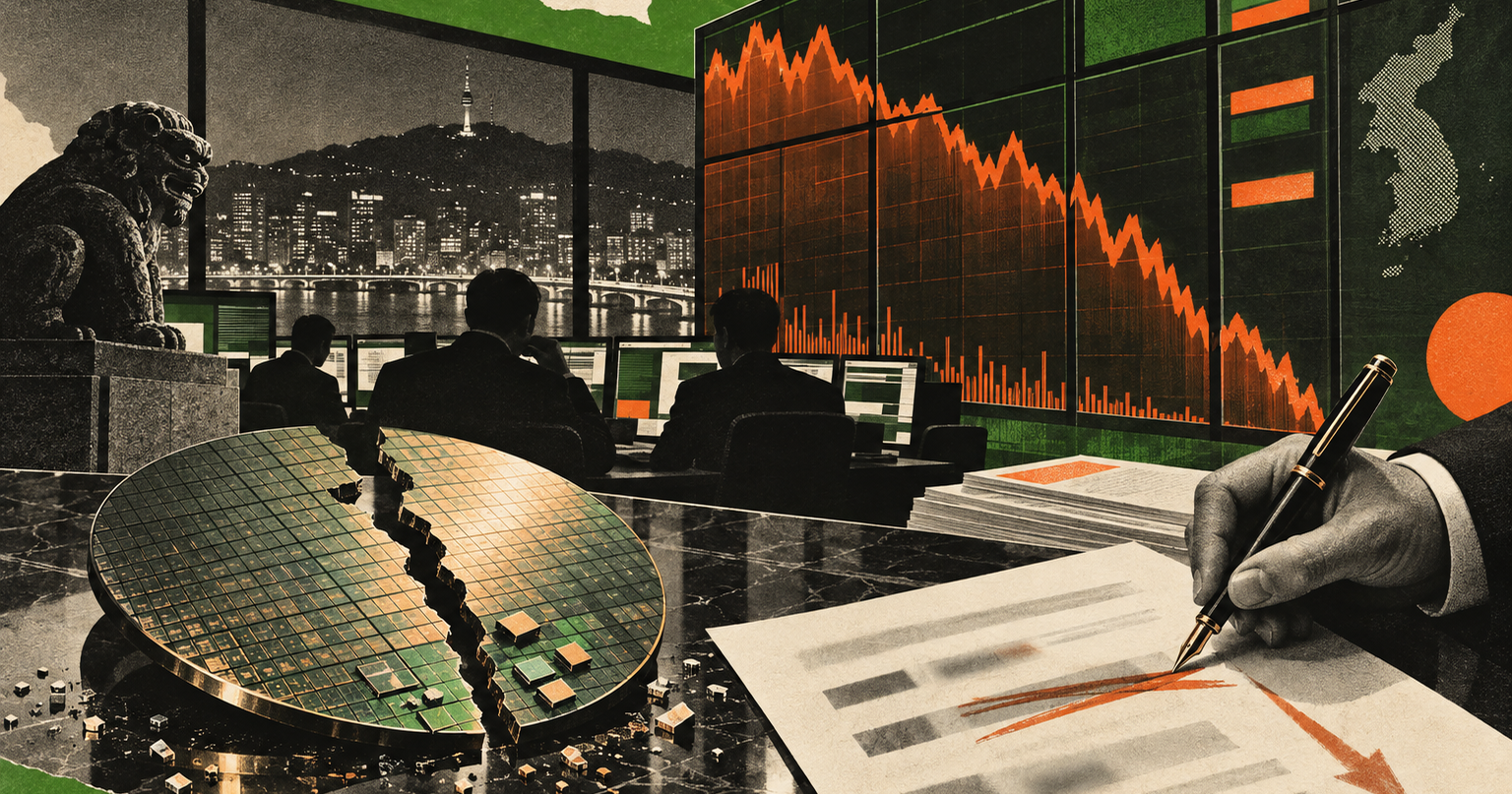
One of Wall Street's loudest bulls on Korean stocks has finally blinked. Goldman Sachs cut its 12-month Kospi target by 25% to 9,000 from 12,000, after the index lost more than a third of its value since June.
The Kospi has become the leading indicator for the global AI hardware trade, so when the bank that defended the most bullish number on the Street backs off, the move says something about the whole trade. Goldman, though, is not giving up on Korea.
Three months of holding the line
Timothy Moe, Goldman's chief Asia Pacific equity strategist, raised his Kospi target to 12,000 from 9,000 in early June, one of the most aggressive calls anywhere. In early August he kept it, describing June's drop as a sharp correction inside a broader bull market.
On September 4 he doubled down. "The market is underestimating the duration of this earnings cycle," he told Bloomberg. "Hyperscalers have to keep spending even if they don't make money. That's good for memory." He said 12,000 would "not look ridiculous" if Korean companies hit Goldman's earnings forecasts.
At the time, Goldman expected Kospi earnings to grow about 360% this year and 35% next year, with US big tech capex reaching $1.2 trillion next year.
The crash that changed the number
Korean stocks kept sliding anyway. On October 15, the Kospi and Kosdaq both fell more than 8% intraday, tripping circuit breakers, and the Kospi closed at 5,554.22, down 7.57%. That came after an earlier day when the Kospi plunged 6% and Samsung sank 10% as the AI trade cracked.
By Goldman's count the index is now down more than 35% from its June peak, and CNBC puts the drop at about 40% from record highs.
The pressure came from several directions: doubts about how long AI spending can last, rising financing costs, uncertain returns on huge infrastructure builds, higher oil prices and increasingly hawkish central banks. Korea is heavily exposed to Samsung Electronics and SK Hynix. Foreign investors, hedge funds in particular, kept selling Korean and Taiwanese shares, and Goldman said South Korea saw $1 billion in foreign outflows.
In its Sunday report, Moe's team cut the target to 9,000. It pointed to heightened volatility and slowing earnings momentum, and applied more conservative valuation assumptions. That is exactly where the target stood before June.
Still the bargain, says Goldman
The bank kept its overweight stance, and the new target still implies more than 60% upside from about 5,550.
Goldman's case rests on valuation. The Kospi trades at roughly 4 times forward earnings, about three standard deviations below its historical average. Bloomberg says that is the lowest among 18 major markets since 2006, and Korean stocks now trade at about half the valuation of Indonesian equities.
Memory chip stock valuations, Goldman argues, imply roughly a 65% decline in 2027 earnings, which it calls too pessimistic. Non-memory stocks, about half the index, trade near 7.6 times forward earnings and are more than 30% undervalued, by Goldman's math.
The bank still favors power, industrials, beneficiaries of corporate governance reform, reflation sectors, K-culture plays and risk reversal strategies. The target came down. The conviction, at least on paper, did not.
Some offers on this page may be paid placements or contain affiliate links.
Finpresso: daily AI & finance brief
Free daily newsletter, read in 5 minutes.
Subscribe free