
Intel Crashed Nearly 30% Toward Its Worst Day Ever After Admitting the AI Memory Crunch Is Choking PC Demand
Intel shares tumbled 29% on Friday, on track for their sharpest one-day decline ever, after the company guided well below expectations as a memory shortage hit PC demand and a deadly explosion disrupted its Israel fab.

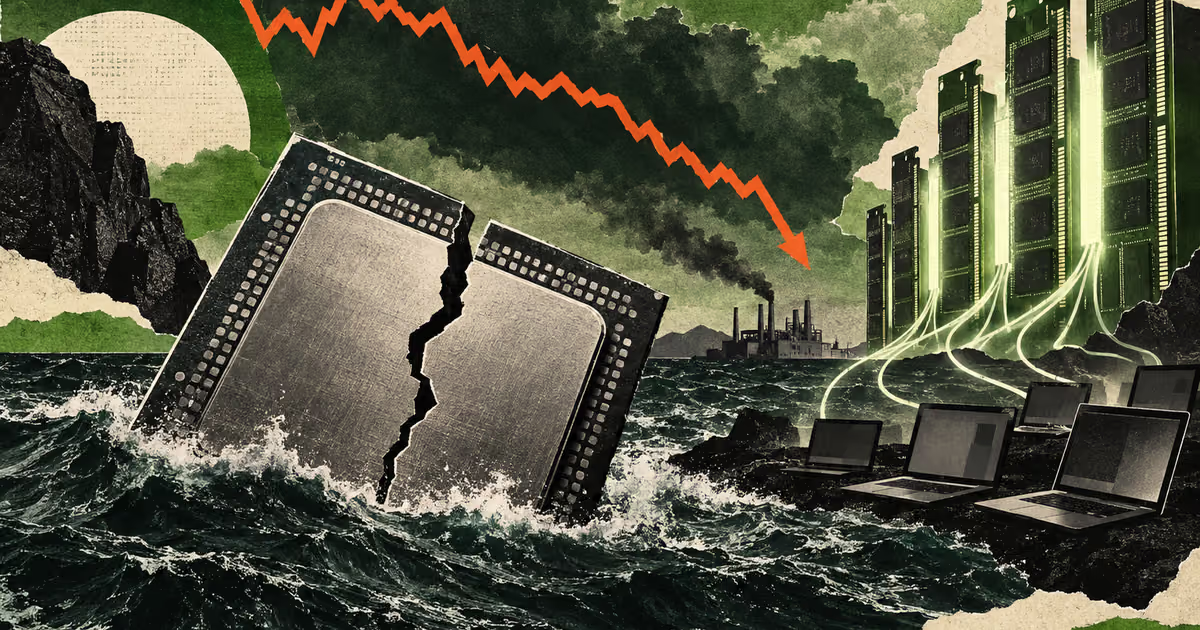
Intel's stock had more than doubled this year. Then the company told investors the AI boom was hurting it from the other side, and the shares tumbled 29% in Friday morning trading, on track for their sharpest one-day decline ever.
With the session still under way, Intel was on track to shed more than $137 billion in market value. The stock had already fallen 23% after hours on Thursday.
The odd part is that the quarter itself was fine. The outlook was the problem.
A good quarter, then a brutal forecast
Third-quarter revenue rose 21% to $16.51 billion, in line with expectations, and adjusted earnings of 52 cents beat the 40 cents analysts wanted. Data center revenue had its strongest growth in 15 years.
Then came the guidance. Intel forecast fourth-quarter revenue of $15 billion to $16 billion against the $17.07 billion Wall Street expected, and adjusted earnings of 25 cents against 43 cents.
CFO David Zinsner also said Intel does not expect positive cash flow this year. Capital spending is on track for $20 billion, and it will rise sharply in 2027. The company raised $20 billion in a common stock offering only in August.
Squeezed by the boom it wants to ride
Memory is the heart of it. Suppliers shifted capacity to the high-bandwidth memory AI systems need, which raised costs for PCs and hurt demand. It is the same scarcity that flipped the power balance between Apple and memory makers like SanDisk, and Intel is on the wrong side of it.
PC chips bring in roughly half of Intel's revenue. That business fell 5% to $8.10 billion in the third quarter and is expected to drop more than 20% sequentially in the fourth.
Intel now expects 2026 PC units to fall about 12%, with the second half down more than 20%, and is planning for a decline of about 10% in 2027. It sees the slowdown lasting at least through the first half of 2027, with no sustained recovery until memory availability and pricing normalize.
Meanwhile, server CPU demand is so strong Intel can't meet it. "I'm disappointed that we were not able to meet strong customer demand in this quarter," CEO Lip-Bu Tan said, pointing to Intel 3 yield and cycle time, an industry-wide shortage of advanced organic substrates for EMIB packaging, and an explosion at its fab in Israel.
The explosion in Kiryat Gat
The October blast at the Kiryat Gat plant, which largely makes 10nm data center chips, killed two workers and seriously injured one, according to media reports. It forced a two-week shutdown.
Intel expects it to erase roughly $600 million of revenue over two quarters. The fourth-quarter revenue outlook takes a hit of about $300 million and the gross margin outlook about 200 basis points, with a similar blow in the first quarter.
The whole sector flinched
AMD, Arm, Qualcomm, Nvidia, Broadcom and Micron fell between 2% and 10%. Server makers Dell, HPE and Super Micro dropped 6% to 10%. In Europe, ASML lost 4.6% and the STOXX Europe 600 Technology index slid 2%, while TSMC's US shares gave up 3.3%.
"The market is in a sell first, ask questions later mood right now, and Intel's warning has given investors an easy excuse to take some money off the table across chip stocks," said Matt Britzman of Hargreaves Lansdown.
Jay Goldberg of Seaport put the mood more bluntly: "No result is good enough, and bad results receive extra punishment."
Some offers on this page may be paid placements or contain affiliate links.
Finpresso: daily AI & finance brief
Free daily newsletter, read in 5 minutes.
Subscribe free