
Nelson Peltz Wants to Buy Wendy's for $1.4 Billion After the Burger Chain's Stock Fell 65% in Two Years
A group led by Nelson Peltz's Trian Fund Management made an unsolicited, non-binding offer of $7.35 a share in cash, about $1.4 billion, for the Wendy's shares it does not already own.

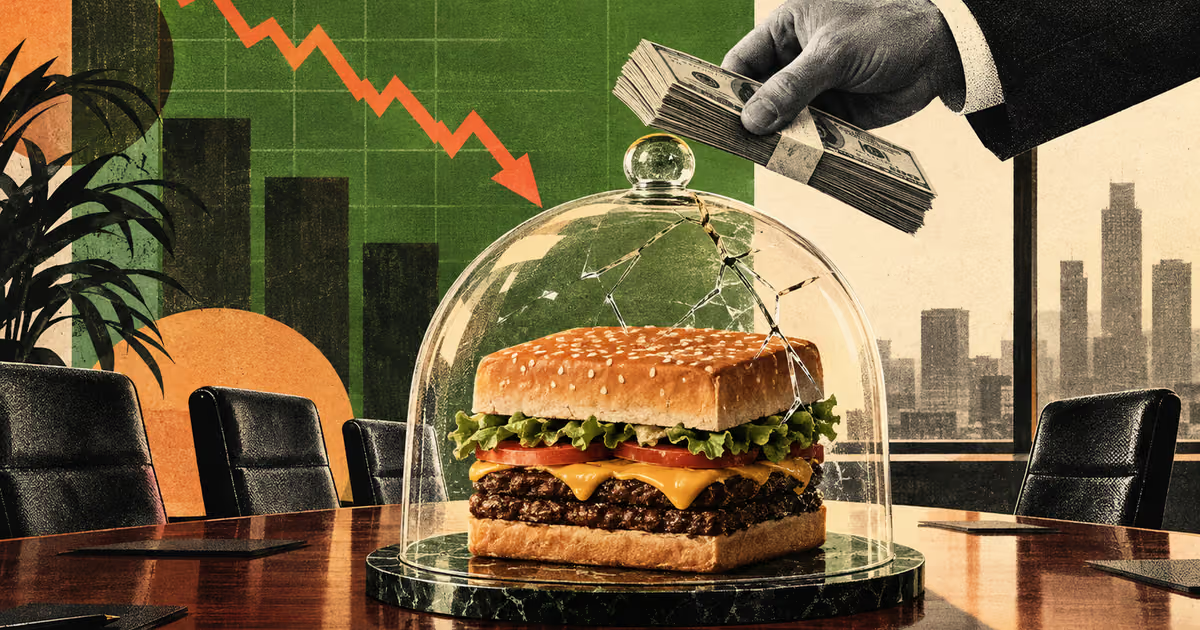
Nelson Peltz's history with Wendy's goes back more than two decades. On Wednesday, with the stock down 65% over two years, he made a bid for the rest of it.
A group led by his Trian Fund Management offered $7.35 a share in cash, about $1.4 billion, for every share it does not already own. The price was a 20% premium to Tuesday's close, and the shares spiked about 15% on the news, first reported by the Wall Street Journal.
An insider's offer
Peltz is hardly a stranger knocking on the door. Trian and its affiliates own 16.25% of Wendy's, making them the largest shareholder, and his involvement began with an activist campaign. Trian explored a takeover in 2022 and decided against it.
This time it has company. The group includes BlueFive Capital, Sixth Street Partners and Flynn Group, one of Wendy's largest franchisees, which puts someone who runs the restaurants on the buying side of the table.
Wendy's has been preparing for this moment since February. After a Trian filing on Feb. 18, the board formed a committee of independent directors to evaluate any proposal, with Morgan Stanley advising and Simpson Thacher as legal counsel. The company confirmed the offer is unsolicited and non-binding, says there is no assurance of a deal, and will not disclose further developments unless appropriate.
How the chain got this cheap
The 65% decline includes Wednesday's jump. Behind it sit six straight quarters of same-store sales declines, discounting across the burger chains and a revolving door of CEOs.
Customers are part of it too, with budget-conscious diners eating out less. Prices are not helping: inflation climbed to 3.6% in September by the Fed's preferred measure, as households ran down their savings to keep up.
The latest person handed the problem is Bob Wright, the former Potbelly CEO, who took over in May after Potbelly went private. On his first call in August he named muddled value offerings, inconsistent execution and too many one-off promotions. His priorities, as Wendy's lists them, are a quality menu at compelling value, marketing, operational excellence, digital and restaurants as a growth engine.
The case for going private
A fix like that takes time, and public shareholders get a quarterly report on how it is going. TD Cowen analyst Andrew Charles thinks that is reason enough to leave the market. "In our view, a take private makes sense as Wendy's turnaround is likely to be prolonged given the challenged state of the lower income consumer and soft state of the quick service burger category," he said.
The board has not said what it thinks. The next scheduled word from the company, which has more than 7,000 restaurants worldwide, comes before the bell on Nov. 5, when it reports third-quarter results and shares more of Wright's strategic plan. Investors will be reading it with a $7.35 offer on the table.
Some offers on this page may be paid placements or contain affiliate links.
Finpresso: daily AI & finance brief
Free daily newsletter, read in 5 minutes.
Subscribe free