
The US Economy Grew 3.4% in Its Last Report Before the Midterms, but Inflation Climbed to 3.6% Anyway
US GDP grew at a 3.4% annualized pace in the third quarter, the fastest in a year, while PCE inflation rose to 3.6% in September as households spent down their savings.

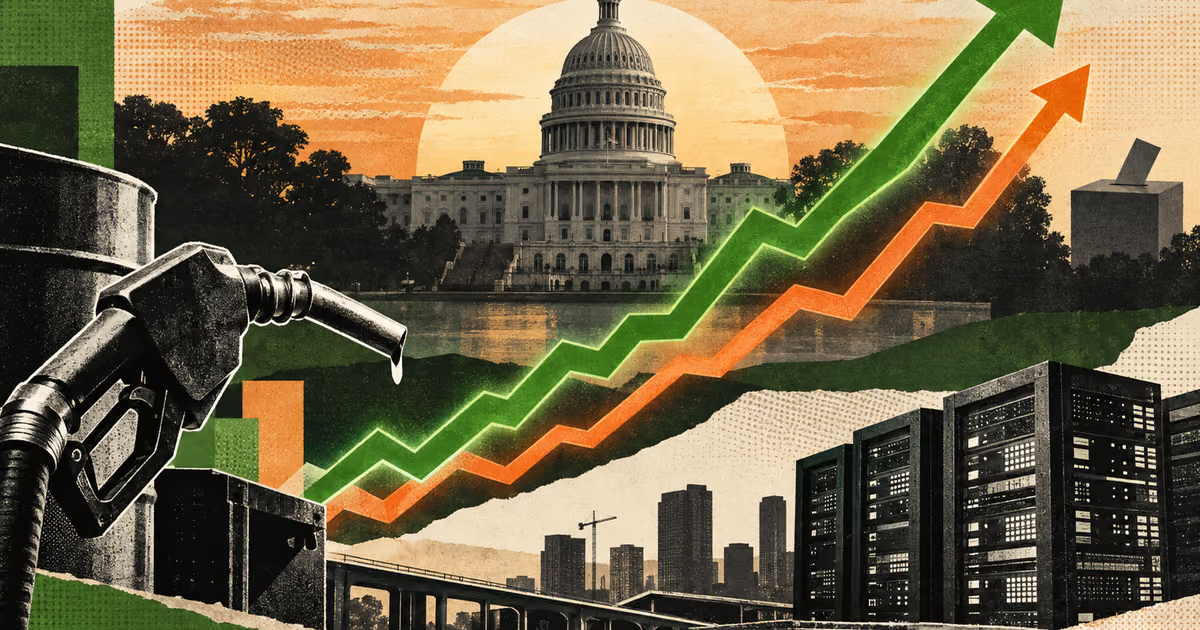
The final big snapshot of the US economy before the midterms arrived Thursday, and it pulled in two directions. Growth hit 3.4% at an annualized, inflation-adjusted pace in the third quarter, the fastest in a year. Inflation, by the Fed's preferred measure, rose to 3.6% in September, a four-month high.
The headline number looks strong. Underneath it, households are running down their savings to keep up, and the Federal Reserve now has fresh reason to raise rates again.
A boom led by machines
The GDP figure beat economists' estimates of around 3%, and it was up from 2.2% in the second quarter. Chris Rupkey of Fwdbonds said real GDP "has bounced back above a 3 percent run rate in Q3 2026 for the first time in a year."
The AI build-out did much of the lifting. Business investment rose to an annualized 12.7% from 9%. Gross private domestic investment soared 19.4%, with equipment spending up 20.9%. Consumer spending held at a 3.8% pace, the same as the prior quarter.
Trade pulled the other way. Exports fell 5.7%, while imports surged at a nearly 20% annualized pace, likely reflecting stockpiling ahead of Canadian tariffs along with data center purchases.
Jobless claims fell to 194,000, near levels last seen in the late 1960s.
The energy bill arrives
The PCE price index rose 0.5% from August, its largest monthly increase since March, lifting the annual rate from 3.4% to 3.6%. Gasoline and other energy goods jumped 9.2% in a single month, and energy goods and services overall climbed 5.4%.
Strip out food and energy and the picture is calmer but still not comfortable: core PCE rose 0.3% on the month, and the annual rate moved to 3.1% from 3%.
The quarterly numbers look gentler, with PCE prices easing to 2.1% on the headline and 2.5% on core, from 5% and 3.3% in the second quarter. But September's jump came from a war-driven energy shock that has not gone away. Brent jumped to $117 after Iran said four tankers hit mines in the Strait of Hormuz.
Households feel the gap
Consumers spent 0.5% more in September in nominal terms, which came out flat after inflation. Personal income rose only 0.2%, and inflation-adjusted after-tax income fell 0.3%.
The difference came out of savings. The savings rate fell 0.2 points to 3.8%, the lowest in nearly four years. Elizabeth Renter, lead economist at Life360, warned that "some households are going to feel a lot more stress from the higher inflation than others."
The Fed's next move
The central bank raised rates last month for the first time in three years, then held on Wednesday at 3.75% to 4%. Chair Kevin Warsh gave little away. "The period right in front of us is information rich," he said.
Thursday's data added plenty of information, and Olu Sonola of Fitch Ratings read it bluntly. "The Fed is tightening the screws, but the economy has yet to get the memo," Sonola said, adding that if the Fed needed another reason to hike in December, "this report just gave it one."
Stock futures dipped and Treasury yields fell after the releases. Voters get their say next, with the economy growing quickly and their paychecks buying less.
Some offers on this page may be paid placements or contain affiliate links.
Finpresso: daily AI & finance brief
Free daily newsletter, read in 5 minutes.
Subscribe free