
A Truck Stop Beat the Fed in Court, and Now the 21 Cent Debit Card Swipe Fee Banks Collect Has to Be Rewritten
A federal appeals court upheld a North Dakota truck stop's win against the Federal Reserve and vacated the 21 cent debit card swipe fee cap, ordering the Fed to redo it.

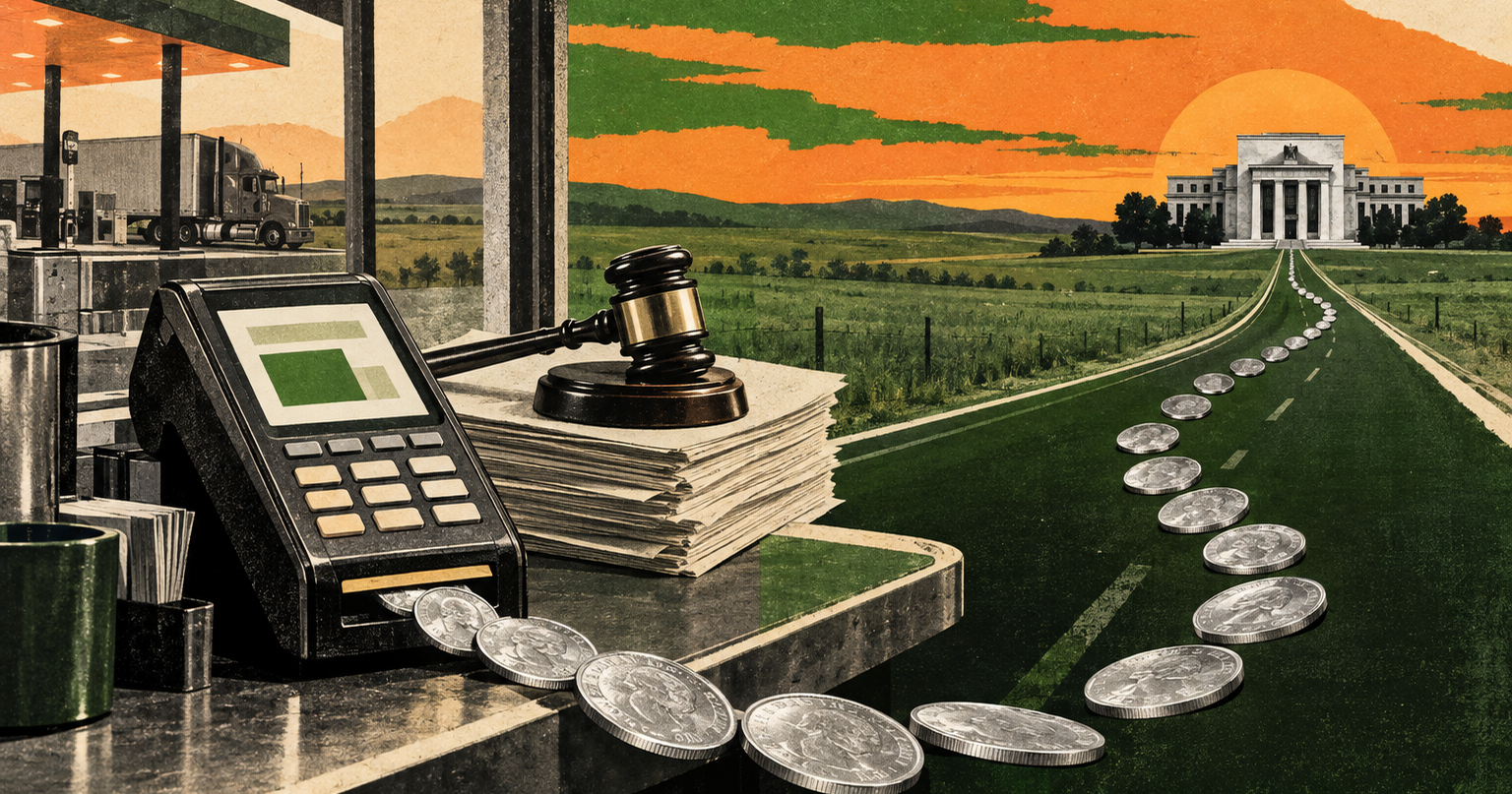
A truck stop in a small North Dakota oil town has now beaten the Federal Reserve twice. On Monday, a federal appeals court agreed with it that the cap on what big banks can charge every time someone swipes a debit card is built on the wrong costs, and threw the rule out.
A three judge panel of the Eighth Circuit in St. Louis affirmed a lower court ruling and vacated the Fed's current interchange fee cap. For merchants who have fought swipe fees for years, it is a rare clean win.
The number at stake
The cap dates to 2011, when the Fed wrote Regulation II to carry out the Durbin Amendment in the Dodd-Frank Act. Banks with $10 billion or more in assets can charge 21 cents plus 0.05% of the transaction, plus a one cent fraud prevention add-on. The Fed is supposed to review it every two years. In October 2023 it proposed cutting the base rate by about 30% to 14.4 cents, then never moved forward.
The problem, the court said, is what went into that 21 cents. The Fed counted banks' "fixed costs related to authorization, clearance, and settlement," along with network processing fees, fraud prevention costs and fraud losses. Congress only allowed marginal, transaction specific costs.
"It does not take much detective work to figure out that the Federal Reserve 'shall . . . consider' marginal costs in setting debit-card interchange fees, but not fixed costs," the judges wrote. They added: "No matter how much some banks and payment networks disagree with approaching the problem this way, the Federal Reserve does not get to revise Congress's work."
The Fed now "must sort the costs into those that are transaction-specific and those that are not," rather than "just pick a number and hope it is close enough for government work." The court did leave some room. Fees need not match marginal cost exactly, and the Fed may use a reasonable proxy, perhaps average variable cost.
How a convenience store got here
Corner Post, a truck stop and convenience store in Watford City, sued the Fed in April 2021. In August 2025, US District Judge Daniel Traynor struck the rule down, writing that "Congress did not hide an 'easter egg' of a third cost category in the Durbin Amendment, particularly when those additional costs would benefit banks at the expense of merchants and consumers," as PYMNTS reported. Traynor has since been confirmed to the Eighth Circuit, but he was not on this panel.
A Fed spokesperson declined to comment on the ruling or on the stalled 2023 proposal.
Stores against banks, again
Doug Kantor, general counsel of the National Association of Convenience Stores, put it in dollar terms. "Two courts have now agreed that the current rate lets banks collect billions of dollars a year more from stores and their customers than the law ever meant for them to have," he said. He wants a replacement rule that follows the law and eases pressure on shelf prices.
Six banking groups, including the American Bankers Association and America's Credit Unions, said they were "deeply disappointed." "For more than a decade, corporate megastores have pocketed billions from the Durbin Amendment while ignoring promises to lower prices for consumers," their statement said. Jason Stverak of the Defense Credit Union Council argued that a secure debit transaction needs infrastructure, fraud monitoring and network connectivity, and that "those costs do not disappear because a court limits which ones may be reflected in an interchange standard."
Banks know this fight from the other side, since they are suing Apple over Apple Pay fees. Here they are pinning hopes on another court. "It's important to remember that this decision is not the last word on these issues," the groups said, pointing to Linney's Pizza v. Federal Reserve, pending in the Sixth Circuit after a federal court in Kentucky sided with the Fed last year. For now, the Fed has to go back and do the math again.
Some offers on this page may be paid placements or contain affiliate links.
Finpresso: daily AI & finance brief
Free daily newsletter, read in 5 minutes.
Subscribe free