
Senate Report Links Tether USDT to Iran Funding and Presses Treasury and DOJ to Investigate
A Senate investigations report found most wallets tied to Iran and its proxies run on Tether's USDT, and Sen. Blumenthal wants Treasury and DOJ to investigate the company.

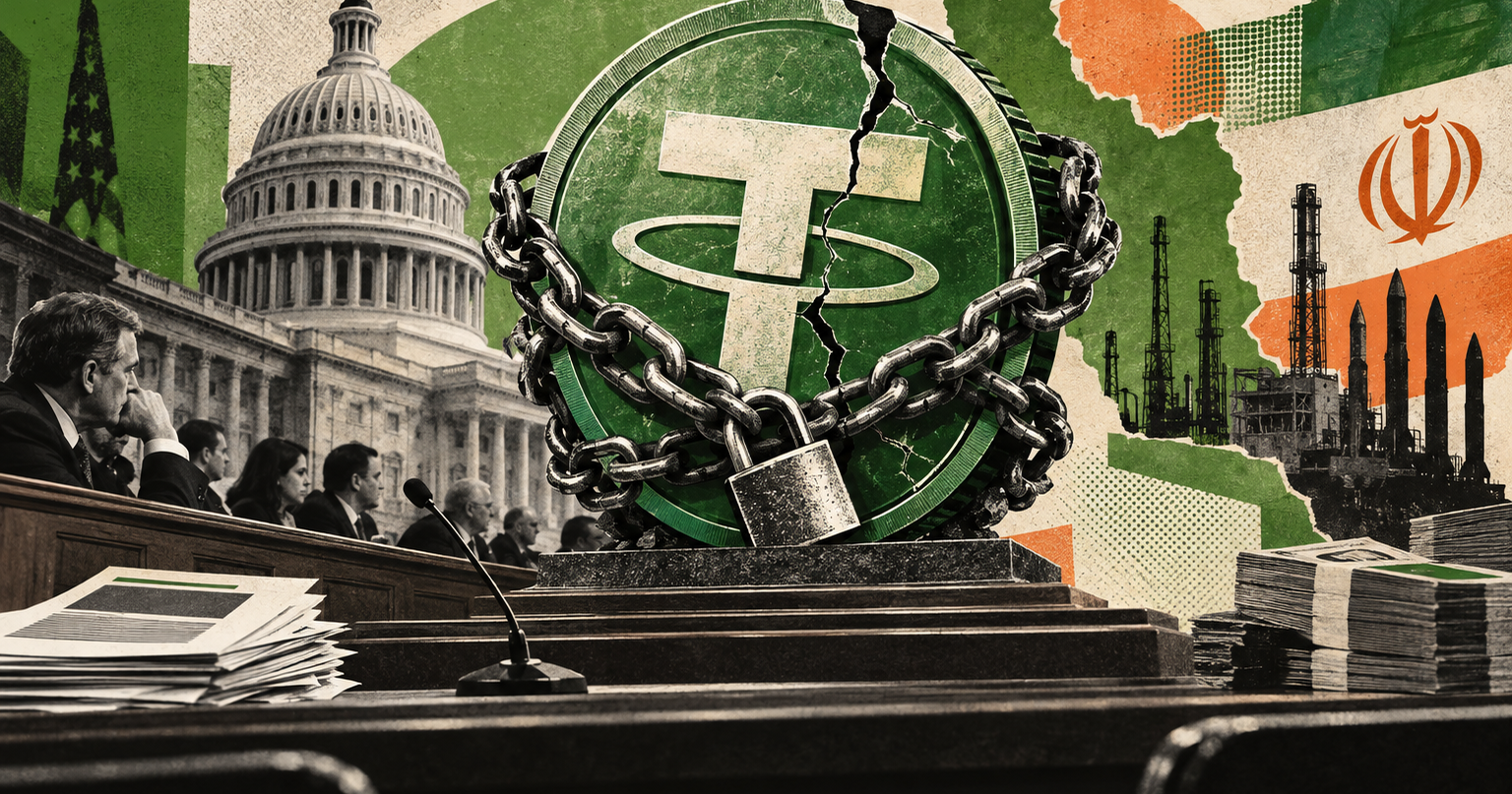
When Iran and its armed allies move money on-chain, they overwhelmingly use one dollar: Tether's USDT. That is the central finding of a new Senate report that puts the world's largest stablecoin issuer back in Washington's crosshairs.
Democratic staff on the Senate Permanent Subcommittee on Investigations analyzed 846 crypto wallets that the US Treasury's OFAC or Israeli authorities had sanctioned or targeted for links to Iran, Hamas, Hezbollah and the Houthis. Some 84% of them transacted exclusively or nearly exclusively in USDT, meaning more than 80% of their dollar volume ran through the stablecoin.
Not even close
The pattern held across both lists. Among 757 wallets flagged by Israel, 87% leaned almost entirely on USDT. Among 101 OFAC wallets, the share was 57%. Bitcoin, often cast as the criminal's currency, came a distant second.
The staff call the findings preliminary. Still, the numbers describe a shadow banking network that runs on a private company's token, and that is exactly the kind of exposure regulators worry about as stablecoins move into the mainstream.
A deadline for Treasury and DOJ
Sen. Richard Blumenthal followed the report with letters to Treasury Secretary Scott Bessent and Attorney General Todd Blanche asking them to investigate Tether's anti-money laundering and sanctions compliance. He wants them to say by October 9 whether any earlier inquiry into the company was narrowed, paused or closed.
That question has teeth. The letters point to reports that Manhattan federal prosecutors opened a Tether investigation in October 2024 and that Treasury weighed sanctioning the company. Neither step has produced public charges or sanctions, and Blumenthal is asking why.
The pressure lands as Washington widens its broader crackdown on Iran's crypto channels, and just days after US prosecutors seized $89 million from EQIBank, one of Tether's banking partners. American Banker argues the real weak point is the banks that connect USDT to the dollar system.
Tether pushes back
Tether rejects the accusations. The company says it helped freeze about $550 million in Iran-linked USDT this year, and it has long argued that its ability to freeze tokens makes it more useful to law enforcement than decentralized coins like Bitcoin.
The report doesn't sanction Tether or accuse it of a crime. What it does is hand Treasury and the Justice Department a public paper trail, and a date by which they are expected to answer.
Some offers on this page may be paid placements or contain affiliate links.
Finpresso: daily AI & finance brief
Free daily newsletter, read in 5 minutes.
Subscribe free