
Republicans Join Democrats Against Trump's Russian Diesel Deal, and Analysts Say It Won't Even Lower Prices
Four Republican senators joined Democrats in demanding Trump reverse his deal to bring Russian diesel to market, arguing it breaks a 2022 import ban. Analysts say the volumes are too small to move US diesel prices ahead of the midterms.
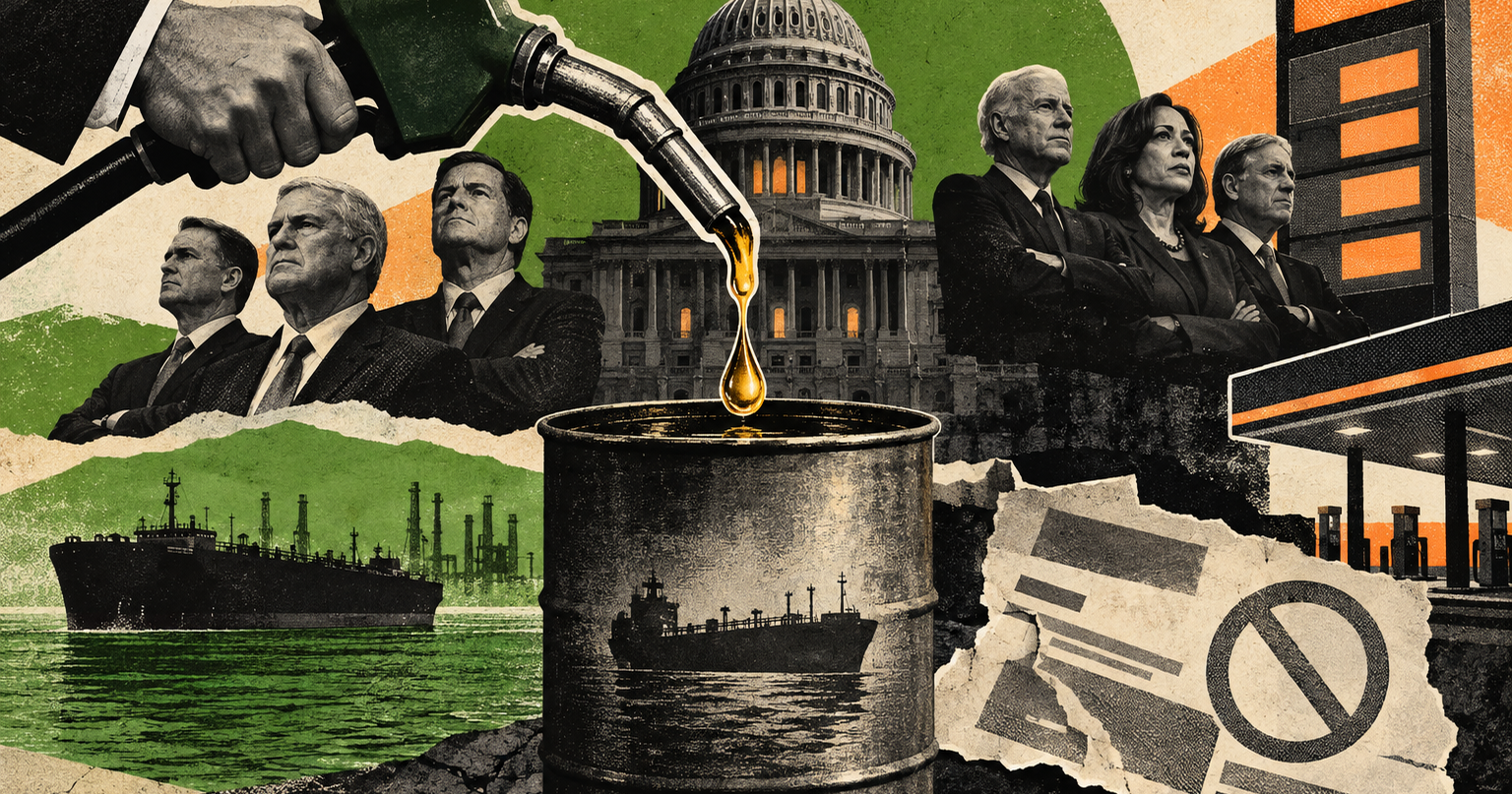
Donald Trump promised cheaper diesel for farmers and truckers. What he got first was a revolt inside his own party. Four Republican senators have joined Democrats in demanding he reverse a deal with Vladimir Putin to bring Russian diesel to market, and energy analysts say the barrels are too few to matter anyway.
The deal came Friday, after a phone call with Putin. Trump wrote on Truth Social that Russia would immediately supply more than 300,000 tons of diesel, then 500,000 tons in November, 1 million tons after that and 3 million more depending on its Ukrainian-bombed refineries. "Lower prices for Americans, especially our Great Farmers, Ranchers, and Truckers, is my Greatest Priority," he wrote. The Treasury backed it with a temporary license suspending sanctions on Russian diesel until April 7.
A law passed 100 to 0
On Sunday, Republicans Susan Collins, Lisa Murkowski, Thom Tillis and John Curtis joined Democrats Jeanne Shaheen and Richard Blumenthal in a blunt statement, with Ron Wyden also signing according to later reports. "The United States should not provide Putin with a financial lifeline while Russia continues to kill Ukrainian civilians," they wrote. "The Administration must immediately reverse course."
Their legal argument rests on the Ending Importation of Russian Oil Act of 2022, which bans Russian oil imports unless the president certifies Russia has left Ukraine and stopped threatening NATO. It passed the Senate 100 to 0 and the House 413 to 9. The senators say Trump's decision "runs directly counter to that law" and that the administration never consulted Congress or filed the justification the statute requires.
It also sits awkwardly next to the Lindsey O. Graham Sanctioning Russia and Iran Act, which Trump signed in September and which authorizes tariffs up to 100 percent on major buyers of Russian energy.
Tillis told NBC's Meet the Press there is a legitimate case the president is not following the law. "Russia is the aggressor," he said. Treasury Secretary Scott Bessent pushed back on Fox News, saying the deal runs through existing legal channels and anyone in Congress claiming otherwise is wrong. Senator John Barrasso defended Trump on CBS as "balancing" tough decisions and called the deal "another point of leverage" against Putin.
The House tries to force a vote
In the House, Republican Brian Fitzpatrick, co-chair of the Ukraine Caucus, plans the Ronald Reagan Peace Through Strength Act to block all purchases of Russian oil. He says a discharge petition will force it to the floor, where "it will pass overwhelmingly." Co-sponsor Don Bacon was harsher: "The president has always had a moral blindness when it comes to Putin."
The path is narrow. A discharge petition needs 218 signatures, Congress is not voting for several weeks, and the term ends in January. Not every Republican objects, either: Thomas Massie wants sanctions lifted on all petroleum products. Senator Angus King called the deal "a fraud" that "will do little for America and much for Vladimir Putin."
Abroad, Volodymyr Zelensky called it a gift to Putin, and EU foreign policy chief Kaja Kallas said "this is not the time to ease pressure on Russia, and Europe won't." Canada's Mark Carney criticized it too.
Too small to move the pump
The economics may be the weakest part. AAA puts average US diesel at $6.28 a gallon, just off the late September record that followed wars wiping out about a fifth of global fuel supply. The US burns 3.7 million barrels of diesel a day and holds 105 million barrels in commercial stocks.
Against that, the first 300,000 tons works out to about 70,000 barrels a day over a month. "Even if the initial 300 kt were available tomorrow it would have little impact," former IEA oil chief Neil Atkinson told CNBC, adding that where the volumes would come from "is a mystery." Jefferies said the amounts are "unlikely to make a substantial difference," and Lombard Odier noted that "announced shipments are not equivalent to delivered supply."
Columbia's Richard Nephew put it most sharply. The whole package looks like less than the US uses in a day, he said, but "the Russians are excited because it puts a big hole in the sanctions regime."
That leaves Trump defending a deal that angers his own senators while barely touching the price voters care about, weeks before midterms where 84% of registered voters tell Pew the economy is very important.
Some offers on this page may be paid placements or contain affiliate links.
Finpresso: daily AI & finance brief
Free daily newsletter, read in 5 minutes.
Subscribe free