
Treasury Targets US Bets on China's AI and Biotech, and Russia Made the List Days After Trump's Diesel Deal
The Treasury Department proposed a rule that would ban some US investments in AI and require advance notice for deals in chips, quantum, supercomputing, hypersonics and biotech in China, Russia, Iran, North Korea and Cuba.

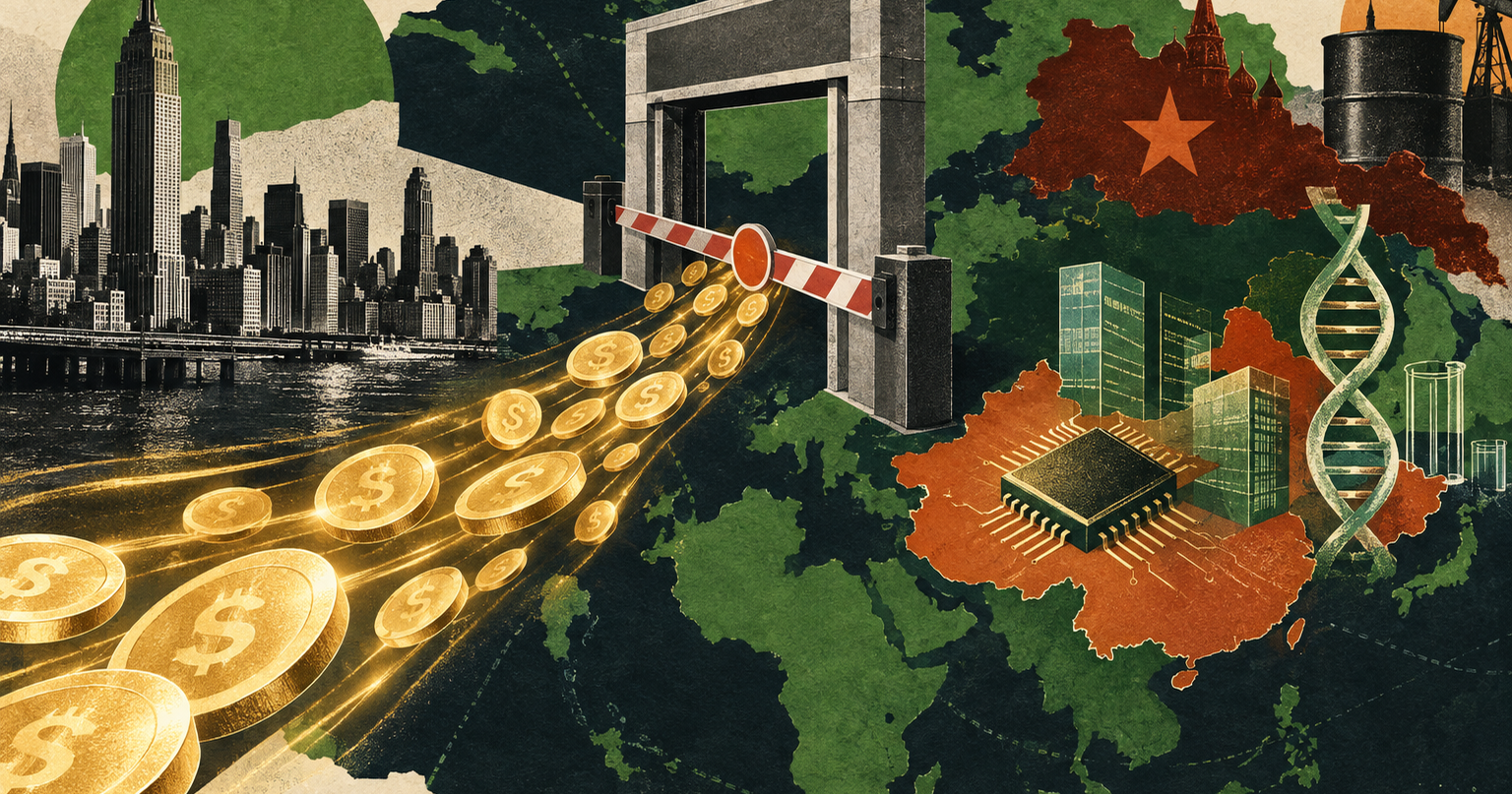
Washington wants to know where American money goes before it helps build a rival's weapons. The Treasury Department proposed a rule on Thursday that would ban some US investments in artificial intelligence and force advance notice for deals in chips, quantum computing, supercomputing, hypersonics and biotech across five "countries of concern": China, Russia, Iran, North Korea and Cuba.
Russia's spot on that list is the awkward part. It comes days after President Trump waived sanctions on Russia following a diesel deal with President Vladimir Putin. One arm of the administration is easing on Moscow while another tightens.
What the rule covers
The draft reaches six areas: semiconductors and microelectronics, AI systems, quantum information technologies, supercomputing, hypersonics (systems traveling at five times the speed of sound) and biotechnology. Only AI gets outright bans on specified investments. Deals in the other sectors would mostly require notice to Treasury before they close. Treasury's text also uses "superintelligence," Trump's favored term for AI.
The target is companies whose dual use technologies feed military programs, surveillance or human rights abuses. A Treasury official said investment can build business networks and supply chain links that extend influence well beyond the original capital.
It is not a blanket ban. The rule applies only to deals above $50,000, exempts many financial investments including purchases of publicly traded stock, allows national interest exceptions and carves out certain pharmaceutical licensing deals. Public comments are open until December 7, and existing rules stay in force until the new ones take effect.
Congress had also listed Venezuela. Treasury left it off, saying Maduro's government no longer existed after his capture in January.
From executive order to law
The program started in 2023, when President Biden signed an executive order restricting outbound investment in Chinese semiconductors, quantum and AI. Treasury set up the Outbound Investment Security Program, and its rules took effect in January 2025. Last December, Congress passed the COINS Act, which codified the program and stretched it to more technologies and more countries.
Enforcement already has a price tag. In July, Treasury fined a US company $200,000 for failing to report a $92,500 investment by one of its subsidiaries in a Chinese AI and robotics firm.
Capital as a weapons input
Craig Singleton, a senior fellow at the Foundation for Defense of Democracies, said the rule "sends an important signal to markets that Washington is tracking where U.S. capital is flowing and what capabilities it is helping build." Screening, he said, "recognizes that capital can accelerate military-relevant capabilities just as surely as technology transfer can."
Lawyers see more paperwork ahead. Jason Chipman, a WilmerHale partner and former Justice Department lawyer, said the rule "will require more substantial compliance programs to manage risk." Ryan Majerus, a former US trade official now at King & Spalding, called it "just the first step in a fairly long process to get to changes which presumably will be more enforcement-minded, to put more teeth behind the outbound investment program."
Beijing pushes back
China's Foreign Ministry told Washington to respect market principles and stop interfering in normal business cooperation. Spokesperson Mao Ning took aim at the addition of biotech: "Overstretching the concept of national security, taking discriminatory measures against specific countries, and artificially restricting trade, economic and investment activities serve no one's interests."
China will watch closely and "take necessary measures to safeguard its interests," she said. The warning lands during a fragile truce: Trump and Xi Jinping agreed last year to ease tensions, and last month they extended that truce into January.
Some offers on this page may be paid placements or contain affiliate links.
Finpresso: daily AI & finance brief
Free daily newsletter, read in 5 minutes.
Subscribe free