
Trump Tells Data Center Builders to Pay Towns a 'Dividend' as the Backlash Becomes a Midterm Problem
President Trump told data center companies on Truth Social to pay communities or residents a dividend to win local support, without saying how much or how it would work.

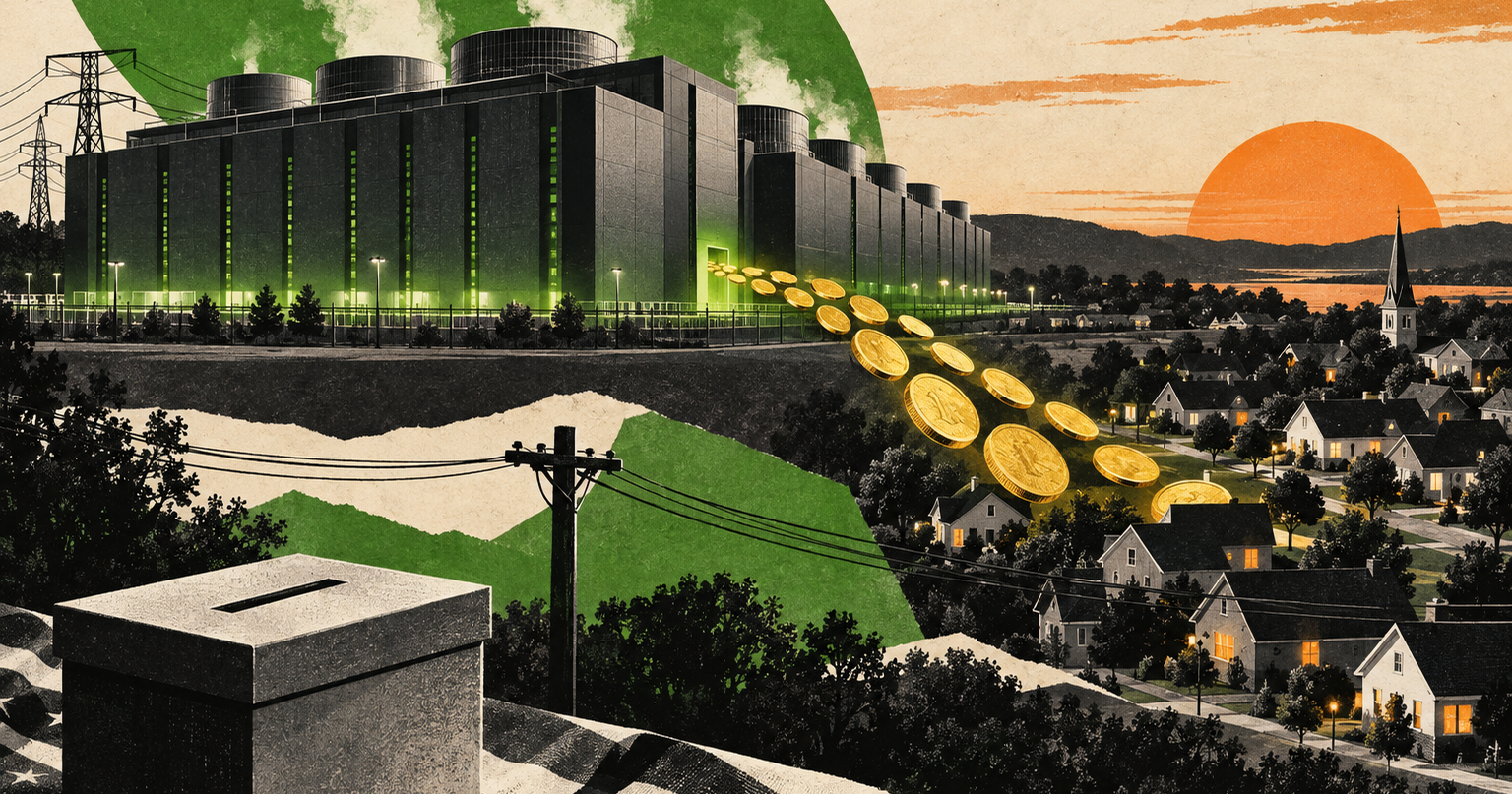
Donald Trump spent the summer warning towns that rejected data centers they would end up "backwards and poor." Now he says the way to win them over is to pay them.
"If companies want to make their Data Centers popular, pay the community, and/or individuals within the community, a 'dividend,'" he wrote on Truth Social early Wednesday. "I have watched the process closely, and Data Centers that were highly unpopular in a certain area, have become extremely popular when a financial deal is struck. MAKE DEALS, and get them built!!! GREAT FOR THE U.S.A."
He gave no details on how much money should go to communities or residents, how payments would work, or what legal footing any of it would have. No company has said it will pay one. Still, a White House push for direct payouts adds a possible new cost line for AI infrastructure just as local opposition becomes a campaign issue.
A mandate with no mechanism
In a post around 1:37 a.m. ET, Trump said new and large, "in some cases gigantic," data centers "are mandated by me to make their own electricity, and give or sell any excess back to the local community, or grid." He argued that would keep power prices from rising and could even cut them: "In fact, there could be a substantial decrease." He said he had reached a "very strong conclusion." He did not say what rule or authority creates the mandate.
The tone is a sharp turn. When he wrote in August that towns saying no would end up poor, he added, "If we kill the Golden Goose, you will only have yourselves to blame." That same month he said that as a mayor or governor offered an AI plant or data center, "I would absolutely want it."
Since then data centers have become a major issue ahead of November's midterms. Opposition has united voters across party lines and pushed some Republicans to shift. Trump himself told TIME, "It doesn't mean I want them right next to my house, but certainly I like them in my county," and at an October 3 rally in Ohio he warned investment could move to China if the US blocked projects.
The money already stuck
The backlash has real numbers behind it. A July Carbon Direct report found community opposition had delayed, withdrawn or stalled at least 46 projects in 20 states, representing $170 billion in announced investment, according to Stocktwits. The Department of Energy has estimated data centers could use 6.7% to 12% of US electricity by 2028, up from 4.4% in 2023.
Multiple states are weighing moratoriums, with concerns over water, power use, electricity prices and land. In March, Amazon, Google, Meta, Microsoft, OpenAI, Oracle and xAI signed the White House's Ratepayer Protection Pledge to cover extra generation and grid costs tied to their facilities. A bill meant to shield household electric bills from data center power costs stalled this month when Senate Democrats blocked it.
How the industry heard it
At GTC Berlin, Nebius chief revenue officer Marc Boroditsky told CNBC his company is "100% in principle" open to investing in communities and that "it's not crazy to consider something like that," suggesting a dividend could take forms like education and job development. Crusoe CEO Chase Lochmiller kept it simpler: "Energy is always a bottleneck." HSBC CEO Georges Elhedery, asked about AI infrastructure investing, said, "One has to be selective."
The pitch arrives at a delicate moment. Data center stocks have come under pressure this week amid concerns about the sector's financial health as companies lean on debt markets. Investor Shay Boloor argued on X that paying residents and building on-site power could be far cheaper for Alphabet, Amazon, Microsoft and Meta than another year of delays.
Whether anyone writes those checks, and how big they are, is still entirely up to the companies.
Some offers on this page may be paid placements or contain affiliate links.
Finpresso: daily AI & finance brief
Free daily newsletter, read in 5 minutes.
Subscribe free