
Trump's Envoys Want Russian Gas Flowing Through Ukraine Again, and Brussels Says Its Law Forbids It
The US is backing a resumption of Russian gas exports to Europe through Ukrainian pipelines, sold through an American intermediary as part of energy ceasefire talks, while EU officials say their phase-out law bars indirect imports.

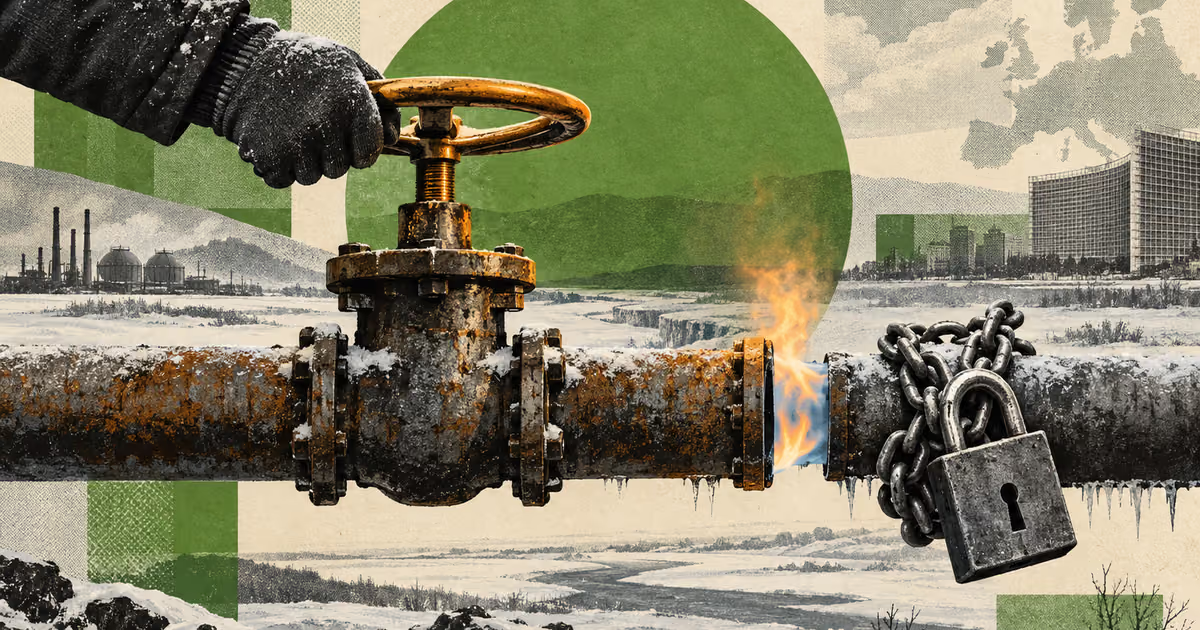
Washington wants Europe buying Russian pipeline gas again, with an American middleman in the deal and Ukraine collecting the transit fees. Europe's answer so far is that it has already written a ban into law, and that nobody asked it first.
The Wall Street Journal reported on Sunday that the US is backing a quick restart of exports through Ukrainian pipelines as part of talks on an energy ceasefire before winter, sold through a US intermediary to get around European sanctions. Envoys Jared Kushner and Steve Witkoff floated the idea on trips to Moscow and Kyiv in September.
The escrow pitch
The gas would run through the Brotherhood pipeline, about 2,800 miles from Siberian fields including Urengoy across Russia and Ukraine to Central and Western Europe. Flows stopped when the five-year transit deal expired at the end of 2024 and Kyiv declined to renew it. The pipes are intact.
Ukraine would earn transit fees, which Kyiv could present as a form of compensation, since Russia is unlikely to pay reparations directly. Proceeds could go to a US-proposed prosperity fund. One option would park the money in escrow in a third country so the Kremlin cannot use it to fund the war. US negotiators told Ukrainian officials in September that it would only happen after Russia ends the war or agrees to a ceasefire.
Ukrainian officials have been reluctant to comment publicly, and some are privately cautious about rejecting it outright.
A painful moment to say no
The offer lands when Europe is short. The Dutch TTF benchmark approached 100 euros per megawatt hour in late October, the highest in almost four years, as Middle East conflict disrupted Qatari LNG exports. EU gas storage was 74.89% full on October 29, against a five-year average of about 89.7%. Germany's sat at 61.61%.
Gas is not the only pressure point. Europe is already releasing 42 million barrels of emergency oil, half of it diesel, to get through a winter fuel squeeze.
Even so, the continent has spent four years weaning itself off Moscow. Russia's share of European gas supply has fallen to about 11% from 45% before the February 2022 invasion.
The law in the way
The EU's phase-out regulation bars qualifying long-term Russian LNG contracts from January 1, 2027, and pipeline supply from September 30, 2027, or November 1 if storage targets are not met. It covers gas exported directly from Russia to the bloc and, in the regulation's words, "indirect export through a third country." A middleman with an American flag would not change where the gas comes from.
"Regardless of what happens, we are phasing out Russian gas and LNG," said Commission spokesperson Anna-Kaisa Itkonen. "The last shipments will be finished by the end of next year." Chief spokesperson Paula Pinho said the supplies were "weaponized, and we have been paying the price. We do not forget."
The irritation goes beyond gas. EU officials are frustrated that Washington keeps proposing initiatives without consulting the bloc, and in October the EU rejected a US proposal to put 200 billion euros of immobilized Russian assets under American custodianship. "The Americans can propose what they want," one senior EU official said. "That doesn't mean we will agree to it."
Capitals are not perfectly aligned. German Economy Minister Katherina Reiche said on October 26: "We should not buy anything that goes into Putin's war chest, including Russian gas." Poland's Andrzej Domanski ruled out a return, while Slovakia says it will keep buying. Kremlin spokesman Dmitry Peskov said implementing such plans is impossible in the current situation, without ruling it out later.
The plan has already had a rocky ride. It was shelved last month when Ukraine paused strikes on Russian refineries under pressure from Trump. Relations soured after Trump struck a deal with Putin to hold off tightening sanctions in return for limited Russian diesel supplies to the global market. On October 30, Ukrainian drones hit Rosneft's Novokuibyshevsk refinery, and the strikes were back on.
Some offers on this page may be paid placements or contain affiliate links.
Finpresso: daily AI & finance brief
Free daily newsletter, read in 5 minutes.
Subscribe free