
Trump Opened Tax-Free Farm Diesel to Every Driver Before the Midterms, but the Tax Bill May Still Come Due
Trump told a Nebraska rally he was waiving the off-road rule on red-dyed diesel. The order he signed defers the tax instead, lands on sellers rather than drivers, and adds no supply.

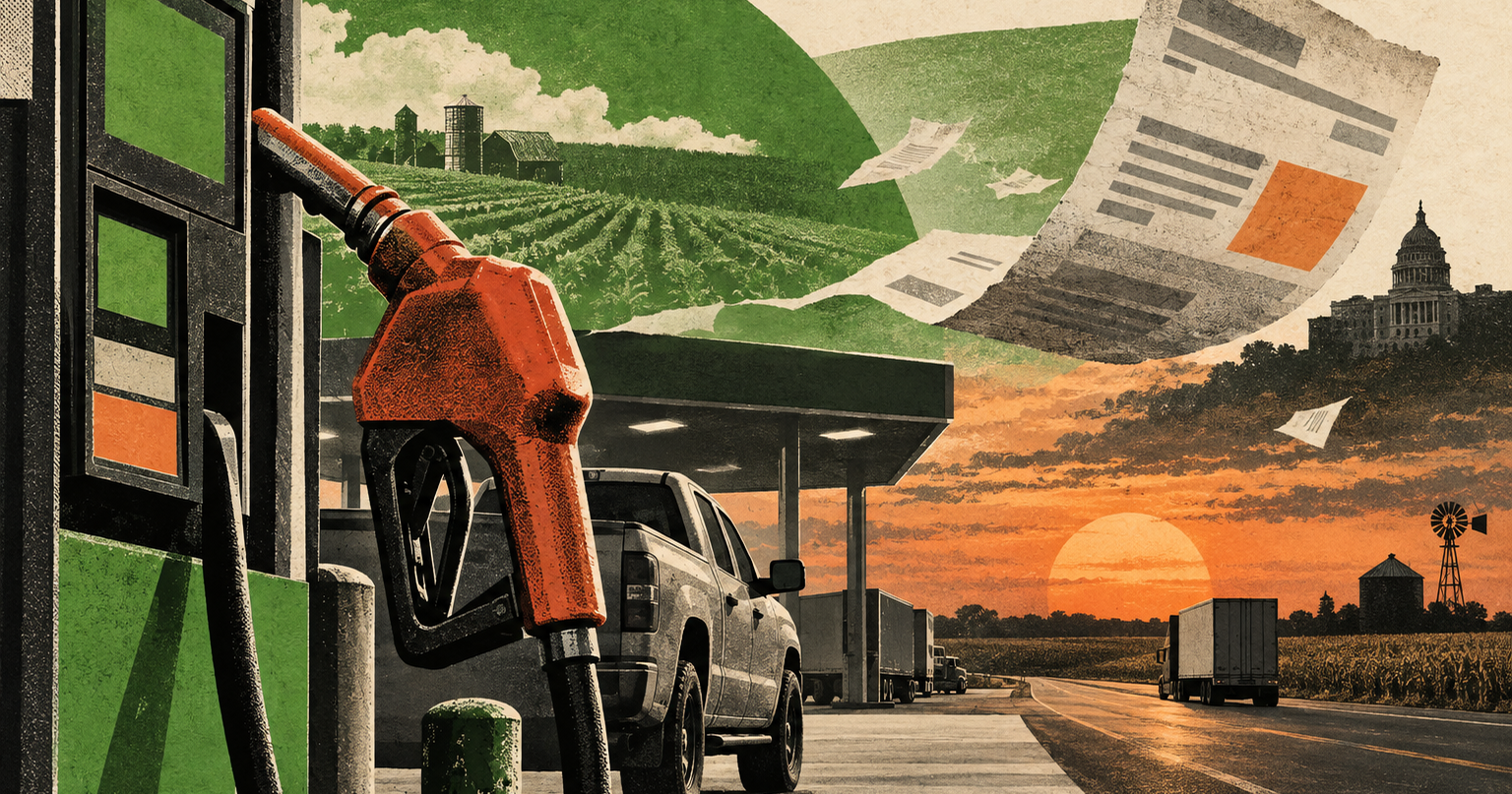
Less than a month before the midterms, standing at a campaign rally in Nebraska where fuel costs are squeezing farmers mid-harvest, President Trump signed an order late Monday letting anyone run red-dyed diesel on the highway. That's the off-road fuel used in tractors and construction equipment, chemically identical to road diesel but sold without the federal excise tax.
"Tonight, I am going to sign a historic Executive Order to officially waive the off-road requirement and allow anyone to purchase tax-free red dye diesel for any reason," Trump told the crowd, calling it an "unprecedented step to bring down costs" that would "drive down the costs of all goods, including groceries."
The order itself is more careful than the speech. The White House says it "temporarily opens highway use of tax-free dyed diesel, deferring the federal diesel tax on that fuel through the end of the year," with no interest and no penalties. Deferring, not waiving.
Why now
Diesel is brutal right now. AAA put the national average at $6.32 a gallon on 5 October, down from a record $6.53 in late September but roughly 68% above the $3.76 drivers paid before the US-Iran conflict began in late February. War-related refinery outages in the Gulf and Ukrainian drone strikes on Russian refineries have kept supply tight, the squeeze that sent diesel to record prices. Last week Trump floated a diesel export ban before a G7 emergency stock release.
The federal tax is 24.4 cents a gallon. The White House says that works out to about $60 on a 250-gallon fill, and more than $100 where states match the relief.
The fine print
Nothing is settled yet. Within five days, the Treasury secretary, consulting the secretary of war, has to decide whether relief is even authorized under the tax code's disaster and emergency provision, section 7508A, including whether a qualifying event occurred. If so, Treasury defers taxes incurred from 5 October through 31 December, and the IRS has to announce it won't impose the usual dyed-fuel penalty, normally the greater of $1,000 or $10 a gallon, during that window.
Treasury is told to "explore pathways to eliminate the obligation to pay the deferred taxes." Nothing guarantees it will. A White House official told MarketWatch the deferred liability will only be enforced if the IRS, at the direction of the Treasury secretary and the president, chooses to enforce it.
And the person who might owe that money isn't the trucker. It's the seller, whether a truck stop, a co-op or a distributor, or the farmer. Whether pump prices fall depends on retailers selling below a tax they may still have to pay.
States are another wrinkle. Many charge their own diesel taxes, often higher than the federal one, and ban dyed fuel on highways. The order doesn't override them; it asks Agriculture Secretary Brooke Rollins and the White House to encourage states to follow. Overdrive counted Alabama, Nebraska and Texas loosening their rules, with eight more states offering some relief.
The skeptics
GasBuddy's Patrick De Haan said the move sidesteps Congress on the 24.4-cent tax, but "complications, including that framework and patchy enforcement, prevent the entire national fleet of diesel consumers from benefiting." His bigger point: "The order doesn't increase supply." Not a single new gallon.
Todd Spencer, president of the Owner-Operator Independent Drivers Association, predicted "minimal relief." NATSO's Wlazlowski Neuman warned that residual dye lingers in tanks, and "even trace amounts in clear diesel can bring IRS and state penalties outside the waiver window."
So what voters got before the election is a tax break that is legally a deferral, lands on sellers rather than drivers, and leaves the supply crunch exactly where it was.
Some offers on this page may be paid placements or contain affiliate links.
Finpresso: daily AI & finance brief
Free daily newsletter, read in 5 minutes.
Subscribe free