
UK MPs Warn Britain Is Dangerously Reliant on China for Minerals Needed for Defence and AI
A Commons select committee says Britain is dangerously dependent on China for the critical minerals behind rearmament, AI and net zero, and wants a critical minerals finance facility to fix it.

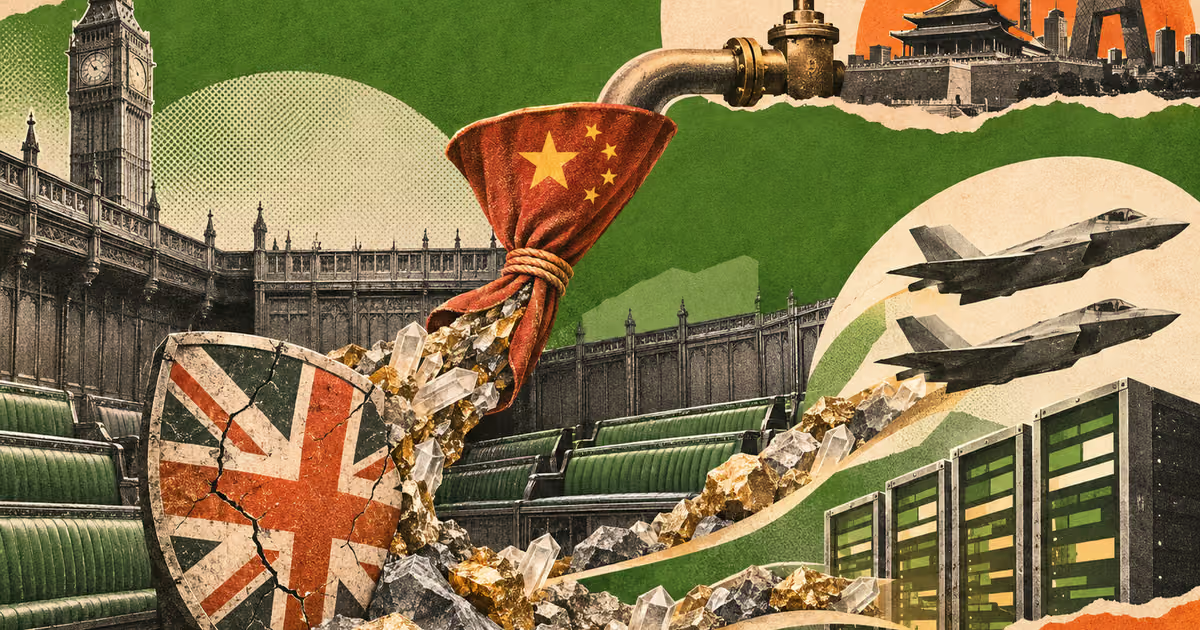
Britain wants to rearm, build AI data centers and hit net zero. A cross-party group of MPs says it cannot do any of that while China controls the minerals those plans run on.
The Commons business and trade committee concluded that the UK is "dangerously" dependent on China for the critical raw materials needed for the military, renewable energy infrastructure and AI. "Critical minerals are the alpha of the new economy," said the committee's chair, Liam Byrne. "We cannot rearm Britain, build AI or deliver net zero unless we secure the minerals these technologies depend on."
His next line was sharper: "Yet 16 years after China first weaponised its chokehold over rare earths, Britain remains dangerously exposed."
Demand is about to explode
The bottleneck is processing. China dominates refining across seven categories of minerals, including refined lithium for electric cars and rare earths used in military aircraft fuselages and wings that must cope with temperature extremes.
The squeeze is about to tighten. Lithium demand alone would rise 45-fold between now and 2030, the MPs found, while rare earths for the permanent magnets in military jets and other uses would rise 16-fold as Britain rebuilds its forces.
Beijing has already shown it will pull the lever. Its rare earth export controls in 2025 disrupted manufacturers well beyond the intended targets, and a separate fight over Nexperia's legacy chips left Europe's car industry days away from stoppages last October.
Donald Trump won a one-year reprieve on global rare earth restrictions from Xi Jinping in October 2025, later extended to January 2027 after Xi's recent visit to Washington. The committee suggests that leaves Britain at the mercy of US and China relations it does not control.
A decade of de-risking
The MPs do not think cutting China out entirely is realistic or desirable. Their preferred route is to work with the G7, the rest of Europe and Indo-Pacific partners to pool demand and bring new suppliers online. That kind of "precision de-risking" would take 10 to 15 years.
They also want what they call "new institutional and financial muscle," starting with a critical minerals finance facility that could offer grants, equity and debt to fund mines and diversification. Allies are already moving that way: European Parliament members have proposed a new EU agency that would take equity stakes in miners, copying Washington's playbook. The committee says Britain still lacks that kind of machinery.
The report also asks ministers to identify domestic mining, refining and recycling options, push buyers to cut procurement from China and look at planning and permitting barriers.
Parliament says it is flying blind
Much of the frustration is about secrecy. "Parliament has no visibility of the capabilities the government is seeking to protect, the vulnerabilities it has identified, or the projects it is backing to reduce risk," the committee wrote. It said it could not be confident the government meets its own 10 tests.
The government rejects the idea that it has no plan. A spokesperson said it is delivering £400 million "to ramp up domestic production and recycling" and building international partnerships. Its strategy aims, by 2035, to meet 10% of demand from domestic production and 20% from recycling, with no more than 60% of any critical mineral coming from a single country.
Some offers on this page may be paid placements or contain affiliate links.
Finpresso: daily AI & finance brief
Free daily newsletter, read in 5 minutes.
Subscribe free